What is Lesbian History Day?


If you’ve ever wondered whether lesbian erasure is real, ask yourself what you know about Florence Nightingale.
19th-century pioneer of modern hospital practices. The “lady with the lamp”. Tireless social reformer. Also a tireless seducer of other women, who wrote, “I have lived and slept in the same beds with English Countesses and Prussian farm women. No woman has excited passions among women more than I have.”
Didn’t know that last part, did you? And given that the lady once graced the UK £10 note – the first woman from history to do so – I’m betting that the crusty officials at the Bank of England and UK Treasury department in the 1980s didn’t know this, either.
It’s this kind of casual erasure, even of famous lesbians of the past (or, in this case, the erasure of the lesbianism of famous women), that has inspired the newest addition to the international LGBTQ+ community calendar: Lesbian History Day.
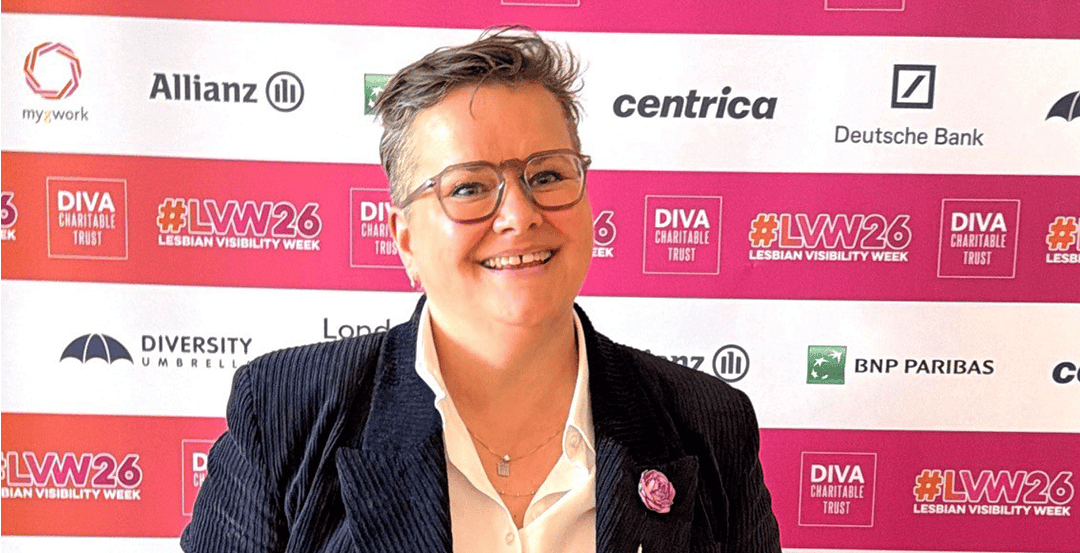
The brainchild of multi-award-winning DEI professional and member of the Link Senior Advisory Board, Marie-Helene Tyack, in this interview, Marie-Helene explains what Lesbian History Day is, what inspired it, and how you can get involved.
Marie-Helene: Lesbian History Day is just what it sounds like – a day dedicated to celebrating and honouring the amazing contributions of lesbians throughout history. It’s going to be held on 6th September annually, starting this year.
I’ve launched it with the support of lots of great people and organisations, such as DIVA magazine, Love Queers, and Curve magazine. But ultimately this is about making those invisible lesbians from history visible again, and celebrating their incredible achievements, whether we’ve heard of them before or not.
This year we’re going to have an event in September – probably a panel discussion with some prominent lesbians – to discuss the importance of celebrating our identity. Ultimately, I hope this grows way beyond me and my small circle into a fully-fledged annual celebration for everyone.

Marie-Helene: Well, at the risk of sounding like an Angry Old Lesbian, I was thinking in the context of today’s generation, it’s great that they feel they don’t have to label who they are, that they’re able to have pink hair and not have to justify it. But a lot of them don’t know what came before.
A lot of them don’t know the sacrifices that people made to allow them to not have to label who they are and to have pink hair. A lot of them don’t know that people died for their right for the equality they have today. So that’s kind of the thinking – to drag them kicking and screaming into awareness.
But what really triggered the idea initially was my lovely friend Kevin taking me to what was the London Lighthouse [the world’s largest centre for people living with HIV when it opened in 1986, the London Lighthouse pioneered a patient-centred approach in HIV care, and housed a residential unit, as well as day-care and drop-in centre facilities – ed], which is now the London Brand Museum [since the Lighthouse closed in 2013 – ed].
Kevin had been around in the 80s and 90s and he’d had friends who had been looked after there, friends who had died there, friends whose ashes were scattered in the gardens. He was telling me about this place and the stories associated with it.
And then he turned around to me and he said, “But you do know who was looking after us? It was the lesbians. You do know that the only people that were giving blood were the lesbians. The people out there marching on the streets were the lesbians.”
And I thought, you know what, you’re right! And then it sat with me. And I thought, people don’t know this.
We need to find a way of remembering these groups of incredible women who did all this amazing stuff in that moment. I started by thinking just about the role of lesbians during the AIDS crisis. And the more I thought about it, I thought okay, how are lesbians being represented in history?
Well, the truth is, they’re not. Florence Nightingale was a lesbian, and she writes about sleeping with women, but actually, that’s been completely erased from her profile. People don’t know that. Just to give you an example.
And then I was thinking about the recent Russell T Davies drama series It’s a Sin from 2021. I loved it. But Russell T Davies didn’t represent that time as he should have, because the people that were manning the switchboards in reality were lesbians. The main female character in it, Jill. Yes, she’s based on a real person, but she should have been a lesbian to reflect the reality.
So that was what triggered it. And I thought, actually, you know what? We need to have a day. We need to have a day where we can remember these incredible women going as far back into history as we can.
Marie-Helene: At the risk of sounding crass, I needed to find a dead lesbian whose birthday we could celebrate. So I looked at all the dead lesbians I could find online, and then I had to find a date that didn’t clash with anything else. I was looking at Anne Lister for example [known as Gentleman Jack both in her time and to those who remember the 2019 BBC historical drama television series or the book it is based upon – ed], but her birthday clashed with something else on the LGBTQ+ calendar.
This was the same for every relatively known dead lesbian. Their birthdays all clashed with something else.
Then I found a woman called Jane Addams and there was no clash! That’s how I decided.
And then I started doing research on this woman, who is not well remembered even in her hometown of Chicago. She was a social reformer, social worker, activist, author… The more I dug up and read about her the more remarkable she seemed, and the fact that she isn’t well known today yet had such a positive influence in her time just seemed perfect – tailor made for the whole concept of Lesbian History Day shining a light on these remarkable women who might otherwise quietly be erased.
I mean, this was the first American woman to win the Nobel Peace Prize!
But then – disaster! Or so I feared…
It turned out that poor old Jane dabbled with eugenics. To most of us today any belief in eugenics seems shocking, and I did consider trying to find a different person or even a different date. But you know what?
While we now see eugenics as racist, many progressives of Jane’s time supported eugenics for different reasons, including the Fabian socialists H. G. Wells, George Bernhard Shaw, and Beatrice and Sidney Webb. Jane herself saw eugenics as a way to combat “social ills” and reduce infant mortality. Her thoughts on eugenics were also linked to the work she did with sex workers in her settlement house, which led her to question whether it would be good for them or wider society if they had children who might get stuck in the same downward spiral.
This reminded me that part of the historical research aspect of this project is to represent people fairly – warts and all. After all, if we erase amazing women like Jane Addams from history because our modern beliefs are offended by what many at the time felt was normal, aren’t we then contributing to the very erasure of lesbians that this day is all about rejecting?
So we’re sticking with Jane. She achieved so much good that it would be crazy to erase her all over again. We must strive to remember these women as they really were, not as we might wish them to be.
Marie-Helene: You can keep in the loop for more updates about the day itself by following us here , on Instagram ( @Lesbian_History_Day ) and our website www.lesbianhistoryday.com. And of course, Link is going to be sending out regular updates too to keep people informed.
But most of all, we’ve already started researching and sharing stories of lesbians from history, and we’re going to continue to do so every month at least until September – and maybe even beyond! Getting to know the achievements and amazing lives of past lesbians has been really exciting for me. I’d like to encourage everyone with an interest to do the same. Do you own research. Find your own lesbian heroes of the past and share them with us using the hashtag #LesbianHistoryDay.
We want as many people as possible to get excited about this and share in the discovery of our shared lesbian past. So do your own research and become part of the celebration.
 https://www.lgbtinsurancenetwork.com/wp-content/uploads/2026/09/Jane-Addams-The-Most-Dangerous-Woman-in-America-featured-2.jpg
1080
1080
fletch
https://www.lgbtinsurancenetwork.com/wp-content/uploads/2021/03/Link-LGBTQ-Insurance-Network-logo-web-white.png
fletch2026-09-05 08:00:312026-09-05 14:43:41Jane Addams: The Most Dangerous Woman in America?
https://www.lgbtinsurancenetwork.com/wp-content/uploads/2026/09/Jane-Addams-The-Most-Dangerous-Woman-in-America-featured-2.jpg
1080
1080
fletch
https://www.lgbtinsurancenetwork.com/wp-content/uploads/2021/03/Link-LGBTQ-Insurance-Network-logo-web-white.png
fletch2026-09-05 08:00:312026-09-05 14:43:41Jane Addams: The Most Dangerous Woman in America? https://www.lgbtinsurancenetwork.com/wp-content/uploads/2026/08/Gluck-featured.png
1080
1080
fletch
https://www.lgbtinsurancenetwork.com/wp-content/uploads/2021/03/Link-LGBTQ-Insurance-Network-logo-web-white.png
fletch2026-08-13 08:26:522026-09-05 14:45:50GLUCK – THE ARTIST WHO REFUSED TO BE LABELLED
https://www.lgbtinsurancenetwork.com/wp-content/uploads/2026/08/Gluck-featured.png
1080
1080
fletch
https://www.lgbtinsurancenetwork.com/wp-content/uploads/2021/03/Link-LGBTQ-Insurance-Network-logo-web-white.png
fletch2026-08-13 08:26:522026-09-05 14:45:50GLUCK – THE ARTIST WHO REFUSED TO BE LABELLED https://www.lgbtinsurancenetwork.com/wp-content/uploads/2026/07/Ruth-Ellis-Featured.png
1080
1080
fletch
https://www.lgbtinsurancenetwork.com/wp-content/uploads/2021/03/Link-LGBTQ-Insurance-Network-logo-web-white.png
fletch2026-07-23 06:00:462026-09-05 14:54:46Ruth Ellis – A Beacon of Hope Across Generations
https://www.lgbtinsurancenetwork.com/wp-content/uploads/2026/07/Ruth-Ellis-Featured.png
1080
1080
fletch
https://www.lgbtinsurancenetwork.com/wp-content/uploads/2021/03/Link-LGBTQ-Insurance-Network-logo-web-white.png
fletch2026-07-23 06:00:462026-09-05 14:54:46Ruth Ellis – A Beacon of Hope Across Generations https://www.lgbtinsurancenetwork.com/wp-content/uploads/2026/06/Renee-Vivien-featured-side.png
1080
1080
fletch
https://www.lgbtinsurancenetwork.com/wp-content/uploads/2021/03/Link-LGBTQ-Insurance-Network-logo-web-white.png
fletch2026-06-10 08:11:402026-09-03 16:35:14Renée Vivien – Enigmatic Poetess of the Belle Époque
https://www.lgbtinsurancenetwork.com/wp-content/uploads/2026/06/Renee-Vivien-featured-side.png
1080
1080
fletch
https://www.lgbtinsurancenetwork.com/wp-content/uploads/2021/03/Link-LGBTQ-Insurance-Network-logo-web-white.png
fletch2026-06-10 08:11:402026-09-03 16:35:14Renée Vivien – Enigmatic Poetess of the Belle Époque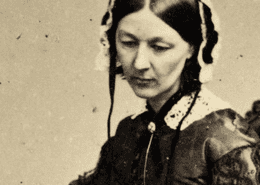 https://www.lgbtinsurancenetwork.com/wp-content/uploads/2026/05/Florence-Nightingale-Featured.png
1080
1080
fletch
https://www.lgbtinsurancenetwork.com/wp-content/uploads/2021/03/Link-LGBTQ-Insurance-Network-logo-web-white.png
fletch2026-05-05 07:53:142026-09-03 16:35:21Florence Nightingale: The Lesbian with the Lamp?
https://www.lgbtinsurancenetwork.com/wp-content/uploads/2026/05/Florence-Nightingale-Featured.png
1080
1080
fletch
https://www.lgbtinsurancenetwork.com/wp-content/uploads/2021/03/Link-LGBTQ-Insurance-Network-logo-web-white.png
fletch2026-05-05 07:53:142026-09-03 16:35:21Florence Nightingale: The Lesbian with the Lamp?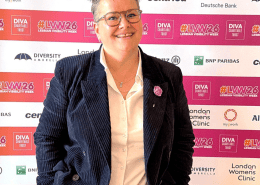 https://www.lgbtinsurancenetwork.com/wp-content/uploads/2026/04/Marie-Helen-featured-MH-2026.png
1080
1080
fletch
https://www.lgbtinsurancenetwork.com/wp-content/uploads/2021/03/Link-LGBTQ-Insurance-Network-logo-web-white.png
fletch2026-04-23 15:08:072026-09-05 14:42:14What is Lesbian History Day?
https://www.lgbtinsurancenetwork.com/wp-content/uploads/2026/04/Marie-Helen-featured-MH-2026.png
1080
1080
fletch
https://www.lgbtinsurancenetwork.com/wp-content/uploads/2021/03/Link-LGBTQ-Insurance-Network-logo-web-white.png
fletch2026-04-23 15:08:072026-09-05 14:42:14What is Lesbian History Day?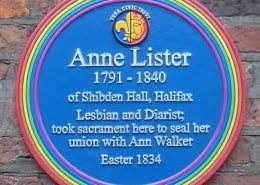 https://www.lgbtinsurancenetwork.com/wp-content/uploads/2026/03/anne-lister-plaque.jpg
591
605
fletch
https://www.lgbtinsurancenetwork.com/wp-content/uploads/2021/03/Link-LGBTQ-Insurance-Network-logo-web-white.png
fletch2026-03-31 05:00:002026-09-03 16:35:39Anne Lister: the First Modern Lesbian?
https://www.lgbtinsurancenetwork.com/wp-content/uploads/2026/03/anne-lister-plaque.jpg
591
605
fletch
https://www.lgbtinsurancenetwork.com/wp-content/uploads/2021/03/Link-LGBTQ-Insurance-Network-logo-web-white.png
fletch2026-03-31 05:00:002026-09-03 16:35:39Anne Lister: the First Modern Lesbian?If you enjoyed this article, please consider joining Link for more great insights and events from the LGBTQ+ community


 Florence Nightingale: The Lesbian with the Lamp?