“AI CAN’T INNOVATE”
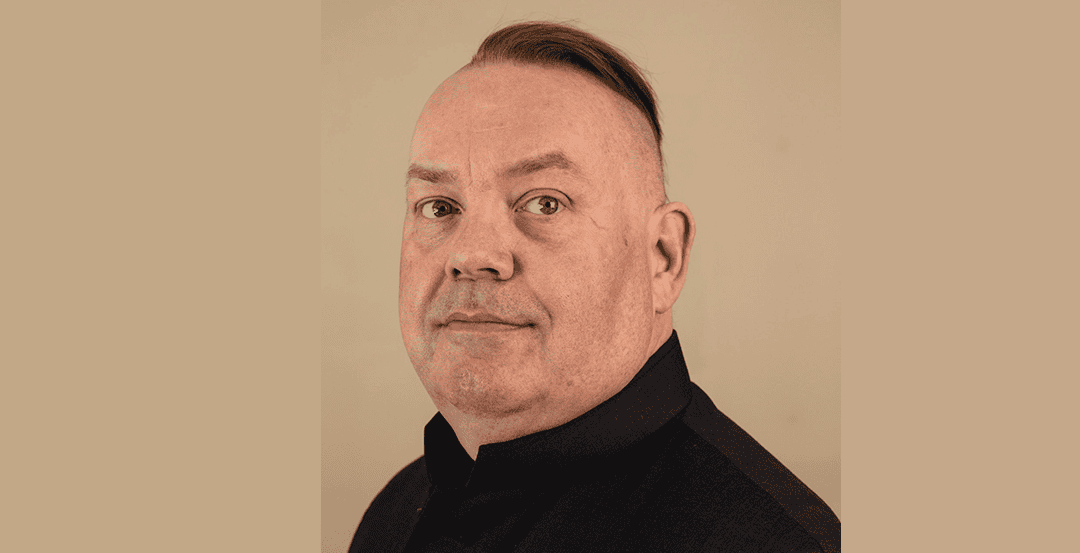


For Tee Barr, Founder and Chief Strategy Officer at Clairvoyint AI, innovation is fundamentally human, so diversity matters because it expands the range of human ideas that can be trusted, tested and built on. But those ideas only become useful if leaders themselves create trust, transparency and psychological safety.
When asked why humans innovate, Tee – a serial entrepreneur in the climate tech space who identifies as queer and non-binary – says: “I think we innovate because humans have a natural curiosity.”
While Tees uses AI creatively, they distinguish between AI as a tool and AI as a source of genuine innovation. For them, innovation still depends on human judgement, curiosity and interpretation.
“AI can’t innovate,” they insist. “It can only take ideas and do mashups. All it’s doing is looking for the next word in the bell curve.”
Tee prefers to use it as a creative assistant, as if it’s “a high-end grad student.”
“What I love using AI for is when I’m writing a blog or something, is dumping my concept into an image generator. Let’s see what it generates and see if that stimulates something else in my head.”
For Tee, this human element to innovation is why diverse teams are important: because they bring different ideas to the table.
“If I bring five men who went to similar universities, have similar backgrounds, I’m gonna get the same bullshit idea out of all five of them.”
On the other hand: “If I’ve got someone who went to a coding boot camp, another person who went to community college, women, and other marginalised communities, I’m going to get a lot of different ideas out of them.”
It’s not about demographic box ticking, though. For Tee, diversity is about cognitive range, lived experience, routes into work, class, education, gender, race, sexuality and professional background all adding to the mix. Even then, Tee adds that only establishing a certain level of trust will turn these differences into usable insight.
So how can leaders establish that trust? For Tee, it’s about radical transparency, equality of contribution, and leader accountability.
“If you come in with 100% transparency about everything, people are gonna trust you more. And if they come to me with a different opinion, I say, ‘Great, let’s discuss it, make our stuff better, make our concept better, make it stronger.’”
They insist that all ideas can have equal weight, regardless of seniority or experience. On top of that, they have a practice called Question Hour, where “I put myself in the hot seat. I cannot assign tasks. I can only be assigned tasks. Any question, I get a response to you within 48 hours. Nothing’s off the table. That way, my team knows I’m as responsible to them as they are to me.”
Tee also has a way to reduce the hidden frictions of communicating with new teams and new people; they call it a user manual. It’s a concept they picked up from working as a defence contractor, where new military officers are rotated in and out of projects annually.
“I was living in DC and one colonel showed up, and he just said, ‘Hey, here’s my user manual.’ It was 3 pages, and had some quotes on it, some ideas. I’m like, ‘This is brilliant’. He’s like, ‘Yeah, I get cycled through a lot of different places, and I don’t like to waste time on learning how to communicate with people.’”
Tee’s user manual includes how they prefer to communicate, things they like and don’t like, and top five books that changed their perception about business.
But even with all this, trust inside a team is only one part of the equation. For people to contribute fully, they also need to believe they belong in the industry in the first place, and that they can progress within it. That’s where visibility matters.
Tee talks about geospatial and insurance-adjacent spaces as areas where there are often plenty of women practitioners, but fewer women in management. For openly queer people, they see a similar barrier.
“There’s a glass ceiling,” they say, “and there’s also a rainbow ceiling.”
That ceiling is not always obvious from the outside. LGBTQ+ people may be present in an organisation without being visible. Some may be private. Some may be cautious. Some may not want to be activists at work. Some may simply want to do their jobs without making identity part of the conversation.
But the result, Tee says, is still a role-model gap.
“As far as I know, I was the highest person in the ranks at my previous employer who was openly queer.”
For Tee, that matters because representation changes what people can imagine for themselves.
“You can’t see it, you can’t be it.”
That doesn’t mean every LGBTQ+ person has a duty to be visible. But it does mean organisations should understand the cost when senior queer people are absent from view. Junior employees may not see a path. Talented people may self-select out.
This is one reason Tee believes physical connection still matters. Virtual work and online events have their place, but they struggle to create the same depth of trust.
“The thing that I hate about virtual events, also the thing I hate about working remotely, is the lack of the follow-up,” they say.
For Tee, the most valuable conversations usually happen after formal sessions end.
“The unintentional brainstorming session is what I miss,” they say, “because most of our communication is done via body language.”
New ideas rarely arrive fully formed in scheduled meetings. They develop through relationships, repeated contact, informal challenge and small moments of recognition. In-person networks create the conditions for those moments to happen.
As Tee puts it: “We met with each other for 120,000 years of evolution, and only the past 10 we’ve been able to meet over video chat.”
In other words, innovation is social. Inclusion is social. Trust is social. And while technology can connect people, it doesn’t automatically create the human chemistry that allows people to test ideas, challenge assumptions and build confidence.
That same theme carries into Tee’s work as a startup founder. Their company, Clairvoyint AI, works at the intersection of geospatial AI, climate risk and source validation – exactly the kind of area where insurance needs better tools, better data and better ways to understand a changing risk landscape.
But insurance is not an easy market for startups.
“Insurance is a person-knowing-person industry,” Tee says.
That can be useful when relationships open doors. But it also makes innovation difficult for new entrants, especially when insurers are being asked to build critical processes around unfamiliar technology.
“The way insurance looks at startups is, ‘I like your tech, but are you going to be here in two years?’”
That caution is understandable. If a tool becomes part of an insurer’s risk framework, it needs to be reliable, supported and available over the long term. But the same caution can also slow down adoption of tools the industry may urgently need.
Tee has seen that first-hand.
“When I was a director of risk, it took me a year and a half to get funding just for satellite imagery.”
The problem, then, is not that insurance doesn’t need innovation. It clearly does – particularly around climate risk, geospatial intelligence and the ability to understand exposures in a changing world. The problem is that insurance needs to trust innovation before it can use it. And trust takes time.
The same paradox applies to talent. If innovation depends on different ideas, then organisations need to find different people. But Tee says that doesn’t happen passively: “You’ve got to dig.”
That means looking beyond obvious candidates, but it also means persuading capable people that they are ready. Tee has seen this especially with women and people from underrepresented backgrounds, who may rule themselves out before applying.
“For me, the hardest thing has been when I have an advanced data scientist position or something and I know a woman who’s really capable, who could easily fit that role. But then, when you send them the job spec, she’s like, I don’t meet that this, that, or this other thing.”
That creates another hidden barrier. A role may be technically open to everyone, but the people most likely to bring different perspectives may be less likely to see themselves as qualified. Tee says sometimes there is “a certain amount of lobbying and convincing” involved in helping people recognise the opportunity in front of them.
They recognise that pattern personally: “I’m a queer kid from 80s Kansas. Of course I have imposter syndrome!”
For Tee, imposter syndrome never goes away, but it is manageable. They manage theirs by journalling and keeping emails where clients or colleagues have praised them. They also have what they call a “mental health pit crew” – a coach, a therapist, and sometimes more than one coach – to keep themselves moving forward.
They also have a rule for creative work. When something feels ready, “Just hit send.” If a piece of work sits in drafts forever, it never becomes real. If it’s sent, published, shared or tested, it can be improved.
That’s also a useful metaphor for innovation itself. At some point, an idea has to leave the safety of the private draft and enter the outside world.
Tee’s argument comes back to a simple but powerful idea: innovation is human. AI can support it. Data can sharpen it. Technology can accelerate it. But the original spark still comes from people noticing things, questioning assumptions, making unexpected connections and feeling safe enough to try.
That is why diversity matters – because sameness narrows the field of possible ideas. Different people see different problems. Different lived experiences produce different questions. Different routes into work create different instincts about what might be possible.
But diversity alone is not enough. Leaders have to build trust. Organisations have to reduce communication friction. Senior people have to be visible. Networks have to create real human connection. And insurance, if it wants to innovate, has to become better at trusting not only new technologies, but new kinds of people.
As Tee’s experience suggests, the future of insurance will not be built by AI alone. It will be built by people – curious people, different people, trusted people – who are given the space to make something better.
Click below to apply to take part in this diversity article series and be interviewed yourself…
Diversity & Innovation: Perspectives from insurance industry leaders at Insurtech Insights Europe, 2026
If you enjoyed this article, please consider joining Link for more great insights and events from the LGBTQ+ community


 Ruth Ellis – A Beacon of Hope Across Generations