“Why would you not want to make the most of your people?”
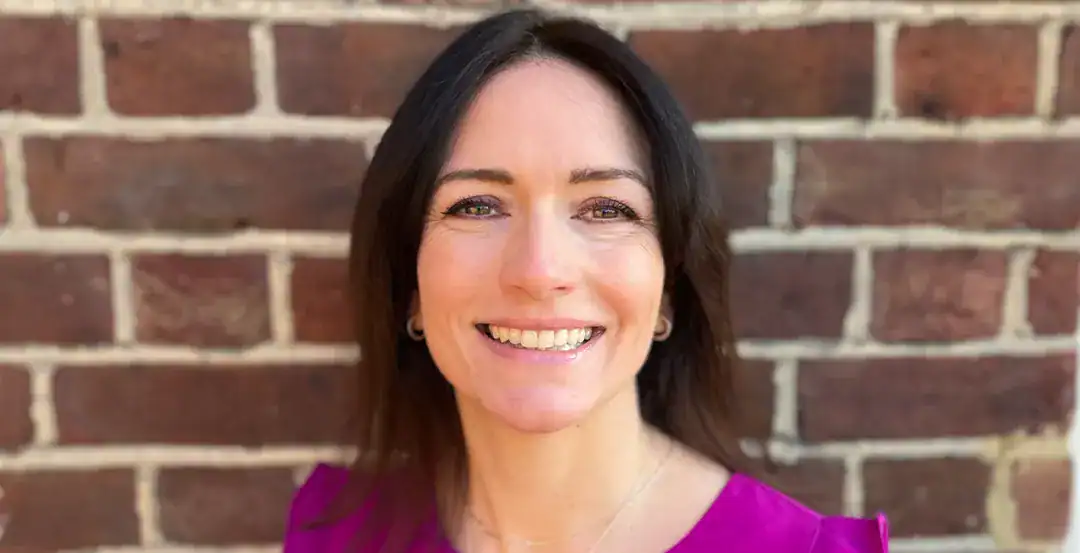


For Maddy Howlett, CEO of MGA By Miles, inclusion in business comes down to who is heard in the room, whose contributions are given most weight, and who must work harder to get taken seriously.
Prior to moving into insurtech, Maddy worked at British Gas in a variety of leadership and innovation roles.
“In my early career there were 500 leaders in the part of the business I worked in, and I was often the only woman in the room,” she explains. “I would sometimes get comments like ‘don’t worry, we don’t think of you as a woman.’”
This tragicomic image suggests that exclusionary cultures are often not built through active hostility at all, but simple unchecked assumptions. As Maddy says: “People there were lovely and trying to be supportive, but they weren’t super aware of what inclusion really means.”
In the same way, she points to the small corporate insurance talent pool and the way internal language becomes normalised: “There are things that people just assume are normal in insurance, which wouldn’t be if you went anywhere else. For example, everybody uses this term ‘MTA’ when anywhere else it would be a policy change.”
If an industry talks to itself in language customers don’t use, it reveals something about who the industry is really listening to.
“There can be a meeting culture that you sometimes get which is not necessarily as curious or open to asking questions as it should be. That curiosity and asking questions is something we encourage and look for at By Miles.”
Maddy’s view of inclusion is strikingly practical. It’s not enough to invite different people into the room and hope the conversation changes. Teams need structures that make contribution easier for people who don’t naturally thrive in conventional corporate settings.
“There is an expectation at By Miles that everybody will have an opinion and everybody’s opinion carries equal weight,” she says. However, even this assumption isn’t enough to ensure inclusive participation: “If you wait for everybody to put their hand up, lots of people don’t want to.”
So how has she helped team members get over these inhibitions?
By running online whiteboard sessions, giving people time pre-meeting to think through their ideas, so they can contribute without being forced to speak in front of others. This can be particularly useful for encouraging introverted or neurodiverse team members.
“If some people’s brains work much better if they’ve already got the framework and the background and the structure, why would you not run your business in a way which makes the most of that?”
In other words, proactive inclusion helps to get the best ideas out of people where a more traditional meeting structure can be counterproductive: “If you’re just standing up in a room and you’re brainstorming ideas, you’re probably not going to get the best ideas.”
So does inclusion just mean everyone talks more and decisions become slower? Maddy’s answer is no. Inclusion works best with clearer structure. At By Miles, this means viewing decisions through a series of lenses – a customer lens, a financial lens, an investment lens – and then being explicit about which one is driving the final choice.
Job descriptions and recruitment processes are another way to decide who feels invited to join insurance. “If you’re a woman or a person of colour, or from the LGBT community, the data suggests you’re much less likely to oversell yourself,” Maddy says, adding that these candidates won’t apply if they think they can’t do 80% or 90% of what’s on a job description.
That’s why “the big thing that our team do when they put together job descriptions is make sure that they’re accurate and not wishful thinking.”
How else has she tried to overcome traditional structural recruitment bias? By looking at working practices and benefits: “Innovators can’t always compete on super high salaries, but what you can offer is flexibility. Flexibility of hours, location. All those things have proven really good for us.”
For Maddy, one clear benefit of diverse teams is their ability to understand customers better because they bring different reference points, different service expectations and different awareness of bias.
“If you want to appeal to as wide a customer base as much as possible… you need to have a product which doesn’t exclude them,” she says, boiling down the business case for greater diversity and inclusion to its simplest form: inclusive design expands the addressable market.
Maddy argues that By Miles has benefited in particular from people who had worked outside insurance, particularly hospitality, before joining, saying, “their approach to customer service is fundamentally different.”
Maddy offers an example as proof, recalling the time a customer emailed her directly about something that had gone wrong. Rather than simply resolving the complaint, a colleague in customer experience worked with the Product and Engineering teams to understand and fix the underlying issue.
“They didn’t just sort this out with the customer, they went deeper and really tried work out how the problem had happened,” Maddy says, “Certainly the expectation here is that our people just have permission to get stuff fixed if it doesn’t make sense for a customer.”
By Miles has been through several phases of growth and ownership, from a VC-backed startup to being acquired by Direct Line and later becoming part of the Aviva group following Aviva’s acquisition of Direct Line. Maddy has experienced innovation in both smaller and larger organisations, as well as under venture-backed and corporate ownership. What does she think helps innovation thrive?
“Curiosity,” she answers, without even pausing. “That kind of compassionate or empathetic approach of being able to understand different perspectives.”
Anything else?
“Yes… a kind of ambition to want to do things differently.”
Good corporate sponsors in particular are well aware of the risk of disruption, Maddy believes. Rather than wait to be disrupted, they’re keen to be the disruptor themselves. “That courage, to take that kind of risk and to dare to try different things, is such a big part of what it takes to be a successful corporate innovator.”
Inclusive teams can generate better ideas and better customer understanding, but those ideas still need strong senior sponsorship and room to develop.
Maddy’s experience at large and small companies suggests that innovation improves when more people are heard, when meetings are designed for different brains and voices, when recruitment opens the door to wider talent, when customer-facing teams have permission to act, and when senior leaders have the courage to protect uncertain work.
Insurance may be a difficult market to innovate in, but that difficulty is precisely why inclusion matters. Without it, the industry risks hearing from the same people, designing for the same customers, and choosing the same safe answers.
Click below to apply to take part in this diversity article series and be interviewed yourself…
Diversity & Innovation: Perspectives from insurance industry leaders at Insurtech Insights Europe, 2026
If you enjoyed this article, please consider joining Link for more great insights and events from the LGBTQ+ community


