“This is How We Build a Stronger, More Sustainable Workforce”
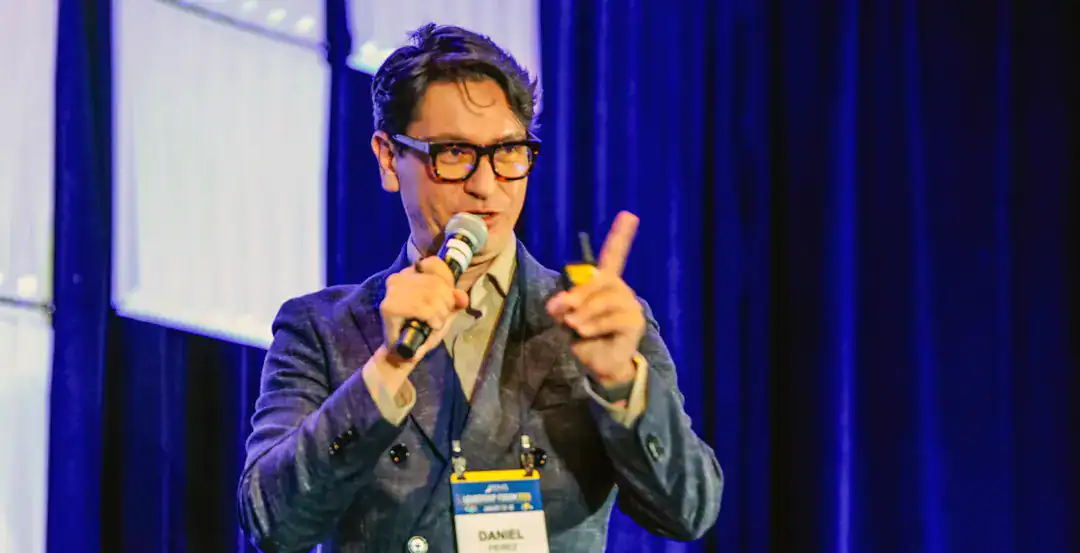


In the US at least, insurance is finally attracting new and diverse talent, according to Daniel Perez of the Spencer Educational Foundation. Daniel has spent much of his career helping to make that happen. Now, he says, comes the real challenge: keeping that talent, and making sure it gets a seat at the table.
Not long ago, a student got in touch with Daniel through a mutual connection. She was studying risk management, and her internship at an insurance company had gone so badly that she was ready to change her major and walk away from the industry altogether.
Daniel took her to lunch.
“Then I had breakfast with her, and connected her with all of these people in the industry,” he says. People who shared her background. Young risk professionals. Women in the fields she wanted to work in – even people in her own company a couple of cities away. “She had four or five lunches when she was here with all these different people.”
She ended up staying. “She came back thanking me and saying she wasn’t going to change her major.” For Daniel. This reflects the fact that there are a lot of great people in the insurance industry who are willing to invest their time into encouraging young talent.
The company where the student interned, to its credit, is now rebuilding its whole internship programme. But Daniel doesn’t let the happy ending obscure the fundamental issue.
“Thank God she was able to reach out to me. But it does leave me wondering: where are the support systems for these students?”
She was saved by a chance connection, but too much industry access still relies on luck rather than talent – even where the industry goodwill exists.
Daniel has little patience for the industry’s favourite bugbear. At a recent conference, having sat through another discussion of the talent crisis, he begged to differ.
“Everyone keeps saying there’s no talent for the industry to tap into, but that’s just not the case. It’s not what I’m seeing.”
His enthusiasm for Spencer’s work is hard to miss, and the numbers back it up. The foundation has been at this for 47 years. It has awarded more than $12 million in scholarships – a million dollars of it the week we spoke – and helped start nearly 100 university programmes across the US and Canada.
Its student risk management challenge drew applications from 53 universities on five continents this year.
“It’s the work,” he says, when asked what drew him to Spencer. “It’s the impact on students’ lives”
Spencer’s scholarship programme is designed to select the best and brightest and, as Daniel says, “By being open to all talent, we find that the students we awards scholarships to tend to reflect the vast inclusivity of U.S. and Canadian society.”
In 2026, more than 660 students applied for Spencer’s scholarship programme, from which the Foundation chose the top 125. The results of this merit-based approach are revealing: “We are very inclusive. Almost a 50-50 split on gender, about 63% racially diverse. All our numbers are right in line with the population. Because the talent is there and if you’re just open to it, that will be reflected.”
Daniel keeps returning to a harder question.
“The industry’s been complaining for years now. But isn’t the system designed to do this? We need to go back and ask if the system itself needs to be changed.”
His answer is that in the US, the redesign is already half done.
“In the US, there are scholarships popping up left and right. We’ve created the education, the scholarships. That’s lovely. We’re at the tail end of phase one. Now let’s go to phase two: the processes of keeping people once they’re in and helping them thrive.”
Asked which part of the talent ecosystem would have the biggest positive impact if changed, he doesn’t hesitate: “Hiring criteria.”
He wants companies to look again at the early talent filters around recruitment. “We need to look at that part of the system and really take chances at the early stages of sifting through talent. Maybe candidates didn’t grow up in an industry family. Maybe they need a couple extra years of training. But I’m going to take a chance because they’re going to bring something to the table that we had never thought of before.”
Part of taking that chance is understanding students from different backgrounds. For example, on head of recruiting a major insurer, now changing her own company’s processes, told Daniel what he had already observed: students without family connections or mentors in the industry are often quieter and more reserved in the hiring process.
“That doesn’t mean they’re not hardworking. It doesn’t mean they’re less smart. It just means they are less confident and less familiar with the industry.”
What actually separates students from well-connected families and everyone else?
Daniel has worked with both, spending years at a majority-Hispanic public university in Texas, then a stint at a very well-to-do private school, where he initially wondered what he could possibly offer such privileged students.
His conclusion is striking. The difference isn’t ability.
“The main difference – I can boil it down to the confidence piece,” he says. “For those from ethnically diverse backgrounds, we often think we need the certificate, the technical skills. But how do you become confident? Through experience.”
So Spencer creates those experiences. Scholars are put in rooms with executives at conferences, dinners, galas – and treated as professionals from the start.
“If you give them the opportunity and say: you’re an adult, I’m going to treat you as such, they will rise to the occasion. Sometimes they will insert foot in mouth. But that’s ok too, because guess what? You’re a student. Now is the time to do it.”
Ask Daniel whether taking chances on overlooked talent pays off, and he points to the students he worked with years ago – first-generation students, funding into the industry through a corporate partnership.
“They’re growing in their careers,” he says. “They’re killing it, and I love that for them. They’ve been able to change their families’ financial status. They’ve moved to bigger cities, been promoted, done very well for themselves. And now they’re giving back, talking to the next generation of first-generation students, Latinos, underrepresented groups.”
Even that success came with a lesson about the industry. Well-meaning advice kept flowing towards his students: dress like this, talk like this. For future retention, however, Daniel wonders if insurers will need to do more to meet students where they are and make their corporate cultures more accommodating.
Companies that continue to want new kinds of talent have to meet that talent partway if they want to retain it. And the commitment has to reach further down than the boardroom.
Spencer has CEOs at its gala tables, and Daniel sees plenty of goodwill at the top. The trouble is that goodwill doesn’t always filter down.
“There’s often a disconnect between what the CEO’s vision is and what the actual boots-on-the-ground people are doing or thinking when it comes to diversity.”
Daniel’s conclusion about what comes next is optimistic, but it comes with homework attached.
“The industry has made great strides for talent,” he says. “But now is the time to not just bring in talent, but to keep those people and give them a seat at the table.”
Which brings us full circle to the question asked at the start: where are the support systems? He has a clear picture of what a fully functioning talent ecosystem should look like.
“For me, a true talent ecosystem means we start thinking about talent as a continuous journey. It’s not enough to introduce a student to the industry. We have to support them from awareness all the way through their first job and beyond.”
At Spencer, that means investing in universities, supporting faculty through curriculum grants, providing scholarships, helping employers create internships, and offering stipends so students can actually afford to accept those internships. Then it’s about connecting students with mentors and getting them to industry conferences where they build real relationships.
“Each of those pieces reinforces the others,” he says.
The ecosystem exists to remove two barriers in particular. “One of the biggest challenges is access. Ther are so many talented students who have never heard of careers in risk management and insurance. Even once they discover the industry, financial barriers can prevent them from taking advantage of internships, conferences, or networking opportunities that often become career-defining experiences.”
The other barrier is belonging: “That means providing mentors, professional development, and opportunities to build meaningful connections early in their careers.”
Build all of that and the next student on the verge of walking away doesn’t need the luck of knowing someone who knows Daniel.
He has advice for students too, drawn from years of observation of the obstacles they face.
“It might take a little longer, but you’re supposed to be where you’re supposed to be. Sometime not getting into one place is a blessing in disguise. You don’t want to be in a placed that doesn’t value you, or accept you, or open opportunities for you. So hang in there.”
Spencer Educational Foundation has already grown beyond the US and Canada into Puerto Rico and Bermuda. It’s also keen on partnering with organisations in the UK.
“It doesn’t seem like there are a lot of risk management and insurance programmes or scholarships in the UK market right now, and that’s something we’d be keen to help with.”
Turning back to the US, Daniel feels the momentum is there to get to the next stage when it comes to building a true talent ecosystem.
“More organisations are realising talent development is a shared responsibility. Carriers, brokers, risk managers, industry associations, and universities are collaborating in ways we haven’t seen before. More companies are funding scholarships, sponsoring conference experiences, and partnering directly with Spencer,” Daniel says.
“When the industry collaborates, everyone benefits. Students gain life-changing opportunities. Employers build stronger talent pipelines. Our profession becomes more innovative and resilient for the future. That’s how we build a stronger, more sustainable workforce. Not by filing jobs today, but by investing in the people who will lead our industry tomorrow.”
Click below to apply to take part in this diversity article series and be interviewed yourself…
Diversity & Innovation: Perspectives from insurance industry leaders at Insurtech Insights Europe, 2026
If you enjoyed this article, please consider joining Link for more great insights and events from the LGBTQ+ community


