“Inclusion Really Is About Everybody”
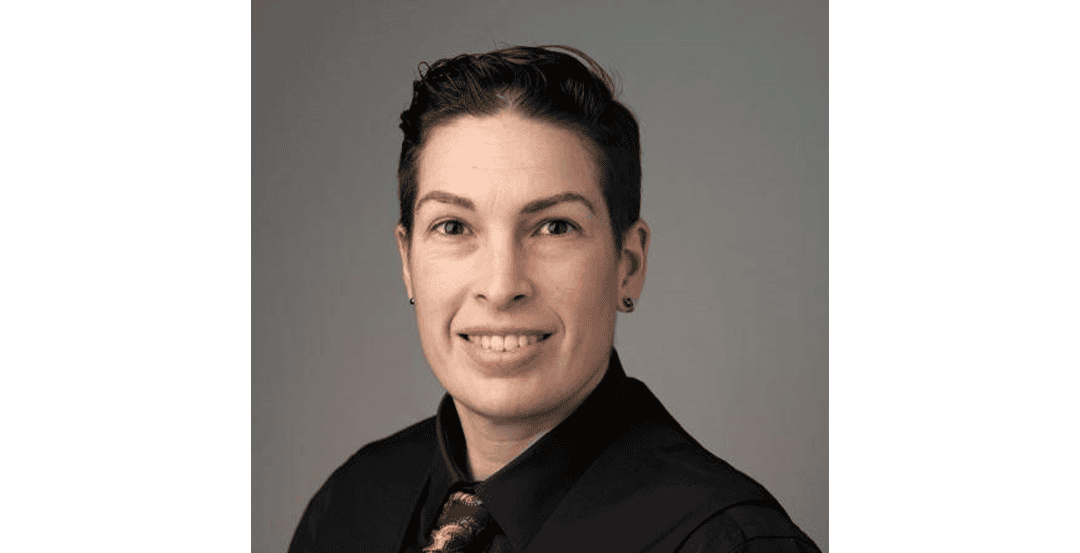


“I think I’m indifferent to the term lesbian,” admits Lindsey early in our conversation.
“If someone refers to me as that, I don’t take offense. But I primarily identify as a gay woman. That term ‘gay’ has sometimes been used for our gay male population exclusively. But I’m a woman married to a woman, and who is attracted to women, and so as long as the phrase is respectful and done in a polite way, it doesn’t really matter how people refer to my identity.”
A certain indifference to identifying as a lesbian extends in part to the concept of Lesbian Visibility Week for Lindsey, who prefers to celebrate all identities all the time: “We need to celebrate all our identities – however we present ourselves to the world – and make sure we’re always advocating and supporting each other year-round.”
It was this drive to be truly inclusive which drew her to become a DEI advocate, first while working at her previous employer and now at MEMIC.
“I can’t speak more highly of MEMIC, and I didn’t realize that I needed MEMIC as much as they needed me,” she reveals, adding: “I love our culture. I love our values. I love everything about MEMIC. It’s a fantastic place to work.”
So what’s the key to creating such an inclusive and motivational culture?
Lindsey puts it simply: “As leaders at MEMIC, we really work every day on creating a psychologically safe environment.” Indeed, she stresses that psychological safety is “one of the most important ways that companies can celebrate and understand everybody in their workforce.”
How can we define psychological safety? For Lindsey, it means creating an environment where people feel able to be their authentic selves at work and to ask questions about other people and processes without fear of being dismissed or judged.
This isn’t just something that comes from MEMIC’s leadership, either. It’s an aspect of the culture that everyone in the company is encouraged to practice daily.
“That’s our culture amongst each other, right?” she says. “Where we’re open and transparent with one another and asking questions not to judge or belittle but to foster understanding.”
Does Lindsey feel like a DEI role model at MEMIC? She likes to think that being an out and authentic director helps others feel safer, whether they identify as LGBTQ+ or as part of another community. This was one of her key motivations for getting involved in DEI.
“When I came out, my manager was an active ally, and I was able to confide in her. And, you know, everything went swimmingly,” Lindsey says. “But I didn’t have a support system to feel confident and comfortable coming out initially, and so I became more involved in DEI and the LGBTQ employee resource group – and now as an out and authentic director – because I wanted folks to see others like them who are out and doing well. For them to know that it’s safe. And that I can always be someone they can talk with or confide in or ask advice if they need it.”
Lindsey’s involvement in employee resources groups and networking to promote DEI over the years has been energizing and exciting for her.
“Now I know thousands of LGBTQ folks in my network, as well as people from different ethnicities and abilities,” she says. “And while we’re all very different, we’re facing similar problems and challenges, and we can learn from each other.”
This is particularly important for Lindsey in the context of the current backlash against diversity going on in the US. “I’m not gonna lie. When recent events happened, it hurt. But the work that we do to support one another is still important. Probably even more so than before.”
So does Lindsey have a message of hope for the LGBTQ+ community right now?
“We’ve always faced headwinds in this space. The current ones are new, maybe a little stronger, but the work we do to be inclusive of everybody, to see the value of what we all bring to the table, that’s still important and we must press on. We can gather and pump ourselves up, but the work still needs to be done, so we have to keep on.”
For MEMIC, this translates into launching a series of resource groups across the company. “We are in the process of launching our resource groups with the training of our leads, co-leads and executive sponsors. They will officially launch at MEMIC week where all team members will have the opportunity to learn more about each group and participate. MEMIC week also allows departments to get together, we have a company lunch with awards and there’s also a great talent show. It’s an opportunity for us to get together, learn from one another, celebrate accomplishments, and then plan for the rest of the year.”
Significantly, the resource groups going forward will be open to all. This seems symbolic and typical of Lindsey’s whole approach to inclusion, which is to be inclusive of all individuals, and to help people celebrate and learn from each other.
“We have a team norm within our finance team at MEMIC: We solve problems by focusing on the root cause, and then we collaborate to build consensus. And though we might not always agree, we align.”
Here Lindsey is keen to clarify what she means. In world where no two people will always agree, “we can agree to collaborate and move forward in the same direction, recognizing that it’s ok to disagree, as long as we can accept it.”
After all, diversity is about celebrating and learning from differences of experience, outlook, or skills. Even a room full of presumably straight, white, middle class, and cisgendered males is a room full of diversity of experience and belief. And, as Lindsey emphasizes, “much of our diversity is not visible.”
People don’t always see themselves in the DEI conversation because they assume diversity and inclusion are about uplifting minoritized groups, she adds, when in reality, “diversity is about everybody. Inclusion is about everybody. I think people don’t necessarily see themselves in inclusion, equity, diversity conversations, but they really should. We’re all in this together.”
If you enjoyed this article, please consider joining Link for more great insights and events from the LGBTQ+ community


 “While Many Don’t Want to be Defined by Their Sexuality, I’ve Found Pride...