Ruth Ellis – A Beacon of Hope Across Generations



I am conscious that the stories of historical lesbians we have shared so far have all been quite dramatic – everyone loves a bit of lesbian drama, right? But for this month’s spotlight, I wanted to share a story based on love and hope.
And that is the story of Ruth Ellis.
Ruth was born in Illinois on 23rd July 1899, to parents who were conceived in the last years of slavery, and she lived to be 101 years old. In that remarkable century of life, she witnessed the Harlem Renaissance, the Civil Rights Movement, the Stonewall Riots, and the dawn of marriage equality.
Yet what makes her story so extraordinary is not merely its length, but the quiet, unwavering hope she carried through every decade – a hope that illuminated the lives of countless LGBTQ+ people, particularly those of colour, who had been told their existence was impossible.
She grew up in a time when being Black and lesbian was not just socially unacceptable – it was dangerous. Yet from a remarkably young age, Ruth refused to hide. She came out to her family as a teenager, and by her own account, was met not with rejection but with a quiet acceptance that was almost unheard of in early twentieth-century America.
She also got a high school diploma at a time when fewer than seven percent of African Americans graduated from secondary school. In 1936 she met her partner of 34 years, Ceciline “Babe” Franklin, with whom she moved to Detroit, Michigan in 1937.
In Detroit, she became a successful entrepreneur – and the first African American woman to own a printing press. She and her partner also opened up their home to the Black LGBTQ+ community. Giving a space to those that had been denied entry to both white gay clubs and Black straight clubs.
The “Gay Spot”, as it was called, became a sanctuary – a place where people could gather, dance, love, and simply be themselves without fear. In an era of segregation and persecution, Ruth and Babe’s home was nothing short of revolutionary. Visitors found fellowship, safety, and the radical message that they deserved joy.
Ruth never saw herself as an activist in the traditional sense. She didn’t march with placards or deliver fiery speeches in her younger years. Instead, her activism was woven into the fabric of her daily life – in every door she opened, every meal she shared, every person she welcomed without judgement. Her message was simple and profound: you belong here, and you deserve to be happy.
For much of the twentieth century, Black lesbians were rendered invisible – erased from both the mainstream narrative and from the emerging gay rights movement, which centred largely on white, middle-class experiences.
Ruth’s very existence was an act of resistance against this erasure. By living openly for over eighty years before the modern LGBTQ+ rights movement gained mainstream traction, she proved that queer Black women had always been here, had always loved, had always built community.
When Ruth was “rediscovered” by younger activists in the 1990s, she became a symbol of resilience and continuity. At an age when most people retreat from public life, Ruth stepped forward. She began attending Pride events, speaking at community gatherings, and sharing her story with a new generation hungry for role models and historical connection. She marched in her first Pride parade at the age of 100.
What set Ruth Ellis apart from many historical figures was her insistence on joy (and I absolutely love this about her!). She did not define her life by struggle, though she had certainly known it. She spoke of love – of Babe, of her community, of dancing and laughter and the simple pleasure of being surrounded by people who understood you. In interviews conducted in her final years, she radiated warmth and humour, often deflecting questions about hardship with a smile and a redirect toward what had made her happy.
This emphasis on joy was itself a radical act. In a world that often reduces LGBTQ+ history to a catalogue of suffering and persecution, Ruth offered a counter-narrative: one of pleasure, connection, and enduring love. She showed that queer history is not only a history of pain, but also a history of community, celebration, and hope – and something that is key to the values of Lesbian History Day.
For those of us who work to make LGBTQ+ lives visible across generations, Ruth’s story is a cornerstone. She reminds us that our history did not begin at Stonewall, that queer elders have always existed, and that the simple act of living authentically, of opening your door and saying, “You are welcome here” can change the world. She wasn’t doing activism for applause; she was protecting lives quietly for decades.
Ruth Ellis did not wait for permission to be herself. She did not wait for laws to change or for society to catch up. She simply lived, loved, and opened her arms to others. In doing so, she left behind something more powerful than any legislation: a message of hope that transcends time. Personally, I take great inspiration from her – I always say I believe in Care Bears and rainbows. Ruth was just more eloquent about that than me!
Diversity & Innovation: Perspectives from insurance industry leaders at Insurtech Insights Europe, 2026
If you enjoyed this article, please consider joining Link for more great insights and events from the LGBTQ+ community
 https://www.lgbtinsurancenetwork.com/wp-content/uploads/2026/09/Jane-Addams-The-Most-Dangerous-Woman-in-America-featured-2.jpg
1080
1080
fletch
https://www.lgbtinsurancenetwork.com/wp-content/uploads/2021/03/Link-LGBTQ-Insurance-Network-logo-web-white.png
fletch2026-09-05 08:00:312026-09-05 14:43:41Jane Addams: The Most Dangerous Woman in America?
https://www.lgbtinsurancenetwork.com/wp-content/uploads/2026/09/Jane-Addams-The-Most-Dangerous-Woman-in-America-featured-2.jpg
1080
1080
fletch
https://www.lgbtinsurancenetwork.com/wp-content/uploads/2021/03/Link-LGBTQ-Insurance-Network-logo-web-white.png
fletch2026-09-05 08:00:312026-09-05 14:43:41Jane Addams: The Most Dangerous Woman in America? https://www.lgbtinsurancenetwork.com/wp-content/uploads/2026/08/Gluck-featured.png
1080
1080
fletch
https://www.lgbtinsurancenetwork.com/wp-content/uploads/2021/03/Link-LGBTQ-Insurance-Network-logo-web-white.png
fletch2026-08-13 08:26:522026-09-05 14:45:50GLUCK – THE ARTIST WHO REFUSED TO BE LABELLED
https://www.lgbtinsurancenetwork.com/wp-content/uploads/2026/08/Gluck-featured.png
1080
1080
fletch
https://www.lgbtinsurancenetwork.com/wp-content/uploads/2021/03/Link-LGBTQ-Insurance-Network-logo-web-white.png
fletch2026-08-13 08:26:522026-09-05 14:45:50GLUCK – THE ARTIST WHO REFUSED TO BE LABELLED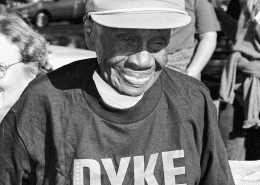 https://www.lgbtinsurancenetwork.com/wp-content/uploads/2026/07/Ruth-Ellis-Featured.png
1080
1080
fletch
https://www.lgbtinsurancenetwork.com/wp-content/uploads/2021/03/Link-LGBTQ-Insurance-Network-logo-web-white.png
fletch2026-07-23 06:00:462026-09-05 14:54:46Ruth Ellis – A Beacon of Hope Across Generations
https://www.lgbtinsurancenetwork.com/wp-content/uploads/2026/07/Ruth-Ellis-Featured.png
1080
1080
fletch
https://www.lgbtinsurancenetwork.com/wp-content/uploads/2021/03/Link-LGBTQ-Insurance-Network-logo-web-white.png
fletch2026-07-23 06:00:462026-09-05 14:54:46Ruth Ellis – A Beacon of Hope Across Generations https://www.lgbtinsurancenetwork.com/wp-content/uploads/2026/06/Renee-Vivien-featured-side.png
1080
1080
fletch
https://www.lgbtinsurancenetwork.com/wp-content/uploads/2021/03/Link-LGBTQ-Insurance-Network-logo-web-white.png
fletch2026-06-10 08:11:402026-09-03 16:35:14Renée Vivien – Enigmatic Poetess of the Belle Époque
https://www.lgbtinsurancenetwork.com/wp-content/uploads/2026/06/Renee-Vivien-featured-side.png
1080
1080
fletch
https://www.lgbtinsurancenetwork.com/wp-content/uploads/2021/03/Link-LGBTQ-Insurance-Network-logo-web-white.png
fletch2026-06-10 08:11:402026-09-03 16:35:14Renée Vivien – Enigmatic Poetess of the Belle Époque https://www.lgbtinsurancenetwork.com/wp-content/uploads/2026/05/Florence-Nightingale-Featured.png
1080
1080
fletch
https://www.lgbtinsurancenetwork.com/wp-content/uploads/2021/03/Link-LGBTQ-Insurance-Network-logo-web-white.png
fletch2026-05-05 07:53:142026-09-03 16:35:21Florence Nightingale: The Lesbian with the Lamp?
https://www.lgbtinsurancenetwork.com/wp-content/uploads/2026/05/Florence-Nightingale-Featured.png
1080
1080
fletch
https://www.lgbtinsurancenetwork.com/wp-content/uploads/2021/03/Link-LGBTQ-Insurance-Network-logo-web-white.png
fletch2026-05-05 07:53:142026-09-03 16:35:21Florence Nightingale: The Lesbian with the Lamp? https://www.lgbtinsurancenetwork.com/wp-content/uploads/2026/04/Marie-Helen-featured-MH-2026.png
1080
1080
fletch
https://www.lgbtinsurancenetwork.com/wp-content/uploads/2021/03/Link-LGBTQ-Insurance-Network-logo-web-white.png
fletch2026-04-23 15:08:072026-09-05 14:42:14What is Lesbian History Day?
https://www.lgbtinsurancenetwork.com/wp-content/uploads/2026/04/Marie-Helen-featured-MH-2026.png
1080
1080
fletch
https://www.lgbtinsurancenetwork.com/wp-content/uploads/2021/03/Link-LGBTQ-Insurance-Network-logo-web-white.png
fletch2026-04-23 15:08:072026-09-05 14:42:14What is Lesbian History Day? https://www.lgbtinsurancenetwork.com/wp-content/uploads/2026/03/anne-lister-plaque.jpg
591
605
fletch
https://www.lgbtinsurancenetwork.com/wp-content/uploads/2021/03/Link-LGBTQ-Insurance-Network-logo-web-white.png
fletch2026-03-31 05:00:002026-09-03 16:35:39Anne Lister: the First Modern Lesbian?
https://www.lgbtinsurancenetwork.com/wp-content/uploads/2026/03/anne-lister-plaque.jpg
591
605
fletch
https://www.lgbtinsurancenetwork.com/wp-content/uploads/2021/03/Link-LGBTQ-Insurance-Network-logo-web-white.png
fletch2026-03-31 05:00:002026-09-03 16:35:39Anne Lister: the First Modern Lesbian?


 GLUCK – THE ARTIST WHO REFUSED TO BE LABELLED