“Diversity isn’t a nice-to-have… It’s the only way!”
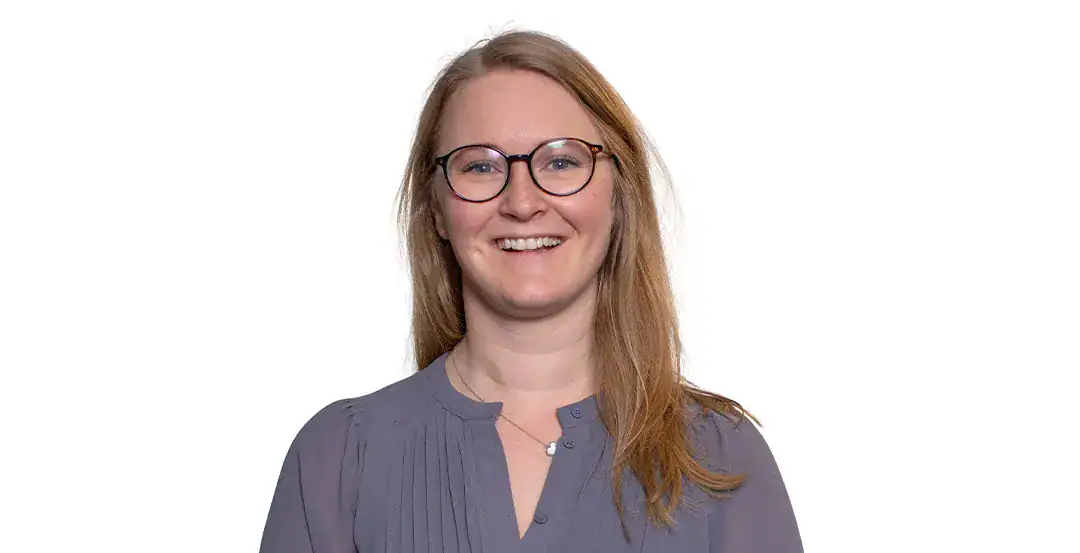


When Bethany Thomas first became an insurance underwriter 12 years ago, the London Market still “sometimes felt like a boys’ club.”
Today she believes women are better able to succeed by being their authentic selves – and that diverse teams, a resilient attitude, and Jedi mind tricks are the three keys to success as a Head of Sustainability.
Should proficiency in golf hold you back from success in insurance?
“The market was already changing when I joined,” Bethany explains, “but it was still a very social, in-the-pub, golf-games-related way of connecting with brokers and customers.”
This was a problem for her because “I’m terrible at golf, other than maybe crazy golf.”
So, what’s changed?
“I think the drinking culture has changed,” Bethany says. “Not just from a gender perspective, but also from a health perspective and in terms of what’s acceptable now in a workplace.”
More significantly, “there’s also better diversity.” Working in Allianz’s Munich and Paris offices exposed her to different cultures, while she has “always worked with really international teams… I think working in London you’re getting a very diverse set of colleagues, which is brilliant.”
The upshot of the changing face of insurance professionals and a changed culture is that “female leaders are able to be more authentic and not have to embody male traits in order to win, as perhaps they once did.”
Even though today’s industry is more diverse, there are still subtle but significant barriers to success.
As Allianz UK’s Head of Sustainability, Bethany now sits in Finance and reports to the CFO: “Finance is another really technical area, full of techie, whizzy people, but also historically has been slightly more male-led, certainly very white, certainly very middle- and upper-class. So, I think there are still challenges. We’re still underrepresented in a lot of finance or technical related roles, also from a sustainability and technical reporting perspective.”
Are there any business functions where women tend to do better?
“I’m not sure there’s anything distinct about specific areas, but it all comes back to attracting women more technical careers. And for me, so much of that goes back to having the right role models and having the right mentors in place.”
How important were role models to her in her early years? “I think I was lucky that I had some fantastic female role models,” she says.
“And I’ve always had mentors. I find mentors work best when that relationship develops organically and you find yourself a mentor, or someone takes you under their wing as a mentee. That’s where it’s really worked best for me. In fact, most of my roles usually come about through me bouncing ideas off a mentor – ‘I couldn’t do that, could I?’ ‘Oh, well, maybe I could actually’ – and someone challenging your thinking.”
Bethany is uncomfortable seeing herself as a role model, despite one of her colleagues describing her as “a great convener of people” who is particularly skilled at bringing people together from across the business to solve problems.
“I’m not sure I do anything particularly special compared to other people,” Bethany insists, before finally conceding that “one thing I’d almost like to be seen as a role model for is being bold about the opportunities I’ve taken.
“What I say to my team is, you’ve just got to seize those things. I have moved abroad. I have taken jobs that I’ve not necessarily felt equipped to do. I have taken those ambitious steps. So, if there’s anything, it’s seizing that moment. But that’s not just me – that’s come from having mentors and people around you who will encourage you to do that and challenge you on that as well.”
Bethany is more comfortable shifting the focus off herself again and talking about her powerful experiences as a reverse mentee.
“We have a brilliant reverse mentoring programme in Allianz, where senior leaders are mentored by others in the business, largely from a lived-experience perspective, by someone who’s living a different experience from yourself.”
Bethany’s reverse mentor comes from a different cultural and social background. She’s also a female trying to navigate a male-dominated area of the business. “Some of the conversations we’ve had have been the most raw, eye-opening, honest conversations that I’ve ever had in a workplace.”
I ask for an example.
“I was recruiting a new role in my team and, although we’ve got diverse recruiting practices across Allianz, I was really conscious of attracting the same type of applicants the whole time. So, I spoke to her a lot about how I could draw out the best candidates in this process, ensure people with different skills sets had a fair and equal opportunity to interview, and to make sure I was attracting a wider pool of people to the role.”
The junior colleague challenged Bethany’s assumptions.
“She said to me, ‘Do you really need five years of experience in technical reporting?’ And I’m like, well, actually, maybe not. What I want is a person who’s going to bring the right questions, who’s going to challenge the business, who’s willing to learn and willing to take on learning about a load of different topics.”
As a result of this conversation, Bethany introduced an extra step in the recruitment process – an in-person business case.
“Instead of just looking at a traditional CV and pool of experience – because what I really wanted for this role was the right attitude and willingness to learn, and I was flexible about skill set – she helped me shape a business case interview process that would help draw out a person’s attitude and learning style much more than their traditional CV experience.”
Bethany is clearly convinced of the immense value of conversations that challenge assumptions. The same goes for her sustainability team, which has a mandate to provide business insights into where the business can promote more sustainable practices. This includes questioning the status quo.
“I see our team’s role as challenging perceptions, pushing for more, pushing for a different way of doing things. And so I need people in my team who are able to do that. Not necessarily head-to-head challenge, but by asking the right questions, by providing the right insights, by scrutinising the data, by looking at things in a different way. That’s how we effectively get the business to think differently about how we might want to do things going forward.”
Is this an example of where diverse lived experience and mindsets bring a real business benefit to Allianz?
“Ultimately, we’re a business. We’re here to serve our customers, and our customers are changing. Our customers’ needs are changing. Our customers are diverse. So, we need to understand that, and we need to understand what’s going to matter to them in the future and how we can continue to be there to support them. And that comes from having diverse perspectives, looking at things in a different way.”
In other words, without diverse team members, businesses may miss what their increasingly diverse customers need. What’s more, diversity of thought – the ability to challenge accepted norms – is even more important to sustainability than to other parts of the business, Bethany argues.
Because it’s a relatively new function, sustainability has no rulebook, so there’s no seniority premium on being right. That makes the function open to different kinds of people and makes diversity of thought a necessity.
“There’s no blueprint for sustainability,” Bethany says. “So that requires us all to think in a very open way and bring that diversity of thought to puzzling out complex issues, because there are no right answers.”
She adds: “Everyone’s voice is valid, from the grad who joined the team five minutes ago to someone like me who’s been in the industry for over a decade. We could equally both come up with the answers or an interesting path to explore, because there is no set path.”
So how important is diverse talent in this context?
“We need it,” Bethany says, without hesitation. “It’s not a nice-to-have; it’s absolutely fundamental. Sustainability is about solving complex problems to live a better future, and we only do that with diversity of thought, experience, and approaches. It’s literally the only way!”
And does the discipline attract a different kind of talent? Bethany thinks that it does: “More than maybe other parts of the business, people are purpose-led, which can be tricky at times, because we are still a business at the end of the day. But people in the team are deeply passionate about what we do.”
Alongside the need for people from a variety of disciplines – from scientific research, to finance, to PR and advocacy – Bethany emphasises behaviours.
“I think we gain people who by nature are curious, who are more open, who are pretty flexible, who are quite creative, who are quite empathetic and have high EQ.”
At the same time, alongside curiosity and willingness to learn, she says there’s also a need for real resilience.
“It’s a hard career. There are a lot of knockbacks. We’re being challenged in the last couple of years unlike ever before because of global pressures around sustainability topics. But equally, you’re competing for priorities in the business. Often, you’re up against financials or other things. So, you have to be resilient. You have to take the knocks where they come, get back up and keep trying, or try it in a different way.”
One of the biggest challenges in sustainability is the need to convince sceptical stakeholders of the need for change.
“If what you’ve tried hasn’t worked, it’s a question of: has that not worked because it will never work, and actually you’re pushing against a closed door? Or did it not work because you didn’t understand their problems and challenges in the right way? Did you not come at it from the right angle? Was it the wrong time? What is the hook that you could use with that person?”
She describes times when stakeholders have agreed with what they’re trying to achieve, but the business incentives aren’t there for them to endorse it. Bethany describes reacting by reviewing data and customer feedback and coming back with a different business case that better reflects that stakeholder’s strategic priorities.
And then there’s the real secret to success. One so powerful, it put me in mind of the Jedi mind trick from Star Wars.
Bethany explains with an example: “We just won an award in conjunction with CBRE, who are our facilities manager – an award for our sustainable property strategy.”
Here, she pauses. “We’d been engaging with our property team for about two years trying to agree a consistent strategy with its own budget and tangible targets. Finally, we got things moving and achieved buy-in to what we wanted to achieve. And once we were rolling, it was our property guys up on stage collecting that award. And that’s how it should be, because they see it as ‘we’ve delivered this sustainable property strategy.’ And they have. And now we know what we can achieve together it’s something we can always keep improving – but they have ownership, it’s not ‘a sustainability thing.’”
For Bethany, that’s actually the biggest win: influencing areas of the business into delivering sustainability initiatives they see as their own. Which often means working on an initial idea with the sustainability team and then adopting it as their own.
“If we can influence our property team or our claims team to identify the opportunity and shape the opportunity, it doesn’t matter to me that my name’s not on the front of the presentation.”
In response to the question of how she gets the best out of her team, Bethany unconsciously reveals what makes others see her as a powerful role model.
She talks about how she encourages her team members to seek out mentors, the way she did, and to seek out opportunities and take risks.
“If you want it and you are motivated, there will always be an opportunity somewhere, and by and large the people of Allianz will make that happen and say yes to opportunities.”
For her, this means training and development programmes, as well as opportunities to work abroad. She’s also keen to be as open as possible with her team, to encourage them to be “very comfortable in their own skin and comfortable around each other.”
She adds: “I don’t want anyone ever to feel uncomfortable in who they are, or in what they’re thinking or doing. So, to me, it’s creating that comfort. Everyone should be able to feel comfortable in the workplace with who they are. We’ve got a way to go, I think.”
It’s also important as a leader to make time for her team to bond outside of the office.
“Actually, this week we were all joking that we’ve never tried a pumpkin spiced latte. So, we went out as a team to have a pumpkin spiced latte together and try it. We all hated it. It was awful! But we spent an hour chatting as a team, and I think that’s invaluable.”
So, be authentic, seek out opportunities, be curious and open, and have the confidence to challenge accepted norms. It certainly seems to have worked for Bethany in her career.
 https://www.lgbtinsurancenetwork.com/wp-content/uploads/2021/03/Link-LGBTQ-Insurance-Network-logo-web-white.png
0
0
fletch
https://www.lgbtinsurancenetwork.com/wp-content/uploads/2021/03/Link-LGBTQ-Insurance-Network-logo-web-white.png
fletch2026-11-09 06:00:492026-11-06 16:46:29Allianz UK’s Head of Sustainability: Diversity Isn’t a Nice to Have. It’s the Only Way
 https://www.lgbtinsurancenetwork.com/wp-content/uploads/2026/10/MS-Amlin-Gemma-Lines-Featured-Image.webp
1080
1080
fletch
https://www.lgbtinsurancenetwork.com/wp-content/uploads/2021/03/Link-LGBTQ-Insurance-Network-logo-web-white.png
fletch2026-10-27 09:15:462026-10-27 09:15:46MS Amlin’s Chief People Officer on why hiring for diversity is the (relatively) easy part
 https://www.lgbtinsurancenetwork.com/wp-content/uploads/2026/10/Danilo-Raponi-Featured-image.webp
1080
1080
fletch
https://www.lgbtinsurancenetwork.com/wp-content/uploads/2021/03/Link-LGBTQ-Insurance-Network-logo-web-white.png
fletch2026-10-22 08:51:162026-10-22 08:51:16Danilo Raponi on building insurance for people the market typically overlooks
 https://www.lgbtinsurancenetwork.com/wp-content/uploads/2026/09/Louis-Stevenson-Featured.webp
1080
1080
fletch
https://www.lgbtinsurancenetwork.com/wp-content/uploads/2021/03/Link-LGBTQ-Insurance-Network-logo-web-white.png
fletch2026-09-29 06:00:392026-10-22 08:52:38Progress Has Not Removed the Need for Visibility
https://www.lgbtinsurancenetwork.com/wp-content/uploads/2026/09/Daniel-Perez-Featured.webp
1080
1080
fletch
https://www.lgbtinsurancenetwork.com/wp-content/uploads/2021/03/Link-LGBTQ-Insurance-Network-logo-web-white.png
fletch2026-09-23 06:00:052026-10-22 08:52:21This is How We Build a Stronger, More Sustainable Workforce
Click below to apply to take part in this diversity article series and be interviewed yourself…
Diversity & Innovation: Perspectives from insurance industry leaders at Insurtech Insights Europe, 2026
If you enjoyed this article, please consider joining Link for more great insights and events from the LGBTQ+ community


