“Less Diversity, More Inclusion”
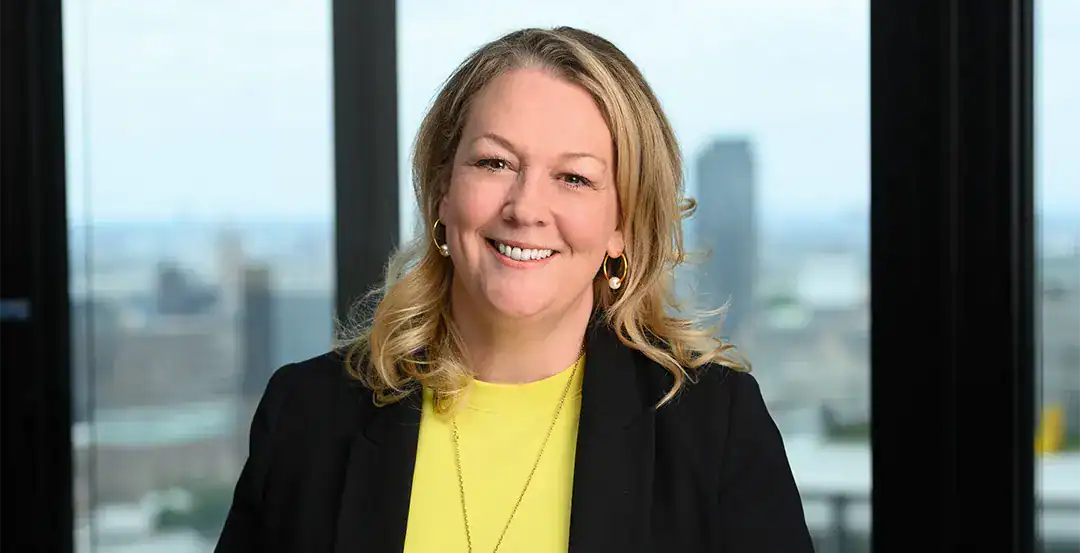


Gemma Lines doesn’t need the statistics to tell her that teams of diverse thinkers make better decisions. What’s more interesting to her is how to build a company that listens to diverse perspectives, that holds people to account when they fail to do so and realise the broader business benefits of genuine inclusion.
In this interview, she talks candidly about the lever that helped return MS Amlin to profit, why Lloyd’s is more British than most major London business sectors, and the one policy her own managers still grumble about over a glass of wine.
Gemma Lines came into insurance from investment banking and a career that began in marketing. Asked how she makes the case for diversity, she cuts straight to diversity of thought.
“I’ve always won over diversity sceptics by challenging people to think about it more in terms of cognitive diversity,” she says.
“If you have people who think differently from one another, you will end up with different perspectives on the growth you’re trying to engender, on the problems you’re trying to solve. And when you have groupthink or majority decision-making, you don’t get to the best outcomes.”
Protected characteristics do matter, because they are a reliable indicator of different thinking. “If you encourage diversity from a protected characteristic perspective, you should facilitate cognitive diversity – and therefore you should have a room full of people better able to drive performance.”
But hiring difference, she is clear, achieves nothing by itself. “For me it’s actually less diversity and more inclusion. It’s important to have diversity because diversity brings cognitive variance. But it’s all for naught if you’re not interested in listening to what people have got to say.”
She’s also alert to quieter forms of exclusion: “I think there’s a sort of endemic ageism creeping in too. We’ve got to be mindful of all kinds of biases we have. And when people do talk, you have to listen. You’ve got to listen to have your mind changed – otherwise what’s the point?”
Listening to its staff is one of the ways MS Amlin has improved its financial fortunes in recent years, Gemma believes.
“MS Amlin had come from quite a low ebb from a financial performance perspective,” Gemma says. “We’ve returned ourselves to profit, and some of that came from a very concerted effort around our culture. In a way, it speaks to the point around inclusion. One of the things we found that wasn’t helping was that people didn’t speak out. Well, why not? That tells you something, right?”
Her answer is one she is “almost embarrassed to share,” because it’s so unglamorous: behaviour now counts for as much as results in performance reviews.
“We brought in equal measurement for the how and the what. You are employed to do X and you must deliver it, but how you deliver it, what kind of human you are, how you behave, is equally important. It’s very well understood in this organisation that you will be measured on both.”
And there are consequences. “You can’t be a rainmaker in this organisation, or a brilliant delivery agent, and also behave badly – you can’t do that. People do get called out over peer performance, and they are rated low and financially penalised if their how is no good.”
She’s not claiming perfection – “I’m not saying we have this right” – but she is confident of the pattern. “I can tell you that plenty of people have been calibrated down because their how wasn’t good enough.”
The same principle – listen, then act – runs through the rest of what has changed at MS Amlin since Gemma arrived in 2019. For example, the company’s engagement survey has led to tangible change, she says.
The company can analyse its survey by demographic, to see what different groups are actually saying. “That’s very powerful if you can say: you said this, and we did that. We’ve directly changed our benefits on the back of it.”
Those benefits now include a transitioning policy and six months’ leave on full pay for both partners – “same sex, adoption, surrogacy, and so on. These are modern practices that didn’t exist here five years ago. I’m not claiming MS Amlin went first, just that we were pretty near the front of the pack.”
Women in MS Amlin leadership have gone from 8% in 2020 to 44% today, “not through targets or menace, but by asking: why don’t you work with me to try and level the playing field and see what comes out.”
Which is not to say the listening reaches everywhere yet. Some voices are simply quieter than others. Of the company’s five employee networks, the LGBTQ+ group Opening Out is “the most mature – it’s got the most brand recognition, the events are regular and well attended.” A new disability network “is at initial discussion stage, and nowhere near as mature, but we know that it will grow in influence”
Some policies are heard but not yet accepted. Equal paternity leave “took a lot of embedding, and I’m still not sure everybody is on board. I know for sure there are men who are only here because of that policy. And yet there are managers who are like, ‘Oh my goodness, I’ve got to get a backfill for two sets of three months.’ But it’ll be like maternity leave – we’ll all get over it.”
Some blind spots the market doesn’t even see as blind spots. “The most striking thing to me was how British it is. That absolutely blew my mind, having come from investment banking, which was much more international. I remember thinking this feels different. I ran an event myself on Friday and everybody except for one person was British.”
And some exclusion happens after hours. Gemma wrote her master’s thesis on the role informal networks play in promotion, and her conclusion was blunt. They “always favour the majority demographic. You play golf, or you don’t. You drink or you don’t drink. You’re not the primary carer so you can stay after work, or you have to go home. Whatever the insider and outsider groups are, they dominate.
“It would be such a shame to lose the relationship-driven piece of the Lloyd’s market. But we’re disingenuous if we don’t recognise that it perpetuates demographics that are the majority.”
 https://www.lgbtinsurancenetwork.com/wp-content/uploads/2026/10/MS-Amlin-Gemma-Lines-Featured-Image.webp
1080
1080
fletch
https://www.lgbtinsurancenetwork.com/wp-content/uploads/2021/03/Link-LGBTQ-Insurance-Network-logo-web-white.png
fletch2026-10-27 09:15:462026-10-27 09:15:46MS Amlin’s Chief People Officer on why hiring for diversity is the (relatively) easy part
 https://www.lgbtinsurancenetwork.com/wp-content/uploads/2026/10/Danilo-Raponi-Featured-image.webp
1080
1080
fletch
https://www.lgbtinsurancenetwork.com/wp-content/uploads/2021/03/Link-LGBTQ-Insurance-Network-logo-web-white.png
fletch2026-10-22 08:51:162026-10-22 08:51:16Danilo Raponi on building insurance for people the market typically overlooks
 https://www.lgbtinsurancenetwork.com/wp-content/uploads/2026/09/Louis-Stevenson-Featured.webp
1080
1080
fletch
https://www.lgbtinsurancenetwork.com/wp-content/uploads/2021/03/Link-LGBTQ-Insurance-Network-logo-web-white.png
fletch2026-09-29 06:00:392026-10-22 08:52:38Progress Has Not Removed the Need for Visibility
 https://www.lgbtinsurancenetwork.com/wp-content/uploads/2026/09/Daniel-Perez-Featured.webp
1080
1080
fletch
https://www.lgbtinsurancenetwork.com/wp-content/uploads/2021/03/Link-LGBTQ-Insurance-Network-logo-web-white.png
fletch2026-09-23 06:00:052026-10-22 08:52:21This is How We Build a Stronger, More Sustainable Workforce
Click below to apply to take part in this diversity article series and be interviewed yourself…
Diversity & Innovation: Perspectives from insurance industry leaders at Insurtech Insights Europe, 2026
If you enjoyed this article, please consider joining Link for more great insights and events from the LGBTQ+ community


