“Are We Fit to Have Those People?”
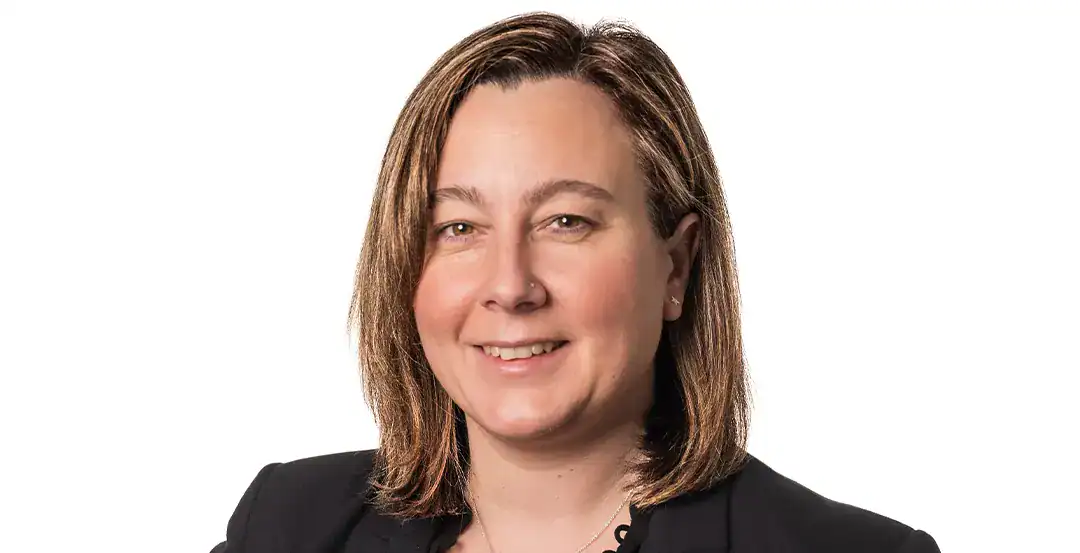


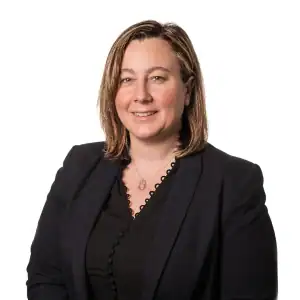
Julie Adams-Moore has a female partner, a daughter with complex medical needs, and no university degree. None of it stopped her becoming CFO – partly because, she says, she worked somewhere that never made any of these things an obstacle. The question she puts to the rest of the industry is whether it can say the same.
One of Julie’s twin daughters has a chromosome disorder and complex health needs. “When she was born, we were told she might never walk or talk. She does both of those things. In fact, she doesn’t shut up!” Julie says with a smile.
That said, Julie has to attend a lot of medical appointments – and she has been to every one while rising from finance director to CFO.
“I’ve always been supported. I’ve worked in this group the whole time that I’ve been a parent, and I’ve always been able to take time off for medical appointments, to be a parent to her and her siblings, as well as not just doing the role that I’m currently in but progressing to that role throughout that time.”
Although she is a deliberate LGBTQ+ role model in the industry, this getting to the top without having to sacrifice her parenting or family responsibilities may be an even more powerful example to other women and LGBTQ+ people.
“It’s hard work, but it is achievable. People get to be both things. You shouldn’t have to choose, and making that visible is really important,” she says.
Can you measure what that kind of culture is worth?
“Being in finance, I would like to be able to measure it, but sadly that’s not always the case.” Julie points to proxies – low turnover, engagement scores on whether people feel included and empowered to speak – but the benefits are “intangible and indirect.”
Her team is the example: more diverse than it was, more efficient, better value, “and you couldn’t put your finger on any one particular thing that’s done that.”
So the CFO’s answer is the one you wouldn’t expect from a CFO: “Contrary to popular belief, even in finance, sometimes we just go on gut feel. If your instinct tells you it’s the right thing to do, then it probably is. Maybe we can’t measure it, but it doesn’t mean we shouldn’t do it.”
“I didn’t have a privileged upbringing at all,” Julie says of her background. “We didn’t have a lot of money. I moved around quite a lot as a child – I’d been to three separate primary schools by the time I was seven. I didn’t follow a traditional university route to become a CFO. And on top of that, I’m gay.”
She trained at PwC through an apprenticeship – “brilliant infrastructure for training, development and support, but even then you still felt slightly different to the rest of the people training alongside you, who’d gone to red-brick universities.”
She moved on to PwC’s audit function, then to high-growth private-equity-backed firms in whatever industry came along – clinical research, domain-name management – “I focused on improving my finance skills. I didn’t focus on the industry.”
That makes 25 years in finance, 11 of them now in insurance. “If it just gives people that little insight that there isn’t just one way to get to a certain place – if it means one person shows up at work and feels a bit more comfortable – then I’ve done my job.”
Her larger point is that the insurance industry could benefit from taking her own CV as a model rather than an exception. When it comes to diverse talent, insurance firms can often be their own worst enemy.
“Quite often you look at a job spec and it’ll say ‘experience in insurance preferred’ or ‘essential.’ It might help you get off the ground a bit quicker, but actually you can get some really strong people who have never worked in insurance before,” she says.
“And despite what many people in insurance like to tell you, it’s not that complex. It’s a supply chain. Yes, they’re going to have to learn the right words for the right part of the transaction, but largely it’s not that difficult.”
Being open-minded about previous experience “can make a massive difference. Otherwise, you’re constantly just recruiting from the same pool of people.”
At DUAL UK, the chief actuary, chief underwriting officer, chief people officer and chief marketing officer are all women. Julie’s view on women in insurance is that technical functions may offer a clearer route to senior leadership, because they have “quite defined training and career paths,” where market-facing roles are often trickier.
“When you’re facing into the broker market, a lot of them were smaller brokers founded largely by men, and there’s still quite a lot of that. We’ve still got a bit of the legacy of the middle-aged man.”
It isn’t that firms fear how brokers will react to women. As Julie says, “The distribution team DUAL built 18 months ago has plenty of women, and “no one’s frightened to have women out in the market leading.” This is an example of inherited structure, and “even if you’ve got a strategy or a target, it’s not going to get you all the way. You need the whole industry to evolve.”
Which brings her to the conversation everyone is having about social mobility.
“Right now, the industry conversation is: how do we get people from different backgrounds into insurance? And my question back is, why would they want to come? Do you just assume that they want to be here? Are we fit to have those people in our organisation?”
Bringing them in isn’t enough, Julie adds: “We need to be prepared to support them and have people who understand their journey, and I think that’s possibly still a bit lacking.”
Being a beneficiary of social mobility herself, Julie’s view here carries particular weight. Can the industry actually support more people from more varied socio-economic and cultural backgrounds? Does it really want to?
“Half the solution is asking the right question. I’m a bit like a dog with a bone. I know I’ve asked this before, but I’m going to ask it again: have we considered this? If all of us keep asking questions, at least we’re holding ourselves to account.”
Julie is clear that she wouldn’t want to work in a place “that doesn’t want me to be 100% of who I am.”
She never decided to come out as gay at work. “It’s a bit like anything: you start talking about your family, or your partner, or your holidays. As people get to know you, you decide what you want to share.”
Being open about one’s sexuality can be a source of anxiety for many, but for Julie, the benefits outweigh this: “If people don’t feel they know you very well, it’s quite hard to trust you.”
Coming out also converted her from a self-confessed “people-pleaser” into someone with a much stronger sense of self-worth. “If you don’t like me because of who I love, then I’m not really interested.”
She remembers one slight wobble early on when she mentioned her girlfriend, and a colleague said, “Do you mean your boyfriend?”
“No,” Julie responded. “I think I’d know the difference!”
The colleague who’d asked the question was mortified at his faux pas, but it didn’t come from a bad place. “They’d just not had that experience,” Julie says. “And that goes back to why diversity is so important – because it doesn’t always look the same.”
This commitment to diversity is one reason why Julie co-chairs the Howden LGBTQ+ network. She also wanted to provide visible senior LGBTQ+ leadership across the wider group.
In terms of the ERG’s impact, she’s proudest of some of the simpler achievements – Howden’s annual Pride drag bingo, for example, which is a staple in the industry’s LGBTQ+ calendar at this point. “It keeps the group visible, it raises money for charity, and everyone has a good time, and you can’t argue with that.”
She also points to a coffee and cake drop-in in October that brought in five new group members from across the Howden group. “It doesn’t sound like a huge number, but I think that’s actually really important. Sometimes you don’t want a big event. You just want to pop in and say hi and have a slice of Victoria sponge with your skinny flat white.”
She admits this is “a difficult thing to do off the side of your desk.” She adds: “I worry at times that I can’t give this role enough focus. Perhaps I should be an exec sponsor instead.” Either way, she thinks it’s important to show up and be seen.
With global wars and political turbulence, Julie admits to being worried about what the future holds for her children, and to reflecting on the huge personal growth she’s been through as a parent.
Her daughter was non-verbal when she was younger, “so she would communicate by making people laugh. She can speak now, but she can still hold a room just by making them laugh. And you think, there must be a place for that somewhere in the workplace. What are we missing by the things that we’re not currently considering?”
That’s what inclusion comes down to. Finding places where more people can fit, so they can contribute their unique talents.
“I didn’t have a role model that looked like me when I started, so I worked hard to fill what I saw as a gap. To the woman in junior finance roles she says, “You are the future of finance. Don’t be limited by what you can see and feel now. Think about what you could achieve and what value you could add, and focus on that.”
 https://www.lgbtinsurancenetwork.com/wp-content/uploads/2026/11/Julie-Adams-Moore-Duel-UK-featured.webp
1080
1080
fletch
https://www.lgbtinsurancenetwork.com/wp-content/uploads/2021/03/Link-LGBTQ-Insurance-Network-logo-web-white.png
fletch2026-11-11 14:20:562026-11-11 14:20:56Are We Fit to Have Those People?
 https://www.lgbtinsurancenetwork.com/wp-content/uploads/2026/11/Scor-Business-Solutions-CEO-Claire-McDonald-Featured.webp
1080
1080
fletch
https://www.lgbtinsurancenetwork.com/wp-content/uploads/2021/03/Link-LGBTQ-Insurance-Network-logo-web-white.png
fletch2026-11-10 06:00:052026-11-10 15:22:15“I’m Glad I Didn’t Start in the City!”
 https://www.lgbtinsurancenetwork.com/wp-content/uploads/2026/11/Bethany-Thomas-Allianz-Featured.webp
1080
1080
fletch
https://www.lgbtinsurancenetwork.com/wp-content/uploads/2021/03/Link-LGBTQ-Insurance-Network-logo-web-white.png
fletch2026-11-09 06:00:492026-11-09 16:31:49Allianz UK’s Head of Sustainability: Diversity Isn’t a Nice to Have. It’s the Only Way
 https://www.lgbtinsurancenetwork.com/wp-content/uploads/2026/10/MS-Amlin-Gemma-Lines-Featured-Image.webp
1080
1080
fletch
https://www.lgbtinsurancenetwork.com/wp-content/uploads/2021/03/Link-LGBTQ-Insurance-Network-logo-web-white.png
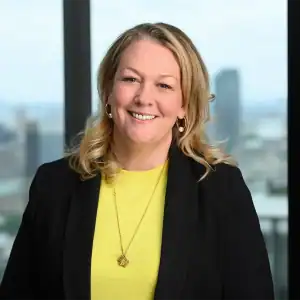
fletch2026-10-27 09:15:462026-10-27 09:15:46MS Amlin’s Chief People Officer on why hiring for diversity is the (relatively) easy part
 https://www.lgbtinsurancenetwork.com/wp-content/uploads/2026/10/Danilo-Raponi-Featured-image.webp
1080
1080
fletch
https://www.lgbtinsurancenetwork.com/wp-content/uploads/2021/03/Link-LGBTQ-Insurance-Network-logo-web-white.png
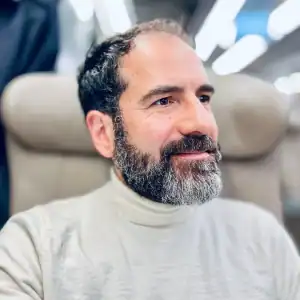
fletch2026-10-22 08:51:162026-10-22 08:51:16Danilo Raponi on building insurance for people the market typically overlooks
 https://www.lgbtinsurancenetwork.com/wp-content/uploads/2026/09/Louis-Stevenson-Featured.webp
1080
1080
fletch
https://www.lgbtinsurancenetwork.com/wp-content/uploads/2021/03/Link-LGBTQ-Insurance-Network-logo-web-white.png
fletch2026-09-29 06:00:392026-10-22 08:52:38Progress Has Not Removed the Need for Visibility
 https://www.lgbtinsurancenetwork.com/wp-content/uploads/2026/09/Daniel-Perez-Featured.webp
1080
1080
fletch
https://www.lgbtinsurancenetwork.com/wp-content/uploads/2021/03/Link-LGBTQ-Insurance-Network-logo-web-white.png
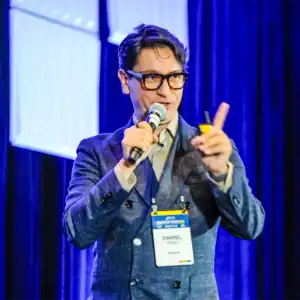
fletch2026-09-23 06:00:052026-10-22 08:52:21This is How We Build a Stronger, More Sustainable Workforce
Click below to apply to take part in this diversity article series and be interviewed yourself…
Diversity & Innovation: Perspectives from insurance industry leaders at Insurtech Insights Europe, 2026
If you enjoyed this article, please consider joining Link for more great insights and events from the LGBTQ+ community


