“For Years I Feared How People Would React if They Knew”
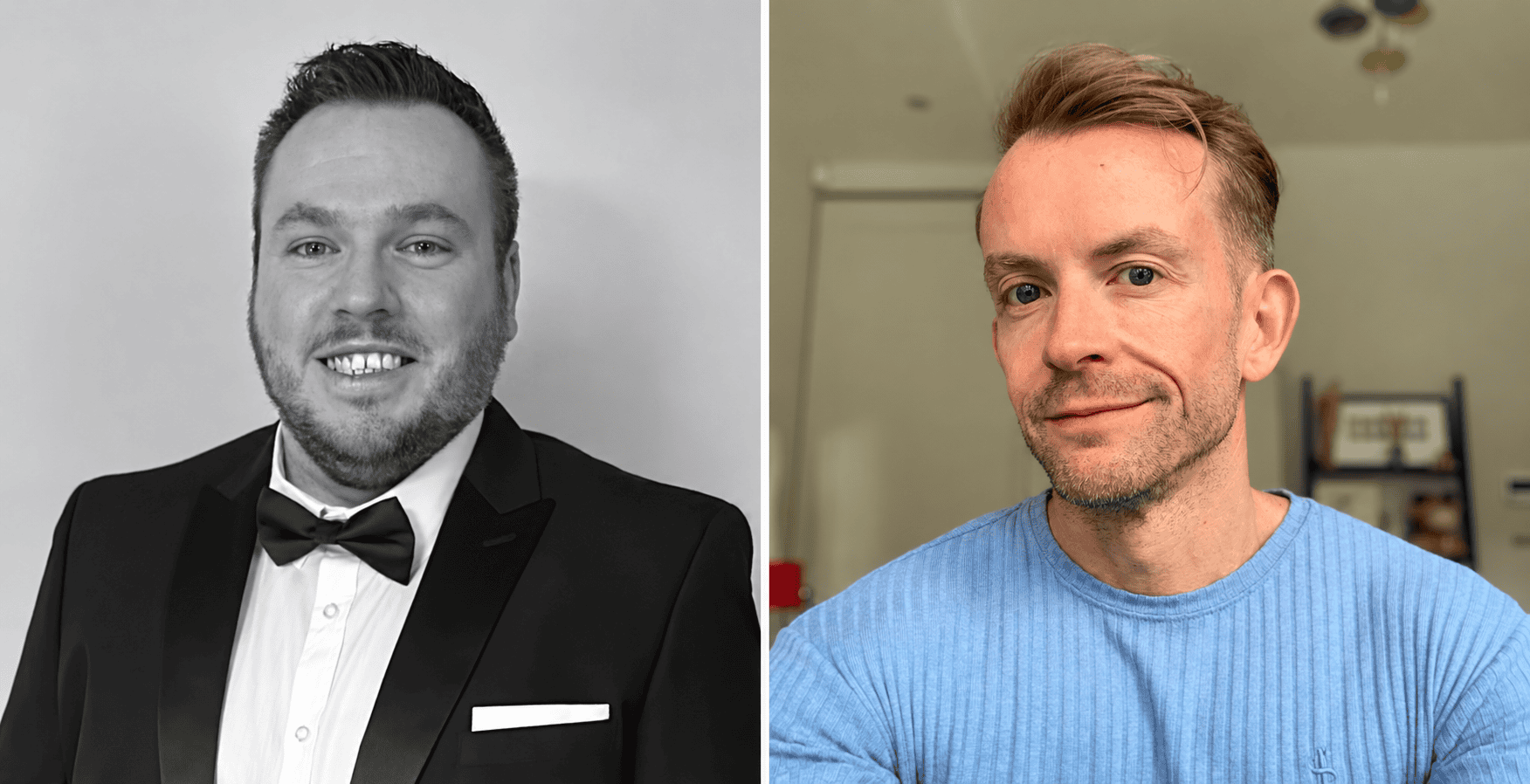


Drew Hutchinson has been in insurance since 2003 and is now a Project Manager at Pen Underwriting, a specialist London-based underwriting arm within Gallagher’s global operation. Mark Osborne is a Training Specialist at Gallagher in Belfast, with 14 years in the industry.
When Mark joined Gallagher four years ago, he signed up to the LGBTQ+ network during induction. The first person he really connected with there was Drew, who was running it. For this interview celebrating Coming Out Day, each told us their stories separately.
What difference did a nine-year age gap make?
Were their experiences in England and Northern Ireland markedly different?
What advice do they have for LGBTQ+ people today on how to navigate “coming out”?
Drew’s been in the industry for 23 years. For him, throughout that time, “there’s not been one defining moment where I consciously decided to come out at work, and broadly speaking I don’t try to hide who I am from other people.”
Despite the nine-year professional age gap, it’s a similar story for Mark. For him, coming out at work “was never really about making a big announcement. Once I had come out in my personal life, I was open about who I was from day one in every workplace I joined.”
This sounds positive, but both men are frank about the struggles they faced and continue to face with being open.
“As in any life situation, whether work or more broadly, it’s a near-continuous process where any new organisation, team, colleague, project stakeholder, networking event, social event (the list goes on) is accompanied with a risk assessment. Am I safe here? Can I be myself? Can I let my guard down? It’s not even a consciously conducted process; it’s an automatic and continuous scanning,” says Drew.
“I pretty much presume that people will pick up on the involuntary clues I dish out about my sexuality, although I have been wrong about that on more than a few occasions,” he adds.
What starts as a comfortable and safe-feeling conversation can quickly turn into a “forced” coming out when well-meaning colleagues ask with interest whether he has a partner, only for them to misgender the partner by asking “what does she do?”
For Mark, the biggest struggle was internal: “I grew up in a fairly conservative environment where, historically, being gay was seen as wrong. The hardest part wasn’t work. It was accepting myself.”
A shooting of a gay police officer in a Belfast gay bar left the young Mark scared of the potential consequences of coming out for years. Thankfully, he finds his colleagues, clients, and managers have all been supportive from the moment he entered the industry.
“Of course, everyone will have occasional awkward moments or assumptions made about them, but the overwhelming majority of my experiences have been positive,” he says.
Inappropriate behaviour – and even bullying – remain an issue for LGBTQ+ people in the workplace. In Link’s 2025 UK Insurance Industry survey, 24% of LGBTQ+ respondents said they had experienced or observed inappropriate behaviour towards LGBTQ+ colleagues in their workplace in the last 12 months. That’s double the 12.6% recorded in the 2021 survey.
How has this impacted coming out? Drew remembers more examples of inappropriate behaviour than Mark.
“Back in around 2007 I remember my manager cautioning me not to make it widely known about my sexuality because she didn’t want it to limit my career opportunities in our organisation. (Thanks, I guess?),” he says.
But there have been great examples of unexpected allyship too.
“In a previous role I was in a meeting with a very senior member of staff who in that meeting in front of me and my peers made what I would consider to be a wholly inappropriate and homophobic joke,” Drew says.
“It made me feel uncomfortable and unwelcome but having not been long with the company I filed it away as being just another ‘one of those things’ and tried not to let it bother me. The part I found surprising wasn’t so much that this happened, rather the conversation I had with my manager the following day, who had also been in the meeting and who reported directly to the person who made the joke. Without prompting, they relayed that they had addressed it privately with their manager and apologised to me on their behalf.”
Real impactful allyship is important to both Drew and Mark – “Sometimes it’s about standing up for colleagues, challenging stereotypes, avoiding assumptions and creating an environment where people know they’ve got support if they need it,” as Mark says, echoing Drew’s real-life example.
Yet even more important is finding role models and colleagues you vibe with – as Mark did when he met Drew.
“For me personally, having access to LGBTQ+ networks and role models has made a huge difference,” he says. “Being able to connect with people like Drew and other colleagues across Gallagher helped me see that I wasn’t alone and that there were others who understood some of the challenges LGBTQ+ people can face.”
Drew agrees about the power of networks: “I have seen huge benefit to providing employee resource groups attached to inclusion and diversity principles, both those that are run internally and those such as Link which support the industry as a whole. At its most basic level, having a network of people with shared life experiences who can help a new joiner navigate the organisation or industry is often underestimated for its impact.
“When I was running the LGBTQ+ and Allies group for Gallagher UK I was often amazed by how many people got in touch, or joined our sub-groups, looking for support. And how many wanted to be involved in the group itself too. Leading that group was an absolute career highlight and something I look back on very fondly.”
For Mark, the positive reaction he received when being himself helped boost his confidence.
“I know that being yourself can feel easier said than done, and every person’s circumstances are different,” he says. “But I would encourage anyone struggling with this to remember that who you are is something to be proud of, not something to hide. The industry is stronger, more innovative and more welcoming when people can bring their whole selves to work.”
As Drew puts it: “There is no rush, no standard to meet, no right or wrong – other than your own standard and what is right or wrong for you right now, at this moment. Explore any internal resource groups and if it feels right join them and get involved.”
“If you need support, reach out,” Mark adds. “You might be surprised by just how many people are ready to stand beside you.”
 https://www.lgbtinsurancenetwork.com/wp-content/uploads/2026/10/6-Maisie-McCarthy-and-Laurence-Peck-Featured.png
1254
1254
fletch
https://www.lgbtinsurancenetwork.com/wp-content/uploads/2021/03/Link-LGBTQ-Insurance-Network-logo-web-white.png
fletch2026-10-02 08:59:082026-10-02 12:22:12Once That Gets Posted, That’s It Now…
https://www.lgbtinsurancenetwork.com/wp-content/uploads/2026/10/6-Maisie-McCarthy-and-Laurence-Peck-Featured.png
1254
1254
fletch
https://www.lgbtinsurancenetwork.com/wp-content/uploads/2021/03/Link-LGBTQ-Insurance-Network-logo-web-white.png
fletch2026-10-02 08:59:082026-10-02 12:22:12Once That Gets Posted, That’s It Now… https://www.lgbtinsurancenetwork.com/wp-content/uploads/2026/10/5-Dr-Keshier-Randolph-and-Ryan-Suby-Featured.png
1254
1254
fletch
https://www.lgbtinsurancenetwork.com/wp-content/uploads/2021/03/Link-LGBTQ-Insurance-Network-logo-web-white.png
fletch2026-10-02 08:50:502026-10-02 12:21:12You Don’t Need the World’s Permission to Be Who God Created You to Be
https://www.lgbtinsurancenetwork.com/wp-content/uploads/2026/10/5-Dr-Keshier-Randolph-and-Ryan-Suby-Featured.png
1254
1254
fletch
https://www.lgbtinsurancenetwork.com/wp-content/uploads/2021/03/Link-LGBTQ-Insurance-Network-logo-web-white.png
fletch2026-10-02 08:50:502026-10-02 12:21:12You Don’t Need the World’s Permission to Be Who God Created You to Be https://www.lgbtinsurancenetwork.com/wp-content/uploads/2026/10/4.-Sean-Bracebridge.webp
1080
1080
fletch
https://www.lgbtinsurancenetwork.com/wp-content/uploads/2021/03/Link-LGBTQ-Insurance-Network-logo-web-white.png
fletch2026-10-02 08:49:292026-10-02 12:19:42I’ve Never Really Come Out
https://www.lgbtinsurancenetwork.com/wp-content/uploads/2026/10/4.-Sean-Bracebridge.webp
1080
1080
fletch
https://www.lgbtinsurancenetwork.com/wp-content/uploads/2021/03/Link-LGBTQ-Insurance-Network-logo-web-white.png
fletch2026-10-02 08:49:292026-10-02 12:19:42I’ve Never Really Come Out https://www.lgbtinsurancenetwork.com/wp-content/uploads/2026/10/3-Pedro-Chamorro-Llanc-and-Steve-Bayless-Featured.png
1254
1254
fletch
https://www.lgbtinsurancenetwork.com/wp-content/uploads/2021/03/Link-LGBTQ-Insurance-Network-logo-web-white.png
fletch2026-10-02 08:48:312026-10-02 12:20:18Seeing Other People Being Themselves Made a Big Difference
https://www.lgbtinsurancenetwork.com/wp-content/uploads/2026/10/3-Pedro-Chamorro-Llanc-and-Steve-Bayless-Featured.png
1254
1254
fletch
https://www.lgbtinsurancenetwork.com/wp-content/uploads/2021/03/Link-LGBTQ-Insurance-Network-logo-web-white.png
fletch2026-10-02 08:48:312026-10-02 12:20:18Seeing Other People Being Themselves Made a Big Difference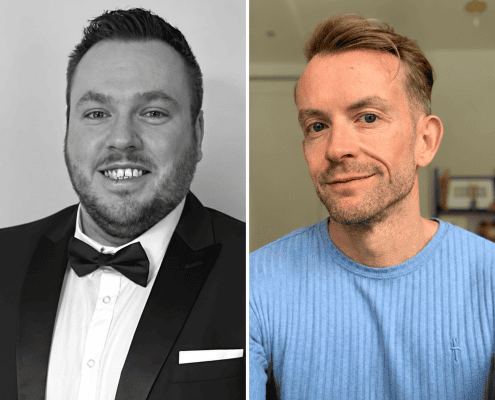 https://www.lgbtinsurancenetwork.com/wp-content/uploads/2026/10/2-Drew-Hutchinson-and-Mark-Osborne-Featured.png
1254
1254
fletch
https://www.lgbtinsurancenetwork.com/wp-content/uploads/2021/03/Link-LGBTQ-Insurance-Network-logo-web-white.png
fletch2026-10-02 08:47:322026-10-02 12:23:16For Years I Feared How People Would React if They Knew
https://www.lgbtinsurancenetwork.com/wp-content/uploads/2026/10/2-Drew-Hutchinson-and-Mark-Osborne-Featured.png
1254
1254
fletch
https://www.lgbtinsurancenetwork.com/wp-content/uploads/2021/03/Link-LGBTQ-Insurance-Network-logo-web-white.png
fletch2026-10-02 08:47:322026-10-02 12:23:16For Years I Feared How People Would React if They Knew https://www.lgbtinsurancenetwork.com/wp-content/uploads/2026/10/1-Vanessa-Horne-and-Geoff-Lealan-Featured.webp
1080
1080
fletch
https://www.lgbtinsurancenetwork.com/wp-content/uploads/2021/03/Link-LGBTQ-Insurance-Network-logo-web-white.png
fletch2026-10-02 08:45:162026-10-02 12:15:41You’ll Know When You’re Ready
https://www.lgbtinsurancenetwork.com/wp-content/uploads/2026/10/1-Vanessa-Horne-and-Geoff-Lealan-Featured.webp
1080
1080
fletch
https://www.lgbtinsurancenetwork.com/wp-content/uploads/2021/03/Link-LGBTQ-Insurance-Network-logo-web-white.png
fletch2026-10-02 08:45:162026-10-02 12:15:41You’ll Know When You’re ReadyIf you enjoyed this article, please consider joining Link for more great insights and events from the LGBTQ+ community


 Seeing Other People Being Themselves Made a Big Difference