“If I Felt Completely Comfortable Being Myself, I’d Be More Visibly Queer”
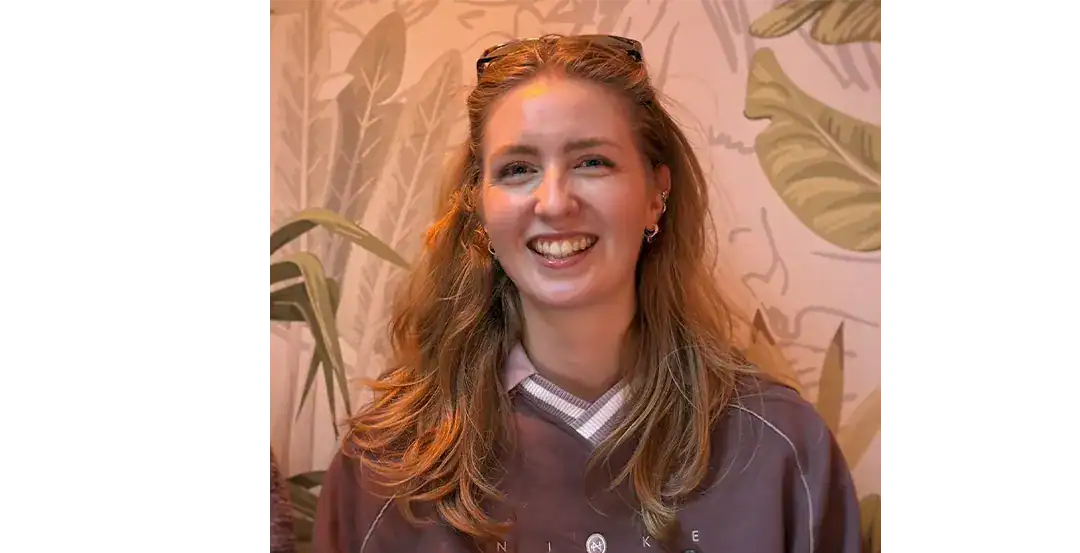


She came out at 18 and has never had a problem being open about it, per se. But a decade on, in an industry she calls “a bit of a boys’ club”, there’s still a flicker of hesitation every time. And the harder barriers, she says, are the subtle ones.
In this interview, Poppy explores why coming out at work can still be so hard, even when you’re open in your personal life and when you’ve never experienced any clearly negative reactions.
“I do think it’s valid to fear that coming out could affect your career,” says Poppy. “People say you don’t need to worry, but you’re relying on other people to regularly challenge their own biases, and as a human race, myself included, we don’t do that well enough.”
She adds that attitudes around sexual identity are not helping. “There’s been a right-wing shift – transphobia, misogyny, homophobia rearing up again, companies quietly axing DEI initiatives. It’s bigger than the workplace, but you bring it into work with you.”
At the same time, many of the barriers to feeling comfortable bringing one’s whole self to work are likely the result of industry systems that have evolved over decades. “People are more homogenous and like to present in a certain way [in insurance], and I think there’s a reason for that: a lot of the industry is based on relationships, and your career depends on your reputation,” Poppy says.
“Institutionally, if the systems are created by the majority, then yes, they hold you back. Most of the people in my team are men. The vast majority around me are cisgender and straight, with a huge skew towards white people. Even for a newer company like mine, it’s a massive issue.”
Poppy is keen to emphasise that her company is accepting of her sexual identity. More than that, she’s never had an issue being open within the insurance industry – though she accepts that may have been partly luck.
“My first line manager was a gay man. I’m not sure how it came out that we were both gay, but it didn’t take long. I remember him taking me aside and just having a little giggle about it, and feeling very validated by that. He told me about the LGBTQ+ network in that company and said he’d come to events with me. It was a safe space without me having to make any kind of statement, and from then on I knew I had him as my backer.”
Another interesting point she raises is that when she was first coming out to work colleagues, she had a partner, “which made me more open – conversations with colleagues about partners make it a lot easier to come out. When you’re single it’s different.”
And this brings us to the first of the more subtle pressures on LGBTQ+ people at work.
“Heteronormativity is so prevalent, and it comes with assumptions that queer people just don’t fit into. So you do have to come out repeatedly. It’s never been something I’ve had any particular issue doing, and as you get older you feel increasingly comfortable in who you are.”
But there’s always a slight hesitation, she explains. “A flicker of anxiety, a learned instinct from when you’ve had unpleasant experiences. A tactical instinct about who you give this information to. It’s an extra burden. And it’s so fundamental to who you are. To not be able to acknowledge that in a place where you’re spending so much of your time is quite a burden.”
Another subtle barrier is “not having a place where you can properly unmask and not be expected to explain yourself. Even in spaces that are genuinely supportive, if they’re predominantly cis and straight, there’s always going to be some level of discomfort for queer people, because by default we’re on the outside of that.”
One of the surprising upsides to being openly LGBTQ+ at work is the way colleagues can open up to you, Poppy thinks: “Being open about my sexuality actually fosters more authenticity with colleagues. When you give a little bit of yourself, people tend to respond with that as well.”
Yet the subtle pressures remain – thanks in large part to thousands of years of social conditioning.
“Discomfort shows up in subtle, heteronormative ways. The unspoken message can be: it’s fine that you’re a lesbian, as long as you look like this straight dynamic that we always have.”
She pauses, then adds: “People still have stereotypes of what a lesbian looks like, and when you don’t meet them, or you step outside gender roles and norms, you see a little moment where people go off somewhere else. So even if people are outwardly very accepting, there’s always an element of: do they actually see you as an equal?”
This is perhaps in part why, despite coming out a decade ago, Poppy only recently made peace with the word “lesbian”.
“There’s a lot of stigma around that word, and I often hear women identify as gay instead,” she says. “To me it’s the same thing, but there’s a reluctance to use it. For me it was imperative that I reclaimed it, because there should be no shame in it. This is something I am, and I feel very proud of it. We’re a brilliant, beautiful group of people. It was a journey, though: initially I’d call myself gay, and it’s only in the last few years I’ve started using lesbian.”
For Poppy, much of this discomfort with identifying as lesbian is linked to misogyny – “the expectation of what a woman should be and how she should present.”
She adds: “If I dressed and acted in a way where I felt completely comfortable, I’d be much more visibly queer. That makes you stand out, and you’ve had enough experiences outside work where those looks are not positive, so you’re hyper-aware of it. In an ideal world you shouldn’t care what people think. But if you’ve had bad experiences, you need to know what people are feeling, because your safety kind of depends on it.”
So what does she think can help LGBTQ+ people come out and be themselves at work?
“It sounds cliché, but community. I felt much more confident expressing myself as a queer person, and not packaging things away for the comfort of other people, when I’ve had genuine queer friendships – in work, out of work, in the network.”
She sees workplace LGBTQ+ networks as positive, with an important caveat: “I’ve often seen them used as the collective that bears the brunt of organising Pride events, as their sole purpose.”
By contrast, “If you have a thriving network in your business where queer people can genuinely connect and find a safe space with each other, that will do wonders for diversity in a way that pink-washing will never achieve.” Networks such as Link can also be vital for LGBTQ+ people who might not have many people in their own company they can connect with.
But one of the biggest positive impacts she has felt in her career was the Lloyd’s LGBTQ+ mentoring scheme, which she took part in two years ago – and which she describes as “incredible.”
“Most people don’t have natural access to executives in the market, and it gave me a practical sense of a path to leadership – plus sponsorship, because they share their network with you.”
When offering advice to others, Poppy hesitates.
“I couldn’t say I’m an expert – I have plenty to learn about coming out, and I’m still young.”
But she returns quickly to her central theme of looking for safe spaces where you can relax and express yourself genuinely.
“You’re not alone. You’re not the problem. If you can find your safe space, your community – whether that’s queer people in your company, in the industry, or outside work – for me that’s been really empowering. Feeling connected and supported has been essential.”
And if you’re not ready to be your authentic self at work?
“That’s completely okay. I believe that the presence of a queer person, or any kind of diverse talent, in this industry is already an act of revolution, in a sense. Just being there is already a great thing.”
 https://www.lgbtinsurancenetwork.com/wp-content/uploads/2026/10/Sidd-Gavirneni-and-Munich-RE-Featured.png
1254
1254
fletch
https://www.lgbtinsurancenetwork.com/wp-content/uploads/2021/03/Link-LGBTQ-Insurance-Network-logo-web-white.png
fletch2026-10-15 17:29:522026-10-15 17:29:52The Most Meaningful Form of Inclusion is When it Doesn’t Feel Like a Big Deal
https://www.lgbtinsurancenetwork.com/wp-content/uploads/2026/10/Sidd-Gavirneni-and-Munich-RE-Featured.png
1254
1254
fletch
https://www.lgbtinsurancenetwork.com/wp-content/uploads/2021/03/Link-LGBTQ-Insurance-Network-logo-web-white.png
fletch2026-10-15 17:29:522026-10-15 17:29:52The Most Meaningful Form of Inclusion is When it Doesn’t Feel Like a Big Deal https://www.lgbtinsurancenetwork.com/wp-content/uploads/2026/10/Coming-Out-at-work-MS-Amlin-Andrew-featured.webp
1080
1080
fletch
https://www.lgbtinsurancenetwork.com/wp-content/uploads/2021/03/Link-LGBTQ-Insurance-Network-logo-web-white.png
fletch2026-10-15 17:22:212026-10-15 17:22:21It’s Not Just My Story; It’s Someone Else’s Story as Well
https://www.lgbtinsurancenetwork.com/wp-content/uploads/2026/10/Coming-Out-at-work-MS-Amlin-Andrew-featured.webp
1080
1080
fletch
https://www.lgbtinsurancenetwork.com/wp-content/uploads/2021/03/Link-LGBTQ-Insurance-Network-logo-web-white.png
fletch2026-10-15 17:22:212026-10-15 17:22:21It’s Not Just My Story; It’s Someone Else’s Story as Well https://www.lgbtinsurancenetwork.com/wp-content/uploads/2026/10/Coming-Out-at-work-MS-Amlin-Rebecca-featured.webp
1080
1080
fletch
https://www.lgbtinsurancenetwork.com/wp-content/uploads/2021/03/Link-LGBTQ-Insurance-Network-logo-web-white.png
fletch2026-10-15 17:13:582026-10-15 17:13:58You Have to Allow Them to Get Used to It
https://www.lgbtinsurancenetwork.com/wp-content/uploads/2026/10/Coming-Out-at-work-MS-Amlin-Rebecca-featured.webp
1080
1080
fletch
https://www.lgbtinsurancenetwork.com/wp-content/uploads/2021/03/Link-LGBTQ-Insurance-Network-logo-web-white.png
fletch2026-10-15 17:13:582026-10-15 17:13:58You Have to Allow Them to Get Used to It https://www.lgbtinsurancenetwork.com/wp-content/uploads/2026/10/Poppy-Wilkinson-Convex-Coming-out-at-work-series-featured.webp
1080
1080
fletch
https://www.lgbtinsurancenetwork.com/wp-content/uploads/2021/03/Link-LGBTQ-Insurance-Network-logo-web-white.png
fletch2026-10-15 16:47:402026-10-15 16:52:20If I Felt Completely Comfortable Being Myself, I’d Be More Visibly Queer
https://www.lgbtinsurancenetwork.com/wp-content/uploads/2026/10/Poppy-Wilkinson-Convex-Coming-out-at-work-series-featured.webp
1080
1080
fletch
https://www.lgbtinsurancenetwork.com/wp-content/uploads/2021/03/Link-LGBTQ-Insurance-Network-logo-web-white.png
fletch2026-10-15 16:47:402026-10-15 16:52:20If I Felt Completely Comfortable Being Myself, I’d Be More Visibly Queer https://www.lgbtinsurancenetwork.com/wp-content/uploads/2026/10/Colin-Masson-Munich-RE-Featured.webp
1080
1080
fletch
https://www.lgbtinsurancenetwork.com/wp-content/uploads/2021/03/Link-LGBTQ-Insurance-Network-logo-web-white.png
fletch2026-10-14 13:26:512026-10-14 13:26:51There’s a Level of Trust You Bring by Being Open
https://www.lgbtinsurancenetwork.com/wp-content/uploads/2026/10/Colin-Masson-Munich-RE-Featured.webp
1080
1080
fletch
https://www.lgbtinsurancenetwork.com/wp-content/uploads/2021/03/Link-LGBTQ-Insurance-Network-logo-web-white.png
fletch2026-10-14 13:26:512026-10-14 13:26:51There’s a Level of Trust You Bring by Being Open https://www.lgbtinsurancenetwork.com/wp-content/uploads/2026/10/Ros-Fisher-Munich-RE-Featured.webp
1080
1080
fletch
https://www.lgbtinsurancenetwork.com/wp-content/uploads/2021/03/Link-LGBTQ-Insurance-Network-logo-web-white.png
fletch2026-10-14 13:18:342026-10-14 14:36:08Can I Dye My Hair at This Company?
https://www.lgbtinsurancenetwork.com/wp-content/uploads/2026/10/Ros-Fisher-Munich-RE-Featured.webp
1080
1080
fletch
https://www.lgbtinsurancenetwork.com/wp-content/uploads/2021/03/Link-LGBTQ-Insurance-Network-logo-web-white.png
fletch2026-10-14 13:18:342026-10-14 14:36:08Can I Dye My Hair at This Company? https://www.lgbtinsurancenetwork.com/wp-content/uploads/2026/10/Coming-Out-Lockton-Featured.png
1254
1254
fletch
https://www.lgbtinsurancenetwork.com/wp-content/uploads/2021/03/Link-LGBTQ-Insurance-Network-logo-web-white.png
fletch2026-10-13 09:38:252026-10-14 13:05:26Unless I Paid Them £1 Million, They Would Tell my Family and my Colleagues at Work That I Was Gay!
https://www.lgbtinsurancenetwork.com/wp-content/uploads/2026/10/Coming-Out-Lockton-Featured.png
1254
1254
fletch
https://www.lgbtinsurancenetwork.com/wp-content/uploads/2021/03/Link-LGBTQ-Insurance-Network-logo-web-white.png
fletch2026-10-13 09:38:252026-10-14 13:05:26Unless I Paid Them £1 Million, They Would Tell my Family and my Colleagues at Work That I Was Gay! https://www.lgbtinsurancenetwork.com/wp-content/uploads/2026/10/6-Maisie-McCarthy-and-Laurence-Peck-Featured.png
1254
1254
fletch
https://www.lgbtinsurancenetwork.com/wp-content/uploads/2021/03/Link-LGBTQ-Insurance-Network-logo-web-white.png
fletch2026-10-02 08:59:082026-10-02 12:22:12Once That Gets Posted, That’s It Now…
https://www.lgbtinsurancenetwork.com/wp-content/uploads/2026/10/6-Maisie-McCarthy-and-Laurence-Peck-Featured.png
1254
1254
fletch
https://www.lgbtinsurancenetwork.com/wp-content/uploads/2021/03/Link-LGBTQ-Insurance-Network-logo-web-white.png
fletch2026-10-02 08:59:082026-10-02 12:22:12Once That Gets Posted, That’s It Now… https://www.lgbtinsurancenetwork.com/wp-content/uploads/2026/10/5-Dr-Keshier-Randolph-and-Ryan-Suby-Featured.png
1254
1254
fletch
https://www.lgbtinsurancenetwork.com/wp-content/uploads/2021/03/Link-LGBTQ-Insurance-Network-logo-web-white.png
fletch2026-10-02 08:50:502026-10-02 12:21:12You Don’t Need the World’s Permission to Be Who God Created You to Be
https://www.lgbtinsurancenetwork.com/wp-content/uploads/2026/10/5-Dr-Keshier-Randolph-and-Ryan-Suby-Featured.png
1254
1254
fletch
https://www.lgbtinsurancenetwork.com/wp-content/uploads/2021/03/Link-LGBTQ-Insurance-Network-logo-web-white.png
fletch2026-10-02 08:50:502026-10-02 12:21:12You Don’t Need the World’s Permission to Be Who God Created You to Be https://www.lgbtinsurancenetwork.com/wp-content/uploads/2026/10/4.-Sean-Bracebridge.webp
1080
1080
fletch
https://www.lgbtinsurancenetwork.com/wp-content/uploads/2021/03/Link-LGBTQ-Insurance-Network-logo-web-white.png
fletch2026-10-02 08:49:292026-10-02 12:19:42I’ve Never Really Come Out
https://www.lgbtinsurancenetwork.com/wp-content/uploads/2026/10/4.-Sean-Bracebridge.webp
1080
1080
fletch
https://www.lgbtinsurancenetwork.com/wp-content/uploads/2021/03/Link-LGBTQ-Insurance-Network-logo-web-white.png
fletch2026-10-02 08:49:292026-10-02 12:19:42I’ve Never Really Come Out https://www.lgbtinsurancenetwork.com/wp-content/uploads/2026/10/3-Pedro-Chamorro-Llanc-and-Steve-Bayless-Featured.png
1254
1254
fletch
https://www.lgbtinsurancenetwork.com/wp-content/uploads/2021/03/Link-LGBTQ-Insurance-Network-logo-web-white.png
fletch2026-10-02 08:48:312026-10-02 12:20:18Seeing Other People Being Themselves Made a Big Difference
https://www.lgbtinsurancenetwork.com/wp-content/uploads/2026/10/3-Pedro-Chamorro-Llanc-and-Steve-Bayless-Featured.png
1254
1254
fletch
https://www.lgbtinsurancenetwork.com/wp-content/uploads/2021/03/Link-LGBTQ-Insurance-Network-logo-web-white.png
fletch2026-10-02 08:48:312026-10-02 12:20:18Seeing Other People Being Themselves Made a Big Difference https://www.lgbtinsurancenetwork.com/wp-content/uploads/2026/10/2-Drew-Hutchinson-and-Mark-Osborne-Featured.png
1254
1254
fletch
https://www.lgbtinsurancenetwork.com/wp-content/uploads/2021/03/Link-LGBTQ-Insurance-Network-logo-web-white.png
fletch2026-10-02 08:47:322026-10-02 12:23:16For Years I Feared How People Would React if They Knew
https://www.lgbtinsurancenetwork.com/wp-content/uploads/2026/10/2-Drew-Hutchinson-and-Mark-Osborne-Featured.png
1254
1254
fletch
https://www.lgbtinsurancenetwork.com/wp-content/uploads/2021/03/Link-LGBTQ-Insurance-Network-logo-web-white.png
fletch2026-10-02 08:47:322026-10-02 12:23:16For Years I Feared How People Would React if They Knew https://www.lgbtinsurancenetwork.com/wp-content/uploads/2026/10/1-Vanessa-Horne-and-Geoff-Lealan-Featured.webp
1080
1080
fletch
https://www.lgbtinsurancenetwork.com/wp-content/uploads/2021/03/Link-LGBTQ-Insurance-Network-logo-web-white.png
fletch2026-10-02 08:45:162026-10-02 12:15:41You’ll Know When You’re Ready
https://www.lgbtinsurancenetwork.com/wp-content/uploads/2026/10/1-Vanessa-Horne-and-Geoff-Lealan-Featured.webp
1080
1080
fletch
https://www.lgbtinsurancenetwork.com/wp-content/uploads/2021/03/Link-LGBTQ-Insurance-Network-logo-web-white.png
fletch2026-10-02 08:45:162026-10-02 12:15:41You’ll Know When You’re ReadyIf you enjoyed this article, please consider joining Link for more great insights and events from the LGBTQ+ community


 You Have to Allow Them to Get Used to It