“You Don’t Need the World’s Permission to Be Who God Created You to Be!”
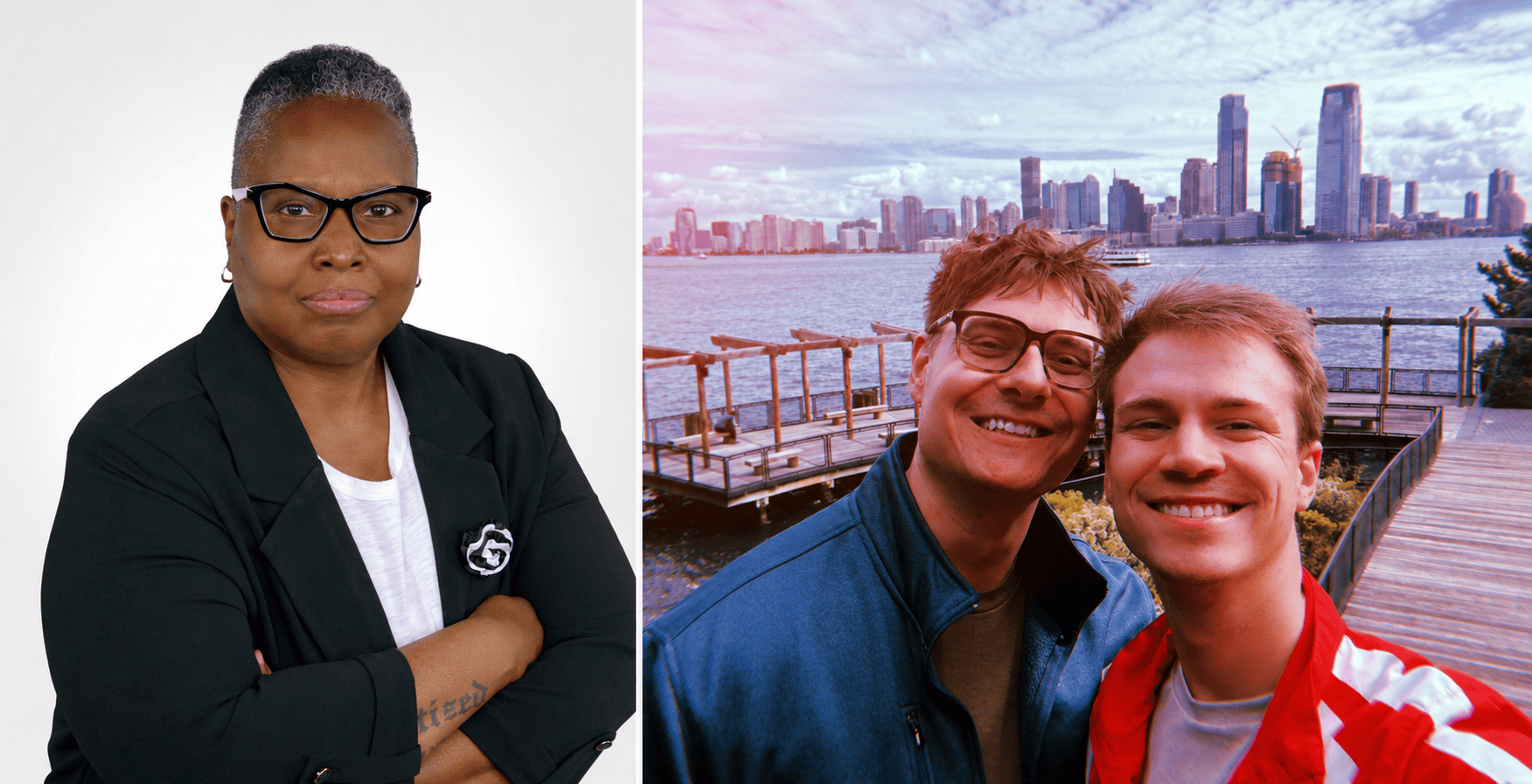


Dr Keshier Randolph is an Assistant Vice President and Project Lead for Zurich US, with 18 years at the company and more than 30 in insurance. Ryan Suby is an Assistant Vice President in Data and Technology, supporting the Zurich US legal function. He joined the company in 2017 through its apprenticeship program. Both are members of PrideZ, Zurich’s LGBTQ+ employee resource group.
Keshier waited 12 years at Zurich before she came out at work. Ryan did it in his first year. What explains the difference?
“For me, coming out at work was a journey, not a single moment,” says Keshier. “Early in my career, I kept my identity private. I have always had a masculine presence, so sometimes I wondered if I was really hiding, but I simply didn’t feel comfortable talking about that part of my life at work.”
The change came six years ago, after a promotion into a new department.
“The leadership team created an environment where I felt safe, respected, and comfortable enough to share my story. They gave me the grace to show up as my authentic self, and what a blessing that was. They welcomed not only me, but my wife as well. In fact, I joke that they ended up loving her more than me!”
Ryan’s permission came from a different source. He arrived at Zurich closeted, an apprentice rotating through claims, underwriting, actuarial and legal.
“I noticed early on that Zurich had an LGBTQ+ employee resource group, PrideZ,” he says. “Seeing the organization openly promote and support that community made an enormous impression on me, so I decided to get involved.”
Ryan says that PrideZ “genuinely” changed his life: “Being around colleagues who were openly LGBTQ+ and seeing people bring their authentic selves to work helped me realize that I could do the same. It gave me a sense of community and belonging, but more importantly, it gave me the confidence to come out.”
Both Keisher and Ryan describe coming out as a continuous process.
“Every time you meet someone new, there can still be that small calculation about whether it feels safe to mention your partner or share something about your personal life,” Ryan says.
“Even today, I sometimes find myself gauging the conversation first. I’m listening for cues that tell me whether I can comfortably talk about my partner or be completely open about that part of my life.”
Keshier also knows that calculation well. Before her promotion, she worked under a leader who didn’t know she was gay.
“I always wondered, ‘If she knew the truth about me, would she see me differently? Would it affect how she viewed my work, my potential, or my future?’ These thoughts made it very difficult for me to feel safe being my authentic self.”
So what got her through?
“My faith and knowing that someone else’s perception of me does not determine my value or my purpose.”
Keshier draws one lesson from those years: “Being invited into the room is not enough; it’s also about the ability to feel safe enough to bring your whole self into that room.”
Ryan looks at who is in the room at the very top.
“LGBTQ+ representation at senior and executive leadership levels across Corporate America remains limited,” he says.
“While leaders such as Tim Cook of Apple and Sam Altman of OpenAI serve as visible examples of LGBTQ+ representation at the highest levels, the fact that these names can be so readily counted underscores the scarcity of such representation. If employees don’t see openly LGBTQ+ leaders at senior levels, they may still wonder, consciously or unconsciously, whether being fully themselves could eventually affect their career progression.”
Both point to the same remedy: leaders who show up.
PrideZ, Keshier notes, “has an executive-level sponsor who attends meetings and regularly interacts with members of the group.”
Ryan puts it more bluntly: “When senior leaders actively participate in inclusion efforts rather than simply endorsing them from a distance, employees notice.”
Both, as Assistant Vice Presidents, are now part of the representation they say is still too scarce. “It showed me that being myself and being successful were not mutually exclusive,” Ryan says of PrideZ.
“I did not have to choose between my faith, my purpose, my career, and my authentic self,” Keshier adds.
Ask Keshier what made the biggest difference and the answer is touching and profound.
“For me, the biggest difference has been something very simple: My coworkers didn’t just accept me, they embraced my wife, too. They show her the same warmth and respect they show me. That may seem like a small gesture, but it means everything. It tells me that I don’t have to separate my personal life from my professional life or carefully choose my words when talking about my family.”
For Ryan, the difference showed up in conversation.
“I’m a good example of someone whose interests don’t necessarily fit into one box. I can talk about the NFL, NBA, MLB or NHL, and then immediately switch over to home renovations, fashion, cooking or something I watched on HGTV. Once I stopped filtering parts of myself, it became much easier to discover all of the different things I had in common with colleagues.”
He adds: “Being authentic at work isn’t only about being able to say that you’re LGBTQ+. It’s about being able to bring the full range of who you are into your relationships with other people.”
Neither think the work is done. For Keshier, the biggest barrier today is uncertainty.
“Changes in the political and legal environment, along with shifts we are seeing across Corporate America, can leave people in the LGBTQ+ community wondering whether the progress we have made is secure,” she says.
“Even in a supportive workplace, people may still ask themselves, ‘Is it truly safe for me to be fully myself?’ Every company has the power to create a workplace where others feel respected, valued, and safe enough to be themselves.”
Ryan agrees that a good workplace can’t fix everything on its own. “People bring experiences from outside the workplace with them. Depending on someone’s family, community, geography, cultural background, or previous workplace experiences, coming out can still feel risky. Creating an inclusive workplace doesn’t necessarily erase those concerns immediately.”
Which is why, he says, the responsibility shouldn’t rest solely with the individual to find the courage to come out: “Employers, leaders, and colleagues have a responsibility to create environments where people don’t have to wonder whether authenticity will come at a professional cost.”
Their advice to anyone not yet out at work is similar.
“There is no timeline to follow,” Ryan says. “Coming out is personal, and nobody should feel pressured to share something before they feel comfortable or safe doing so.” For him, the reward was energy. “It allowed me to stop spending energy hiding part of myself and instead put that energy into growing, building relationships, and becoming the leader, I wanted to be.”
Keshier agrees and goes further:
“I understand that everyone’s situation is different, and you should come out only when you feel safe and ready. But never allow fear or the opinions of others to make you question your worth. For me, my faith reminds me that God created me as His masterpiece. Hiding never changed who I was, it only kept me from experiencing the freedom of fully embracing myself.
“So, when the time is right for you, walk boldly in your truth. You don’t need the world’s permission to be who God created you to be!”
 https://www.lgbtinsurancenetwork.com/wp-content/uploads/2026/10/6-Maisie-McCarthy-and-Laurence-Peck-Featured.png
1254
1254
fletch
https://www.lgbtinsurancenetwork.com/wp-content/uploads/2021/03/Link-LGBTQ-Insurance-Network-logo-web-white.png
fletch2026-10-02 08:59:082026-10-02 12:22:12Once That Gets Posted, That’s It Now…
https://www.lgbtinsurancenetwork.com/wp-content/uploads/2026/10/6-Maisie-McCarthy-and-Laurence-Peck-Featured.png
1254
1254
fletch
https://www.lgbtinsurancenetwork.com/wp-content/uploads/2021/03/Link-LGBTQ-Insurance-Network-logo-web-white.png
fletch2026-10-02 08:59:082026-10-02 12:22:12Once That Gets Posted, That’s It Now… https://www.lgbtinsurancenetwork.com/wp-content/uploads/2026/10/5-Dr-Keshier-Randolph-and-Ryan-Suby-Featured.png
1254
1254
fletch
https://www.lgbtinsurancenetwork.com/wp-content/uploads/2021/03/Link-LGBTQ-Insurance-Network-logo-web-white.png
fletch2026-10-02 08:50:502026-10-02 12:21:12You Don’t Need the World’s Permission to Be Who God Created You to Be
https://www.lgbtinsurancenetwork.com/wp-content/uploads/2026/10/5-Dr-Keshier-Randolph-and-Ryan-Suby-Featured.png
1254
1254
fletch
https://www.lgbtinsurancenetwork.com/wp-content/uploads/2021/03/Link-LGBTQ-Insurance-Network-logo-web-white.png
fletch2026-10-02 08:50:502026-10-02 12:21:12You Don’t Need the World’s Permission to Be Who God Created You to Be https://www.lgbtinsurancenetwork.com/wp-content/uploads/2026/10/4.-Sean-Bracebridge.webp
1080
1080
fletch
https://www.lgbtinsurancenetwork.com/wp-content/uploads/2021/03/Link-LGBTQ-Insurance-Network-logo-web-white.png
fletch2026-10-02 08:49:292026-10-02 12:19:42I’ve Never Really Come Out
https://www.lgbtinsurancenetwork.com/wp-content/uploads/2026/10/4.-Sean-Bracebridge.webp
1080
1080
fletch
https://www.lgbtinsurancenetwork.com/wp-content/uploads/2021/03/Link-LGBTQ-Insurance-Network-logo-web-white.png
fletch2026-10-02 08:49:292026-10-02 12:19:42I’ve Never Really Come Out https://www.lgbtinsurancenetwork.com/wp-content/uploads/2026/10/3-Pedro-Chamorro-Llanc-and-Steve-Bayless-Featured.png
1254
1254
fletch
https://www.lgbtinsurancenetwork.com/wp-content/uploads/2021/03/Link-LGBTQ-Insurance-Network-logo-web-white.png
fletch2026-10-02 08:48:312026-10-02 12:20:18Seeing Other People Being Themselves Made a Big Difference
https://www.lgbtinsurancenetwork.com/wp-content/uploads/2026/10/3-Pedro-Chamorro-Llanc-and-Steve-Bayless-Featured.png
1254
1254
fletch
https://www.lgbtinsurancenetwork.com/wp-content/uploads/2021/03/Link-LGBTQ-Insurance-Network-logo-web-white.png
fletch2026-10-02 08:48:312026-10-02 12:20:18Seeing Other People Being Themselves Made a Big Difference https://www.lgbtinsurancenetwork.com/wp-content/uploads/2026/10/2-Drew-Hutchinson-and-Mark-Osborne-Featured.png
1254
1254
fletch
https://www.lgbtinsurancenetwork.com/wp-content/uploads/2021/03/Link-LGBTQ-Insurance-Network-logo-web-white.png
fletch2026-10-02 08:47:322026-10-02 12:23:16For Years I Feared How People Would React if They Knew
https://www.lgbtinsurancenetwork.com/wp-content/uploads/2026/10/2-Drew-Hutchinson-and-Mark-Osborne-Featured.png
1254
1254
fletch
https://www.lgbtinsurancenetwork.com/wp-content/uploads/2021/03/Link-LGBTQ-Insurance-Network-logo-web-white.png
fletch2026-10-02 08:47:322026-10-02 12:23:16For Years I Feared How People Would React if They Knew https://www.lgbtinsurancenetwork.com/wp-content/uploads/2026/10/1-Vanessa-Horne-and-Geoff-Lealan-Featured.webp
1080
1080
fletch
https://www.lgbtinsurancenetwork.com/wp-content/uploads/2021/03/Link-LGBTQ-Insurance-Network-logo-web-white.png
fletch2026-10-02 08:45:162026-10-02 12:15:41You’ll Know When You’re Ready
https://www.lgbtinsurancenetwork.com/wp-content/uploads/2026/10/1-Vanessa-Horne-and-Geoff-Lealan-Featured.webp
1080
1080
fletch
https://www.lgbtinsurancenetwork.com/wp-content/uploads/2021/03/Link-LGBTQ-Insurance-Network-logo-web-white.png
fletch2026-10-02 08:45:162026-10-02 12:15:41You’ll Know When You’re ReadyIf you enjoyed this article, please consider joining Link for more great insights and events from the LGBTQ+ community


 Once That Gets Posted, That’s It Now…