“I’ve Never Really Come Out”
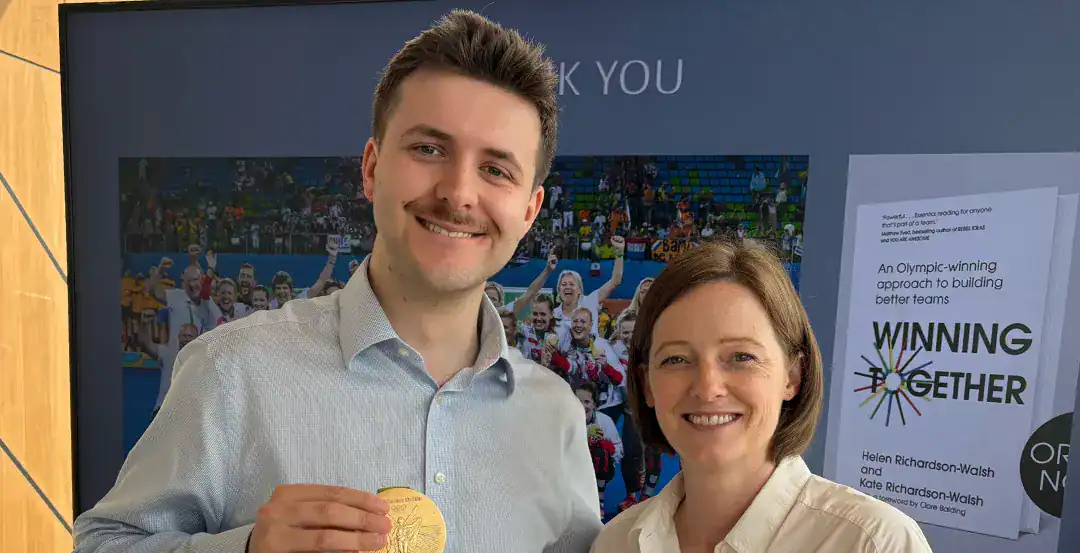


Sean Bracebridge has been in insurance for two and a half years and has never come out at work. Not because he has hidden anything, but because he has never needed to. He talks about his dates and his weekends the way anyone else does, and nobody bats an eye.
A few months in, he was comfortable and confident enough to co-found Atrium Plus, the firm’s LGBTQ+ employee resource group. But, as Sean tells it, this inclusive and supportive culture was obvious to him before he even walked through the door.
Sean joined Atrium as an assistant reinsurance technician after several years as a self-employed maths tutor. “I didn’t love the self-employed life. I wanted to work with other people and be part of a team,” he says.
He chose Atrium partly because of something he’d seen before applying. “They’d had a talk from a lesbian footballer, and I thought, they’re obviously a friendly environment. I’d like to work there.”
Any visible signa of warmth towards the LGBTQ+ community – or even diversity in a broader sense – can made a huge difference, as Sean explains:
“It can be the tiniest thing. One Pride event a year on your website. We’re a Stonewall Diversity Champion and we show that. We’ve got a little LGBTQ flag up in the office. Most people probably don’t notice. But for someone who sees importance in it, it says: these people are going to be happy to see me walk through the door, and I’ll be treated like everyone else.”
Once inside, being himself was simple.
“If I’m going on a date with a man, I’ve just said to colleagues, I’m going on a date with this guy tonight. There’s never been a point where I’ve felt the need to censor myself.”
Nor does he think that’s unusual for his generation: “People my age in the industry all seem really comfortable.” He adds a caveat: “The people I meet are largely the people who go to Link drinks, and those are going to be the people who are comfortable with it. So it’s a bit self-fulfilling.”
Atrium already had a Pride committee when Sean arrived, but there was a sense it went quiet for eleven months of the year. With a few colleagues he set up Atrium Plus, which now runs quarterly events: internal workshops, keynote speakers, allyship sessions, a tour of the Bishopsgate Institute’s LGBT archive, an LGBTQ walking tour of the City. The group has hosted Link drinks for the past two Novembers and hopes to again this year.
Management’s response was, in Sean’s words, “Very supportive. They said we really want someone to champion this. What budget do you need?” He was given money to manage and the independence to spend it as the group saw fit, plus time in his working day to plan.
That last part is what he’d tell anyone weighing up a new employer to look for. “Do they have an LGBTQ presence in the office? An employee resource group? Do they put money into events? But also: is it performative or is it authentic? Do they do something when they can be bothered, or do they have people thinking about this all year round? A lot of people are happy to commit for a few days after an event.”
The buy-in at Atrium, he says, goes all the way up the chain. Several exco members came to workshops and then booked time with him afterwards to understand the group better. “I sat down with John Fowle, our CEO, to talk about it, because he was genuinely interested and wanted to know how he could support.”
Sean is candid that his confidence didn’t start at Atrium. He has been a member of Stonewall Football Club for far longer than he has been in insurance and even served as the club’s welfare officer.
“Outside my corporate life I’m used to marching at London Pride and being openly LGBT on the football pitch. For me it feels natural.”
That confidence shapes his advice to anyone in the industry who feels they can’t be themselves at work. “I’d say go somewhere that takes culture seriously. For me it’s a red line. If somewhere doesn’t have a culture that lets me be my confident self, I’m not going to work there.”
He concedes not everyone can simply leave. But he thinks the insurance industry has a reputation for being hetero male-dominated that simply isn’t deserved, and so there are plenty of firms that will welcome LGBQT+ people.
“Insurance has had a reputation for being male-dominated. That hasn’t been my experience at all – quite the opposite. There was maybe an apprehension before I joined about how it might be, but what I’ve actually seen has been totally the other way. I can see why people might be shielded when they first come in, because they’re not sure whether it’s okay. But as soon as you make the first step and say to someone “my boyfriend” or “my husband”, all of that melts away quite quickly.”
 https://www.lgbtinsurancenetwork.com/wp-content/uploads/2026/10/6-Maisie-McCarthy-and-Laurence-Peck-Featured.png
1254
1254
fletch
https://www.lgbtinsurancenetwork.com/wp-content/uploads/2021/03/Link-LGBTQ-Insurance-Network-logo-web-white.png
fletch2026-10-02 08:59:082026-10-02 12:22:12Once That Gets Posted, That’s It Now…
https://www.lgbtinsurancenetwork.com/wp-content/uploads/2026/10/6-Maisie-McCarthy-and-Laurence-Peck-Featured.png
1254
1254
fletch
https://www.lgbtinsurancenetwork.com/wp-content/uploads/2021/03/Link-LGBTQ-Insurance-Network-logo-web-white.png
fletch2026-10-02 08:59:082026-10-02 12:22:12Once That Gets Posted, That’s It Now… https://www.lgbtinsurancenetwork.com/wp-content/uploads/2026/10/5-Dr-Keshier-Randolph-and-Ryan-Suby-Featured.png
1254
1254
fletch
https://www.lgbtinsurancenetwork.com/wp-content/uploads/2021/03/Link-LGBTQ-Insurance-Network-logo-web-white.png
fletch2026-10-02 08:50:502026-10-02 12:21:12You Don’t Need the World’s Permission to Be Who God Created You to Be
https://www.lgbtinsurancenetwork.com/wp-content/uploads/2026/10/5-Dr-Keshier-Randolph-and-Ryan-Suby-Featured.png
1254
1254
fletch
https://www.lgbtinsurancenetwork.com/wp-content/uploads/2021/03/Link-LGBTQ-Insurance-Network-logo-web-white.png
fletch2026-10-02 08:50:502026-10-02 12:21:12You Don’t Need the World’s Permission to Be Who God Created You to Be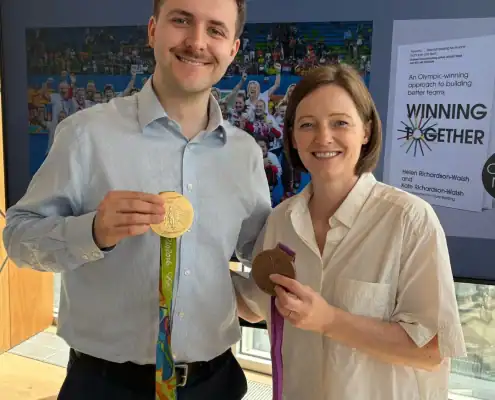 https://www.lgbtinsurancenetwork.com/wp-content/uploads/2026/10/4.-Sean-Bracebridge.webp
1080
1080
fletch
https://www.lgbtinsurancenetwork.com/wp-content/uploads/2021/03/Link-LGBTQ-Insurance-Network-logo-web-white.png
fletch2026-10-02 08:49:292026-10-02 12:19:42I’ve Never Really Come Out
https://www.lgbtinsurancenetwork.com/wp-content/uploads/2026/10/4.-Sean-Bracebridge.webp
1080
1080
fletch
https://www.lgbtinsurancenetwork.com/wp-content/uploads/2021/03/Link-LGBTQ-Insurance-Network-logo-web-white.png
fletch2026-10-02 08:49:292026-10-02 12:19:42I’ve Never Really Come Out https://www.lgbtinsurancenetwork.com/wp-content/uploads/2026/10/3-Pedro-Chamorro-Llanc-and-Steve-Bayless-Featured.png
1254
1254
fletch
https://www.lgbtinsurancenetwork.com/wp-content/uploads/2021/03/Link-LGBTQ-Insurance-Network-logo-web-white.png
fletch2026-10-02 08:48:312026-10-02 12:20:18Seeing Other People Being Themselves Made a Big Difference
https://www.lgbtinsurancenetwork.com/wp-content/uploads/2026/10/3-Pedro-Chamorro-Llanc-and-Steve-Bayless-Featured.png
1254
1254
fletch
https://www.lgbtinsurancenetwork.com/wp-content/uploads/2021/03/Link-LGBTQ-Insurance-Network-logo-web-white.png
fletch2026-10-02 08:48:312026-10-02 12:20:18Seeing Other People Being Themselves Made a Big Difference https://www.lgbtinsurancenetwork.com/wp-content/uploads/2026/10/2-Drew-Hutchinson-and-Mark-Osborne-Featured.png
1254
1254
fletch
https://www.lgbtinsurancenetwork.com/wp-content/uploads/2021/03/Link-LGBTQ-Insurance-Network-logo-web-white.png
fletch2026-10-02 08:47:322026-10-02 12:23:16For Years I Feared How People Would React if They Knew
https://www.lgbtinsurancenetwork.com/wp-content/uploads/2026/10/2-Drew-Hutchinson-and-Mark-Osborne-Featured.png
1254
1254
fletch
https://www.lgbtinsurancenetwork.com/wp-content/uploads/2021/03/Link-LGBTQ-Insurance-Network-logo-web-white.png
fletch2026-10-02 08:47:322026-10-02 12:23:16For Years I Feared How People Would React if They Knew https://www.lgbtinsurancenetwork.com/wp-content/uploads/2026/10/1-Vanessa-Horne-and-Geoff-Lealan-Featured.webp
1080
1080
fletch
https://www.lgbtinsurancenetwork.com/wp-content/uploads/2021/03/Link-LGBTQ-Insurance-Network-logo-web-white.png
fletch2026-10-02 08:45:162026-10-02 12:15:41You’ll Know When You’re Ready
https://www.lgbtinsurancenetwork.com/wp-content/uploads/2026/10/1-Vanessa-Horne-and-Geoff-Lealan-Featured.webp
1080
1080
fletch
https://www.lgbtinsurancenetwork.com/wp-content/uploads/2021/03/Link-LGBTQ-Insurance-Network-logo-web-white.png
fletch2026-10-02 08:45:162026-10-02 12:15:41You’ll Know When You’re ReadyIf you enjoyed this article, please consider joining Link for more great insights and events from the LGBTQ+ community


 You Don’t Need the World’s Permission to Be Who God Created You to Be