“Unless I Paid Them £1 Million, They Would Tell my Family and my Colleagues at Work That I Was Gay!”
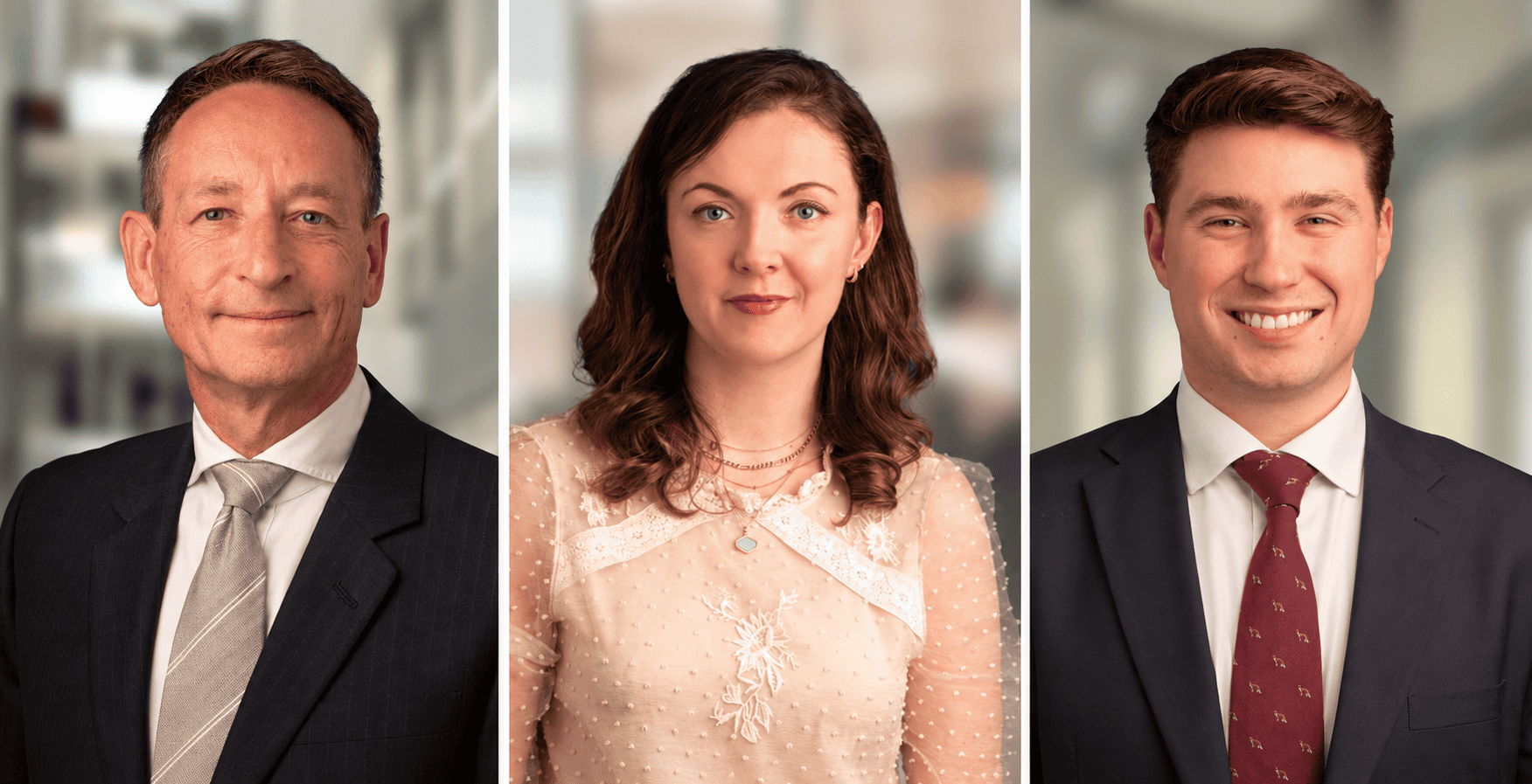


Whether it arrives by phone call, by pronoun or by someone’s “I knew it!”, coming out isn’t always a moment you can plan for.
In this article, Lockton Partner Richard Owen and Talent Acquisition Business Partner Danielle Lawson join Will Gibson, Medical Malpractice Assistant Underwriter at Lockton MGA Omnyy, to tell their very different and intriguing stories.
Richard’s coming out story is as dramatic as they come. Although he had known he was gay since the age of 12, having a homophobic, alcoholic, and abusive father “made it very difficult for me to be open about who I was.”
Thus Richard was 45 with a wife and two children before falling for Adrian – “the love of my life.”
And if you thought that was dramatic, just wait.
“I was heading overseas on a work trip to Colorado when someone telephoned me and said they knew who I was, where I lived, that I had a wife and children, and that unless I paid them £1 million, they would tell my family and my colleagues at work that I was gay!”
He immediately emailed his then wife, “apologizing and explaining that I had met somebody, and recognized sadly that our relationship had not been working for a number of years. I told her that I was gay, pressed send, got on the plane and travelled to Colorado.”
He adds, somewhat drily: “it was not quite the way I would have chosen to do it.”
“I find that I have to come out quite often as there seems to be a perception that I have a boyfriend,” says Danielle, describing a problem many in the community face. “I was struggling a bit with the lack of perceived representation. But now I am fully confident with who I am.”
Will’s experiences differed greatly between workplaces: “In my previous workplace I “came out” after quite a few months, when people started calling me out on the gender-neutral pronouns I was using to describe people I had dated at the time. This seems to be a common way of ‘soft launching’ one’s sexuality in the workplace these days.”
He adds: “At the current company I work for, I have had the privilege of working in a team with LGBTQ+ individuals who were very open and friendly from the start, so I was able to be upfront and honest from the get-go!”
So what was the reaction when Will came out?
“I had (I emphasize, not in my current role) in the past received the odd gay joke, but these almost felt inevitable,” he says. “The most common reaction I have seen is that some people feel a sense of accomplishment by announcing, ‘I knew it! I knew you were gay – I have a great gaydar!’”
He adds: “Others feel there needs to be a conversation about how ‘Oh! I would never have guessed, you look so straight!’ When you boil it down to what the core of being gay actually means, it really puts into perspective that a lot of people are still working on old stereotypes.
“In my experience, people who react negatively are people who are unsure as to what to say,” says Danielle. “But in my career, any responses I have had have been positive. I think for me, the hardest part is initially coming out, because it is what I think people’s reactions will be (which in my experience, has always been worse in my head!)”
And for Richard? As you might expect, for him, “it was not an easy journey for any of us. That said, my friends and colleagues at work were hugely supportive.
“l will always be incredibly grateful to the Lockton family and the executives in both the US and UK who supported me at that time and who continue to support me today. In addition, my children have been incredible dealing with the emotional roller coaster and have been consistently loving, caring and hugely supportive from the time I came out, and remain so to this day.”
“While I am extremely grateful for the progress that society has made in the last few decades, old attitudes still exist,” says Will. “It was often easier to allow people to make fun of my sexuality rather than call out instances that make me uncomfortable.”
For him, society has had decades now to get accustomed to queerness, so “education is not an issue anymore; accountability is.”
Although he is at pains to stress how welcoming the culture is at Lockton, this is not the only place he has worked. “Workplace culture does not change overnight, and habits are hard to break. People are more than happy to complain about how delicate people have become in recent years, not realising they have become the delicate and offended ones in these situations!”
“When Adrian and I walked down the street holding hands, there were occasions when we were subjected to abuse,” Richard says. “On one occasion, I was even spat at. Those experiences made me realise that there can be an underlying level of homophobia that you don’t necessarily see until you become part of the community yourself.”
On the other hand, while “there were a few people at work who reacted negatively, both of whom were very religious and they personally held the view that homosexuality, in their eyes was a sin,” on the whole the reaction from clients and colleagues was hugely supportive.
Danielle believes the biggest barrier to coming out is lack of representation and visibility, “which I think might make someone hesitate to fully be themselves, even if their environment is supportive. I think it is human nature that no one wants to be the only person perceived to be ‘different’.”
This was her experience when she first came out – initially as bisexual – at the age of 17, lacking obvious role models in her life or in the media. She found it hard to be fully herself for years, until she found the visibility that gave her the confidence she needed: “It helps people to be their authentic self. That is the thing that has got me through, and that is why my big driver is business change, where we can see the direct business impact.”
Besides visibility, what else does Danielle think makes those who have come out feel more accepted and included?
For her, it’s when people show curiosity. “A lot of the time, people are afraid to say anything, in case they say something wrong, but half of the time, the silence makes things worse. No one wants to talk about their other half and get silence as a response, so I think just normal conversation and being generally (appropriately) inquisitive, is something that has made a huge difference to me.”
For Richard, “what really makes a positive difference is being treated with respect and being recognised for your skillset, not for your sexuality, your colour, or your religion.”
More than that, however, was the support of his now-husband Adrian – and his circle: “They were incredibly supportive then and remain so today. Having people around me who accepted me completely made an enormous difference.”
For Will, it’s “allies and accountability.” He explains: “In my previous workplace a few colleagues stepped in and had a private word with someone who had made a couple of derogatory jokes, not on my request, but on my behalf. Knowing that these people were willing to stand up for me made me feel overwhelmingly more supported than the initial jokes had made me feel small.”
“I don’t think you can ever convince someone to be authentically themselves if the environment doesn’t feel both physically and psychologically safe,” Danielle says. “You can never guarantee what someone else’s response would be to anything you would say. Just like you are never responsible for someone else’s emotions, you are only responsible for your response.”
However, “there are more people out there that are just like you, you just haven’t met them yet. Don’t deprive the world of seeing your authentic self!”
Will is blunter about fitting in and being yourself. “If you don’t feel like you can be yourself at work – you work for the wrong company! Have a look at the Link hiring pages for firms that will stand by you. Take your talent to somewhere that deserves it!
Perhaps we can give the last word here to Richard, whose coming out moment was perhaps the most traumatic and who has had the longest struggle to be his authentic self in life:
“For anyone in the industry who doesn’t yet feel able to be themselves at work, I would say: give it time. You’ll find a support network around you. There is always somebody willing to show compassion and grace and help you along the way.
“You might worry about how people will question or perceive you, but I think you just have to embrace it and live life as you are.”
 https://www.lgbtinsurancenetwork.com/wp-content/uploads/2026/10/Coming-Out-Lockton-Featured.png
1254
1254
fletch
https://www.lgbtinsurancenetwork.com/wp-content/uploads/2021/03/Link-LGBTQ-Insurance-Network-logo-web-white.png
fletch2026-10-13 09:38:252026-10-13 09:42:47Unless I Paid Them £1 Million, They Would Tell my Family and my Colleagues at Work That I Was Gay!
https://www.lgbtinsurancenetwork.com/wp-content/uploads/2026/10/Coming-Out-Lockton-Featured.png
1254
1254
fletch
https://www.lgbtinsurancenetwork.com/wp-content/uploads/2021/03/Link-LGBTQ-Insurance-Network-logo-web-white.png
fletch2026-10-13 09:38:252026-10-13 09:42:47Unless I Paid Them £1 Million, They Would Tell my Family and my Colleagues at Work That I Was Gay! https://www.lgbtinsurancenetwork.com/wp-content/uploads/2026/10/6-Maisie-McCarthy-and-Laurence-Peck-Featured.png
1254
1254
fletch
https://www.lgbtinsurancenetwork.com/wp-content/uploads/2021/03/Link-LGBTQ-Insurance-Network-logo-web-white.png
fletch2026-10-02 08:59:082026-10-02 12:22:12Once That Gets Posted, That’s It Now…
https://www.lgbtinsurancenetwork.com/wp-content/uploads/2026/10/6-Maisie-McCarthy-and-Laurence-Peck-Featured.png
1254
1254
fletch
https://www.lgbtinsurancenetwork.com/wp-content/uploads/2021/03/Link-LGBTQ-Insurance-Network-logo-web-white.png
fletch2026-10-02 08:59:082026-10-02 12:22:12Once That Gets Posted, That’s It Now… https://www.lgbtinsurancenetwork.com/wp-content/uploads/2026/10/5-Dr-Keshier-Randolph-and-Ryan-Suby-Featured.png
1254
1254
fletch
https://www.lgbtinsurancenetwork.com/wp-content/uploads/2021/03/Link-LGBTQ-Insurance-Network-logo-web-white.png
fletch2026-10-02 08:50:502026-10-02 12:21:12You Don’t Need the World’s Permission to Be Who God Created You to Be
https://www.lgbtinsurancenetwork.com/wp-content/uploads/2026/10/5-Dr-Keshier-Randolph-and-Ryan-Suby-Featured.png
1254
1254
fletch
https://www.lgbtinsurancenetwork.com/wp-content/uploads/2021/03/Link-LGBTQ-Insurance-Network-logo-web-white.png
fletch2026-10-02 08:50:502026-10-02 12:21:12You Don’t Need the World’s Permission to Be Who God Created You to Be https://www.lgbtinsurancenetwork.com/wp-content/uploads/2026/10/4.-Sean-Bracebridge.webp
1080
1080
fletch
https://www.lgbtinsurancenetwork.com/wp-content/uploads/2021/03/Link-LGBTQ-Insurance-Network-logo-web-white.png
fletch2026-10-02 08:49:292026-10-02 12:19:42I’ve Never Really Come Out
https://www.lgbtinsurancenetwork.com/wp-content/uploads/2026/10/4.-Sean-Bracebridge.webp
1080
1080
fletch
https://www.lgbtinsurancenetwork.com/wp-content/uploads/2021/03/Link-LGBTQ-Insurance-Network-logo-web-white.png
fletch2026-10-02 08:49:292026-10-02 12:19:42I’ve Never Really Come Out https://www.lgbtinsurancenetwork.com/wp-content/uploads/2026/10/3-Pedro-Chamorro-Llanc-and-Steve-Bayless-Featured.png
1254
1254
fletch
https://www.lgbtinsurancenetwork.com/wp-content/uploads/2021/03/Link-LGBTQ-Insurance-Network-logo-web-white.png
fletch2026-10-02 08:48:312026-10-02 12:20:18Seeing Other People Being Themselves Made a Big Difference
https://www.lgbtinsurancenetwork.com/wp-content/uploads/2026/10/3-Pedro-Chamorro-Llanc-and-Steve-Bayless-Featured.png
1254
1254
fletch
https://www.lgbtinsurancenetwork.com/wp-content/uploads/2021/03/Link-LGBTQ-Insurance-Network-logo-web-white.png
fletch2026-10-02 08:48:312026-10-02 12:20:18Seeing Other People Being Themselves Made a Big Difference https://www.lgbtinsurancenetwork.com/wp-content/uploads/2026/10/2-Drew-Hutchinson-and-Mark-Osborne-Featured.png
1254
1254
fletch
https://www.lgbtinsurancenetwork.com/wp-content/uploads/2021/03/Link-LGBTQ-Insurance-Network-logo-web-white.png
fletch2026-10-02 08:47:322026-10-02 12:23:16For Years I Feared How People Would React if They Knew
https://www.lgbtinsurancenetwork.com/wp-content/uploads/2026/10/2-Drew-Hutchinson-and-Mark-Osborne-Featured.png
1254
1254
fletch
https://www.lgbtinsurancenetwork.com/wp-content/uploads/2021/03/Link-LGBTQ-Insurance-Network-logo-web-white.png
fletch2026-10-02 08:47:322026-10-02 12:23:16For Years I Feared How People Would React if They Knew https://www.lgbtinsurancenetwork.com/wp-content/uploads/2026/10/1-Vanessa-Horne-and-Geoff-Lealan-Featured.webp
1080
1080
fletch
https://www.lgbtinsurancenetwork.com/wp-content/uploads/2021/03/Link-LGBTQ-Insurance-Network-logo-web-white.png
fletch2026-10-02 08:45:162026-10-02 12:15:41You’ll Know When You’re Ready
https://www.lgbtinsurancenetwork.com/wp-content/uploads/2026/10/1-Vanessa-Horne-and-Geoff-Lealan-Featured.webp
1080
1080
fletch
https://www.lgbtinsurancenetwork.com/wp-content/uploads/2021/03/Link-LGBTQ-Insurance-Network-logo-web-white.png
fletch2026-10-02 08:45:162026-10-02 12:15:41You’ll Know When You’re ReadyIf you enjoyed this article, please consider joining Link for more great insights and events from the LGBTQ+ community


