“Once That Gets Posted, That’s It Now…”



Coming out doesn’t get easier with age, though it may get easier with practice, as the contrasting experiences of Maisie McCarthy (early 30s) and Laurence Peck (a whisper from turning 50) here demonstrate.
Take Maisie’s story. She co-runs Beazley’s LGBTQ+ network and is a member of Link’s London steering committee. She even got engaged in 2026 and openly says “she” when congratulated. And yet it took agreeing to be featured in an article about bisexual visibility in September 2024 before she become comfortable admitting it to the wider world.
She’d shared being at Pride and taking part in other LGBTQ+ events. “Even internally at Beazley I’d posted a few things, but never written it literally as a sentence: I am bisexual… So it was that first article, and it was like, right, once that gets posted, that’s it now – that digital footprint is there forever,” she says.
“I find it easier to mention it in passing in person. Writing something down and putting it out there for anyone to see, people you don’t know, was such a bigger leap for me.”
We’re speaking together about her and Laurence’s experiences of coming out and being out, and even now Maisie feels she lacks Laurence’s relative confidence and ease.
“Laurence is talking about the role-model behaviour, where his experience has flipped and he’s in that more senior position, able to say, ‘this is me’ and wanting to create that environment,” she says. “I don’t think I’m there yet, because I haven’t been doing this as long. I’ve been in the industry a while, but not out, as such.”
It’s a startling admission from someone many feel projects a confident and welcoming presence within the LGBTQ+ London insurance community. It’s also a stark reminder that everyone needs to feel supported.
Maisie feels supported when people turn up to Beazley and Link LGBTQ+ events.
“When people reciprocate with their time – face time with colleagues, senior leadership, exec – I find that the most supportive. Even if someone gives an hour of their month to something. When people send an email afterwards, ‘that was a really good event’, they’re giving up their time, and it means quite a lot,” she says.
“There’s no progress if it’s one-sided. We can bang the drum as much as we like, but if no one’s listening it don’t do any good.”
Unlike Maisie, Laurence, Beazley’s Group Head of Tax, didn’t get to choose his workplace coming out moment.
He came out at university, then joined accounting firm Arthur Andersen as a graduate trainee, telling a few fellow trainees as they got to know each other. Then, towards the end of his first year, he was in a relationship with a colleague.
“After we got together, I walked into the staff canteen and saw about five people point at me,” he says. “I was like, okay, right. Everybody knows!”
There was only one time when Laurence wasn’t out at work.
“The tax director at the time, I’ll euphemistically say he was old school. He gave me a bunch of CVs once and said, come up with a shortlist, but remember: no women, no Blacks and no Irish. He was joking – if you looked at the make-up of his team, it was clear he was joking. But I’m not going to expend energy coming out to a guy who says stuff like that.”
So he told his friends at work and was careful with everyone else. “Non-gender-specific pronouns. Sentences about what you’d been doing at the weekend – ‘I went out with my friends.’ It’s just exhausting.”
Twenty-eight years on, the calculation has been done so many times it barely registers. “It’s got so much easier,” Laurence says.
And what made the biggest difference was getting married: “I actually found it easier to be out at work after that, because people see the ring. Sometimes people assume I have a wife. I’m like, cool. And I say, oh, I have a husband.” But he will not always correct someone if he is worried it will make them feel awkward.
Laurence works his husband into conversations on purpose: “I kind of want to give subtle signals to other people that it’s okay to be different.”
Once while working at Lloyd’s, in a project planning meeting where everyone kept saying “he” about a chief underwriter who hadn’t yet been hired, he started saying “she”.
“Someone said, why do you keep saying ‘she’? I said, well, why do you keep saying ‘he’? Two of the senior women in the room said to me afterwards: thanks very much for saying that.”
Maisie has sat in rooms where people wondered aloud whether D&I had “gone too far” and chosen not to say anything about being bisexual.
“These are people who don’t know me,” she says. “Your opinion is your opinion, but I shouldn’t have to say, ‘well, I’m in the community, what do you say to that?’ I could challenge it just based on being a person. I didn’t want that to be a factor.”
Ask them about barriers and they answer as if they’d been asked two different questions.
Laurence looks outward. “Homosexuality was decriminalised in the UK less than ten years before I was born. I grew up very much in that context: being gay was synonymous with HIV and AIDS. Section 28. It was a grim period, and we’ve moved a long way from that.”
But the rise of right-wing populism gives him pause. “It makes you realise we can’t take progress for granted. I’m not saying man the barricades, but you can’t rest on your laurels.”
Maisie reflects on the risks inherent in the conformity of D&I: “In London we’re in this bubble. D&I is practised – or preached, even. So you’re in a protective bubble, and people may have their own opinion outside work and not want to say it because of how it would look.”
The risk, she says, starts when people leave the office. “A lot of the industry functions on networking. Once people leave the office and the work walls are gone, maybe people go back inwards. Someone who is open and out at work may not want to talk as much about their personal life at drinks or events.”
Which brings us back to where we began. If you can’t take it back, how do you know when you’re ready to come out?
Laurence’s advice comes with a lifetime’s caveat. “I wouldn’t want anyone to do something they didn’t feel comfortable with. But you’ve got to think: where do you want your life to be? I’m a sufficiently simple person that I find it easier just being one person. Some organisations may be more liberal than others, but you can always find your people.”
Maisie goes a step further. You can engage with the community without ever having to officially come out, if you don’t want, she insists.
“There are so many events, so many opportunities for mentoring and networking. You don’t ever have to go in there and say what you are or who you are. You can just go. No one’s ever going to question you on it, because that’s not how this works,” she says.
“Just go along, and if you feel apprehensive, you can start to see the people in the room – like Laurence and me – who have been around and done these things a lot.”
She adds: “You never have to disclose anything. It’s just being in that environment. You might actually think you want to go by different pronouns – you can start to introduce that to one person there and see how that feels. Be around that, go again and again, build up your comfort in yourself, and then start following their lead.”
 https://www.lgbtinsurancenetwork.com/wp-content/uploads/2026/10/6-Maisie-McCarthy-and-Laurence-Peck-Featured.png
1254
1254
fletch
https://www.lgbtinsurancenetwork.com/wp-content/uploads/2021/03/Link-LGBTQ-Insurance-Network-logo-web-white.png
fletch2026-10-02 08:59:082026-10-02 12:22:12Once That Gets Posted, That’s It Now…
https://www.lgbtinsurancenetwork.com/wp-content/uploads/2026/10/6-Maisie-McCarthy-and-Laurence-Peck-Featured.png
1254
1254
fletch
https://www.lgbtinsurancenetwork.com/wp-content/uploads/2021/03/Link-LGBTQ-Insurance-Network-logo-web-white.png
fletch2026-10-02 08:59:082026-10-02 12:22:12Once That Gets Posted, That’s It Now… https://www.lgbtinsurancenetwork.com/wp-content/uploads/2026/10/5-Dr-Keshier-Randolph-and-Ryan-Suby-Featured.png
1254
1254
fletch
https://www.lgbtinsurancenetwork.com/wp-content/uploads/2021/03/Link-LGBTQ-Insurance-Network-logo-web-white.png
fletch2026-10-02 08:50:502026-10-02 12:21:12You Don’t Need the World’s Permission to Be Who God Created You to Be
https://www.lgbtinsurancenetwork.com/wp-content/uploads/2026/10/5-Dr-Keshier-Randolph-and-Ryan-Suby-Featured.png
1254
1254
fletch
https://www.lgbtinsurancenetwork.com/wp-content/uploads/2021/03/Link-LGBTQ-Insurance-Network-logo-web-white.png
fletch2026-10-02 08:50:502026-10-02 12:21:12You Don’t Need the World’s Permission to Be Who God Created You to Be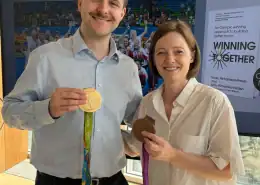 https://www.lgbtinsurancenetwork.com/wp-content/uploads/2026/10/4.-Sean-Bracebridge.webp
1080
1080
fletch
https://www.lgbtinsurancenetwork.com/wp-content/uploads/2021/03/Link-LGBTQ-Insurance-Network-logo-web-white.png
fletch2026-10-02 08:49:292026-10-02 12:19:42I’ve Never Really Come Out
https://www.lgbtinsurancenetwork.com/wp-content/uploads/2026/10/4.-Sean-Bracebridge.webp
1080
1080
fletch
https://www.lgbtinsurancenetwork.com/wp-content/uploads/2021/03/Link-LGBTQ-Insurance-Network-logo-web-white.png
fletch2026-10-02 08:49:292026-10-02 12:19:42I’ve Never Really Come Out https://www.lgbtinsurancenetwork.com/wp-content/uploads/2026/10/3-Pedro-Chamorro-Llanc-and-Steve-Bayless-Featured.png
1254
1254
fletch
https://www.lgbtinsurancenetwork.com/wp-content/uploads/2021/03/Link-LGBTQ-Insurance-Network-logo-web-white.png
fletch2026-10-02 08:48:312026-10-02 12:20:18Seeing Other People Being Themselves Made a Big Difference
https://www.lgbtinsurancenetwork.com/wp-content/uploads/2026/10/3-Pedro-Chamorro-Llanc-and-Steve-Bayless-Featured.png
1254
1254
fletch
https://www.lgbtinsurancenetwork.com/wp-content/uploads/2021/03/Link-LGBTQ-Insurance-Network-logo-web-white.png
fletch2026-10-02 08:48:312026-10-02 12:20:18Seeing Other People Being Themselves Made a Big Difference https://www.lgbtinsurancenetwork.com/wp-content/uploads/2026/10/2-Drew-Hutchinson-and-Mark-Osborne-Featured.png
1254
1254
fletch
https://www.lgbtinsurancenetwork.com/wp-content/uploads/2021/03/Link-LGBTQ-Insurance-Network-logo-web-white.png
fletch2026-10-02 08:47:322026-10-02 12:23:16For Years I Feared How People Would React if They Knew
https://www.lgbtinsurancenetwork.com/wp-content/uploads/2026/10/2-Drew-Hutchinson-and-Mark-Osborne-Featured.png
1254
1254
fletch
https://www.lgbtinsurancenetwork.com/wp-content/uploads/2021/03/Link-LGBTQ-Insurance-Network-logo-web-white.png
fletch2026-10-02 08:47:322026-10-02 12:23:16For Years I Feared How People Would React if They Knew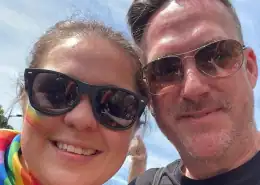 https://www.lgbtinsurancenetwork.com/wp-content/uploads/2026/10/1-Vanessa-Horne-and-Geoff-Lealan-Featured.webp
1080
1080
fletch
https://www.lgbtinsurancenetwork.com/wp-content/uploads/2021/03/Link-LGBTQ-Insurance-Network-logo-web-white.png
fletch2026-10-02 08:45:162026-10-02 12:15:41You’ll Know When You’re Ready
https://www.lgbtinsurancenetwork.com/wp-content/uploads/2026/10/1-Vanessa-Horne-and-Geoff-Lealan-Featured.webp
1080
1080
fletch
https://www.lgbtinsurancenetwork.com/wp-content/uploads/2021/03/Link-LGBTQ-Insurance-Network-logo-web-white.png
fletch2026-10-02 08:45:162026-10-02 12:15:41You’ll Know When You’re ReadyIf you enjoyed this article, please consider joining Link for more great insights and events from the LGBTQ+ community


