“You Have to Allow Them to Get Used to It”
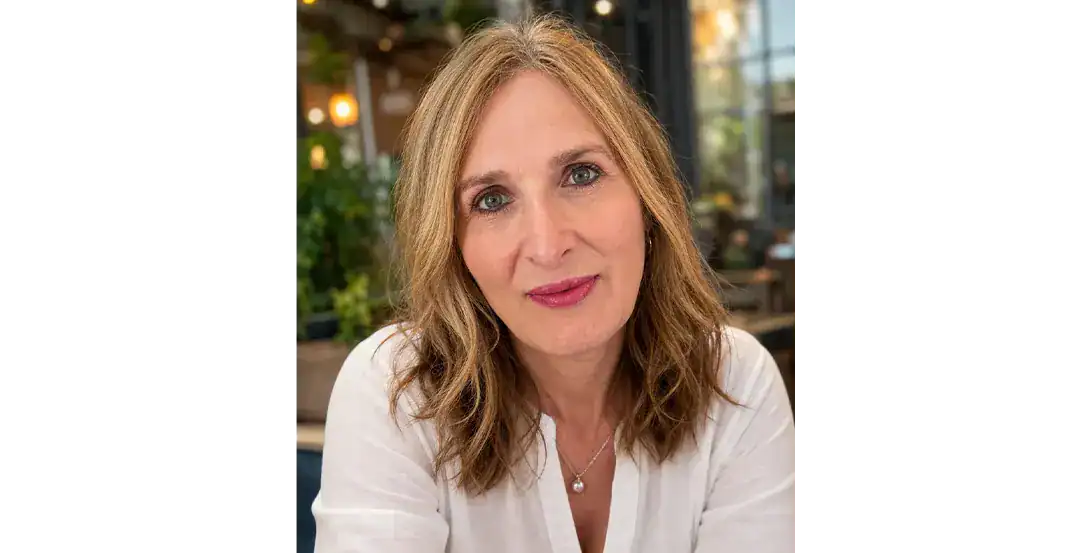


Rebecca Mason transitioned in the London market in 2001, when most people had no idea what was involved. Here she talks about allies, allowing gossip to work for you – and what the portraits on the wall at Lloyd’s mean about LGBQT+ visibility.
Picture, if you will, the challenge of transitioning in the workplace. Now picture how that might have felt a quarter of a century ago.
This was the experience of Rebecca Mason, Head of Wordings at MS Amlin, who has long been an LGBTQ+ role model, but back then had to transition at a time when most people had no real idea of what was involved. “It’s not just you who are transitioning, it’s your colleagues getting used to this,” Rebecca says, “and you have to allow them to get used to it.”
Rebecca is clear that what her colleagues had to get used to was of a different order from a colleague coming out.
“There’s a world of difference between transitioning in a workplace and coming out as gay, lesbian or bi,” she says. “If a cisgender man or woman comes out, they are still Damien or Jane or whoever.
“Whereas in my case, I left work at the end of July 2001 in a suit and a tie, and on 15 August 2001 I turned up in a skirt with make-up on, and using a different name. The whole perception of me as an individual had changed. My place in the world had changed a bit. You’ve gone from there to there.”
Even though she depicts a 2001 in which the wider world was starting to accept homosexuality, “with people being trans, it was like: what is this? We don’t know.”
That August morning had been a year in the making. Rebecca’s transition at Aon Underwriting Managers was planned over a year with no policy to follow – “we were making this up as we went along” – and with one ally, Sarah, who supported her “immediately, with absolutely no hesitation”.
Then came a piece of London market cunning: “We cooked up this crazy idea to let the gossip chain do the work for us and leaked the news to a few people.”
By the time of a company breakfast at Christmas 2000, everybody was talking about it: “So then we had the first conversation with HR.”
Once Rebecca was back at work, people getting used to her meant, at first, being misgendered.
“I like to think I was okay. I cut them some slack,” she says. “That was because my ally took me to one side and said: ‘You’re not the only person going through this transition. They’re having to adapt to this as well. They are adjusting in the same way as you’re adjusting.’ I needed that. Sometimes you need an ally to be truthful with you as much as to be your bodyguard.”
There were limits though. When a client’s email referred to Rebecca as “he/she”, her firm stopped doing business with them that day.
And there were surprises in the other direction. “A client we had – in terms of work, he was a pain in the arse. But he was absolutely wonderful post-transition. He used my correct name; we had a lunch and had several drinks together. Perfect gentleman. That was the kind of thing where I felt, yeah, I think I’m going to succeed at this.”
Her advice to anyone transitioning now comes straight out of that experience.
“Allow people to be human,” she says. “Don’t be too demanding.” She pauses. “But at the same time, if someone’s being deliberately obtuse, then there should be a policy in place to support you.”
And for anyone coming into the market who doubts they belong, Rebecca has a test that doesn’t involve reading a policy.
“When I sat in that room (the Old Library in Lloyd’s) for the first time in 1980-whatever, and looked around at all those old white faces looking very sternly back at me from the walls, I just thought: can’t see my face being up there any time soon,” she says. And yet, today her portrait hangs there, in the Old Library, and she’s a Women in Insurance Awards recipient.
“So I keep going back to the portraits on the wall. That’s a simple, profound statement, and three years on, I’m still up there. And this is Lloyd’s – an institution which isn’t exactly known for being progressive. I would take that individual for a walk along Fenchurch Street and say: have a look around you. Go into Lloyd’s itself and have a look around. Look at the women, look at the people from diverse backgrounds. You’ll still see a strong contingent of the public school guys. But they’re not dominant anymore.”
 https://www.lgbtinsurancenetwork.com/wp-content/uploads/2026/10/Sidd-Gavirneni-and-Munich-RE-Featured.png
1254
1254
fletch
https://www.lgbtinsurancenetwork.com/wp-content/uploads/2021/03/Link-LGBTQ-Insurance-Network-logo-web-white.png
fletch2026-10-15 17:29:522026-10-15 17:29:52The Most Meaningful Form of Inclusion is When it Doesn’t Feel Like a Big Deal
https://www.lgbtinsurancenetwork.com/wp-content/uploads/2026/10/Sidd-Gavirneni-and-Munich-RE-Featured.png
1254
1254
fletch
https://www.lgbtinsurancenetwork.com/wp-content/uploads/2021/03/Link-LGBTQ-Insurance-Network-logo-web-white.png
fletch2026-10-15 17:29:522026-10-15 17:29:52The Most Meaningful Form of Inclusion is When it Doesn’t Feel Like a Big Deal https://www.lgbtinsurancenetwork.com/wp-content/uploads/2026/10/Coming-Out-at-work-MS-Amlin-Andrew-featured.webp
1080
1080
fletch
https://www.lgbtinsurancenetwork.com/wp-content/uploads/2021/03/Link-LGBTQ-Insurance-Network-logo-web-white.png
fletch2026-10-15 17:22:212026-10-15 17:22:21It’s Not Just My Story; It’s Someone Else’s Story as Well
https://www.lgbtinsurancenetwork.com/wp-content/uploads/2026/10/Coming-Out-at-work-MS-Amlin-Andrew-featured.webp
1080
1080
fletch
https://www.lgbtinsurancenetwork.com/wp-content/uploads/2021/03/Link-LGBTQ-Insurance-Network-logo-web-white.png
fletch2026-10-15 17:22:212026-10-15 17:22:21It’s Not Just My Story; It’s Someone Else’s Story as Well https://www.lgbtinsurancenetwork.com/wp-content/uploads/2026/10/Coming-Out-at-work-MS-Amlin-Rebecca-featured.webp
1080
1080
fletch
https://www.lgbtinsurancenetwork.com/wp-content/uploads/2021/03/Link-LGBTQ-Insurance-Network-logo-web-white.png
fletch2026-10-15 17:13:582026-10-15 17:13:58You Have to Allow Them to Get Used to It
https://www.lgbtinsurancenetwork.com/wp-content/uploads/2026/10/Coming-Out-at-work-MS-Amlin-Rebecca-featured.webp
1080
1080
fletch
https://www.lgbtinsurancenetwork.com/wp-content/uploads/2021/03/Link-LGBTQ-Insurance-Network-logo-web-white.png
fletch2026-10-15 17:13:582026-10-15 17:13:58You Have to Allow Them to Get Used to It https://www.lgbtinsurancenetwork.com/wp-content/uploads/2026/10/Poppy-Wilkinson-Convex-Coming-out-at-work-series-featured.webp
1080
1080
fletch
https://www.lgbtinsurancenetwork.com/wp-content/uploads/2021/03/Link-LGBTQ-Insurance-Network-logo-web-white.png
fletch2026-10-15 16:47:402026-10-15 16:52:20If I Felt Completely Comfortable Being Myself, I’d Be More Visibly Queer
https://www.lgbtinsurancenetwork.com/wp-content/uploads/2026/10/Poppy-Wilkinson-Convex-Coming-out-at-work-series-featured.webp
1080
1080
fletch
https://www.lgbtinsurancenetwork.com/wp-content/uploads/2021/03/Link-LGBTQ-Insurance-Network-logo-web-white.png
fletch2026-10-15 16:47:402026-10-15 16:52:20If I Felt Completely Comfortable Being Myself, I’d Be More Visibly Queer https://www.lgbtinsurancenetwork.com/wp-content/uploads/2026/10/Colin-Masson-Munich-RE-Featured.webp
1080
1080
fletch
https://www.lgbtinsurancenetwork.com/wp-content/uploads/2021/03/Link-LGBTQ-Insurance-Network-logo-web-white.png
fletch2026-10-14 13:26:512026-10-14 13:26:51There’s a Level of Trust You Bring by Being Open
https://www.lgbtinsurancenetwork.com/wp-content/uploads/2026/10/Colin-Masson-Munich-RE-Featured.webp
1080
1080
fletch
https://www.lgbtinsurancenetwork.com/wp-content/uploads/2021/03/Link-LGBTQ-Insurance-Network-logo-web-white.png
fletch2026-10-14 13:26:512026-10-14 13:26:51There’s a Level of Trust You Bring by Being Open https://www.lgbtinsurancenetwork.com/wp-content/uploads/2026/10/Ros-Fisher-Munich-RE-Featured.webp
1080
1080
fletch
https://www.lgbtinsurancenetwork.com/wp-content/uploads/2021/03/Link-LGBTQ-Insurance-Network-logo-web-white.png
fletch2026-10-14 13:18:342026-10-14 14:36:08Can I Dye My Hair at This Company?
https://www.lgbtinsurancenetwork.com/wp-content/uploads/2026/10/Ros-Fisher-Munich-RE-Featured.webp
1080
1080
fletch
https://www.lgbtinsurancenetwork.com/wp-content/uploads/2021/03/Link-LGBTQ-Insurance-Network-logo-web-white.png
fletch2026-10-14 13:18:342026-10-14 14:36:08Can I Dye My Hair at This Company? https://www.lgbtinsurancenetwork.com/wp-content/uploads/2026/10/Coming-Out-Lockton-Featured.png
1254
1254
fletch
https://www.lgbtinsurancenetwork.com/wp-content/uploads/2021/03/Link-LGBTQ-Insurance-Network-logo-web-white.png
fletch2026-10-13 09:38:252026-10-14 13:05:26Unless I Paid Them £1 Million, They Would Tell my Family and my Colleagues at Work That I Was Gay!
https://www.lgbtinsurancenetwork.com/wp-content/uploads/2026/10/Coming-Out-Lockton-Featured.png
1254
1254
fletch
https://www.lgbtinsurancenetwork.com/wp-content/uploads/2021/03/Link-LGBTQ-Insurance-Network-logo-web-white.png
fletch2026-10-13 09:38:252026-10-14 13:05:26Unless I Paid Them £1 Million, They Would Tell my Family and my Colleagues at Work That I Was Gay! https://www.lgbtinsurancenetwork.com/wp-content/uploads/2026/10/6-Maisie-McCarthy-and-Laurence-Peck-Featured.png
1254
1254
fletch
https://www.lgbtinsurancenetwork.com/wp-content/uploads/2021/03/Link-LGBTQ-Insurance-Network-logo-web-white.png
fletch2026-10-02 08:59:082026-10-02 12:22:12Once That Gets Posted, That’s It Now…
https://www.lgbtinsurancenetwork.com/wp-content/uploads/2026/10/6-Maisie-McCarthy-and-Laurence-Peck-Featured.png
1254
1254
fletch
https://www.lgbtinsurancenetwork.com/wp-content/uploads/2021/03/Link-LGBTQ-Insurance-Network-logo-web-white.png
fletch2026-10-02 08:59:082026-10-02 12:22:12Once That Gets Posted, That’s It Now… https://www.lgbtinsurancenetwork.com/wp-content/uploads/2026/10/5-Dr-Keshier-Randolph-and-Ryan-Suby-Featured.png
1254
1254
fletch
https://www.lgbtinsurancenetwork.com/wp-content/uploads/2021/03/Link-LGBTQ-Insurance-Network-logo-web-white.png
fletch2026-10-02 08:50:502026-10-02 12:21:12You Don’t Need the World’s Permission to Be Who God Created You to Be
https://www.lgbtinsurancenetwork.com/wp-content/uploads/2026/10/5-Dr-Keshier-Randolph-and-Ryan-Suby-Featured.png
1254
1254
fletch
https://www.lgbtinsurancenetwork.com/wp-content/uploads/2021/03/Link-LGBTQ-Insurance-Network-logo-web-white.png
fletch2026-10-02 08:50:502026-10-02 12:21:12You Don’t Need the World’s Permission to Be Who God Created You to Be https://www.lgbtinsurancenetwork.com/wp-content/uploads/2026/10/4.-Sean-Bracebridge.webp
1080
1080
fletch
https://www.lgbtinsurancenetwork.com/wp-content/uploads/2021/03/Link-LGBTQ-Insurance-Network-logo-web-white.png
fletch2026-10-02 08:49:292026-10-02 12:19:42I’ve Never Really Come Out
https://www.lgbtinsurancenetwork.com/wp-content/uploads/2026/10/4.-Sean-Bracebridge.webp
1080
1080
fletch
https://www.lgbtinsurancenetwork.com/wp-content/uploads/2021/03/Link-LGBTQ-Insurance-Network-logo-web-white.png
fletch2026-10-02 08:49:292026-10-02 12:19:42I’ve Never Really Come Out https://www.lgbtinsurancenetwork.com/wp-content/uploads/2026/10/3-Pedro-Chamorro-Llanc-and-Steve-Bayless-Featured.png
1254
1254
fletch
https://www.lgbtinsurancenetwork.com/wp-content/uploads/2021/03/Link-LGBTQ-Insurance-Network-logo-web-white.png
fletch2026-10-02 08:48:312026-10-02 12:20:18Seeing Other People Being Themselves Made a Big Difference
https://www.lgbtinsurancenetwork.com/wp-content/uploads/2026/10/3-Pedro-Chamorro-Llanc-and-Steve-Bayless-Featured.png
1254
1254
fletch
https://www.lgbtinsurancenetwork.com/wp-content/uploads/2021/03/Link-LGBTQ-Insurance-Network-logo-web-white.png
fletch2026-10-02 08:48:312026-10-02 12:20:18Seeing Other People Being Themselves Made a Big Difference https://www.lgbtinsurancenetwork.com/wp-content/uploads/2026/10/2-Drew-Hutchinson-and-Mark-Osborne-Featured.png
1254
1254
fletch
https://www.lgbtinsurancenetwork.com/wp-content/uploads/2021/03/Link-LGBTQ-Insurance-Network-logo-web-white.png
fletch2026-10-02 08:47:322026-10-02 12:23:16For Years I Feared How People Would React if They Knew
https://www.lgbtinsurancenetwork.com/wp-content/uploads/2026/10/2-Drew-Hutchinson-and-Mark-Osborne-Featured.png
1254
1254
fletch
https://www.lgbtinsurancenetwork.com/wp-content/uploads/2021/03/Link-LGBTQ-Insurance-Network-logo-web-white.png
fletch2026-10-02 08:47:322026-10-02 12:23:16For Years I Feared How People Would React if They Knew https://www.lgbtinsurancenetwork.com/wp-content/uploads/2026/10/1-Vanessa-Horne-and-Geoff-Lealan-Featured.webp
1080
1080
fletch
https://www.lgbtinsurancenetwork.com/wp-content/uploads/2021/03/Link-LGBTQ-Insurance-Network-logo-web-white.png
fletch2026-10-02 08:45:162026-10-02 12:15:41You’ll Know When You’re Ready
https://www.lgbtinsurancenetwork.com/wp-content/uploads/2026/10/1-Vanessa-Horne-and-Geoff-Lealan-Featured.webp
1080
1080
fletch
https://www.lgbtinsurancenetwork.com/wp-content/uploads/2021/03/Link-LGBTQ-Insurance-Network-logo-web-white.png
fletch2026-10-02 08:45:162026-10-02 12:15:41You’ll Know When You’re ReadyIf you enjoyed this article, please consider joining Link for more great insights and events from the LGBTQ+ community


 It’s Not Just My Story; It’s Someone Else’s Story as Well