“It’s Not Just My Story; It’s Someone Else’s Story as Well”
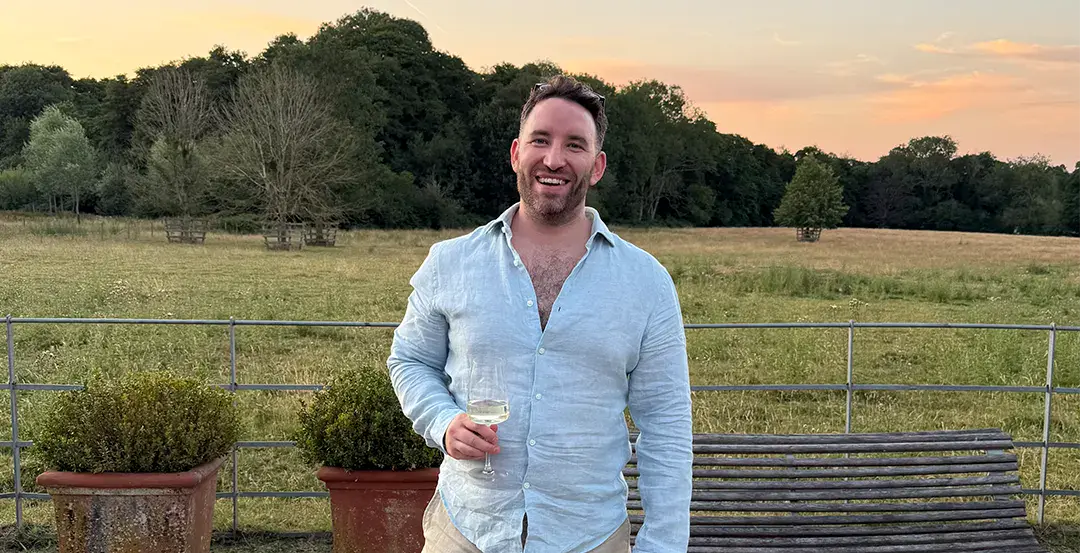


Andrew Dore has never had a big coming out moment. But being out, he says, is rarely a single event – and other people’s reactions are as much about their assumptions and lived experiences as about his.
Andrew Dore, Reserving Manager at MS Amlin, has been in insurance for around 15 years: the first decade in South Africa, where he trained and qualified as an actuary, and the last five in the London market. He describes the move as “going from being a bigger fish in a smaller pond to deliberately becoming a smaller fish in a much bigger one.”
He has never had a single, all-defining coming out moment, and doesn’t want one. “No straight person ever had to come out, so I don’t know why I, as a gay person, need to come out.” But he is still keenly aware of how others may react when they realise.
“Some people are none the wiser and would never have expected it, and some people have already made that conclusion,” he says.
“But it’s interesting how some people assume it and for some people it’s not even on their radar. I think that gives me insight into how they’ve grown up and what they’ve been exposed to. It’s not just my story, it’s someone else’s story as well – because they would or wouldn’t have grown up in an environment where there’s a lot of representation for queer folk.”
His own coming out was gradual, and much of it happened on the inside. “It’s difficult to confidently present an authentic version of yourself to the world when you are still negotiating with that person yourself,” he says. “There wasn’t one dramatic moment when everything changed. Confidence accumulated.”
On the surface, he says, it would be easy to say that being out has simply been easier in London, with its larger and more visible LGBTQ+ community. “But I’m not sure geography tells the whole story. My years in South Africa were also the years in which I was figuring myself out. By the time I moved to London, I knew myself considerably better. A very significant part of it is that I changed too.”
The small decisions haven’t gone away, though. “At work, you make the micro decisions of: am I going to say ‘partner’, or am I going to say ‘boyfriend’? Even now, there can be a very quick calculation running in the background: how is this person likely to react? The difference now is that the calculation carries much less weight.”
Earlier in his career in South Africa, he worked with some “very conservative Afrikaans men” whose reactions were largely negative. But the overwhelming majority of his experiences, in both countries, have been positive, and he has come to treat most reactions as something to be worked on.
“Sometimes it’s about educating people as to what is and isn’t acceptable,” he says. “But a lot of the time I’m quite chill, as long as people don’t mean ill.”
What he is less relaxed about is the gap between what a workplace says and what it does. “Simply saying ‘you can bring your whole self to work’ isn’t enough. People need to see evidence that doing so really is safe – in how colleagues behave, how managers respond, and what actually happens when somebody encounters prejudice.”
Some of that evidence comes from unexpected places. Andrew hosted a pub quiz at work and noticed the regulars.
“I don’t actually know how all of those people identify, and I don’t need to. By consistently showing up, they have communicated something without saying it: I’m a safe person. I’m interested. I support you. You never quite know who in the room is noticing. And sometimes the person who benefits most is somebody who isn’t ready to tell you why it matters to them yet.”
His advice starts with setting the tone yourself. “I stopped approaching every interaction wondering whether people would accept me, and increasingly assumed that they would,” he says. “Most of the time, they followed my lead.”
His other advice is to find your people. “That doesn’t necessarily need to be at work, but the more you’re told that you can be comfortable being who you are, the less you feel you need to hide it anywhere. Those are the people with whom you don’t need to edit yourself or provide context. You simply get to exist.”
And to anyone in the industry who doesn’t feel they can be themselves at work yet, Andrew’s answer starts with that last word.
“Coming out is deeply personal,” he says. “Nobody else gets to decide when you should do it, how you should do it, or whether you should do it at all. But don’t assume that how you feel today is how you will always feel.”
He remembers looking for people like him from quite a young age. “You think: there is somebody like me here, and they are doing well. Maybe there is space for me here too.”
Then, at some point, that need evolves. “Eventually, rather than simply looking for evidence that I belonged, I became capable of providing some of that evidence for somebody else. You may not realise that a younger colleague, or somebody who has not come out yet, is looking at you in exactly the same way you once looked at others.
“You don’t need an enormous community around you to begin with. Sometimes one safe person is enough to make a place feel different. Because that is often where longing transforms into belonging.”
 https://www.lgbtinsurancenetwork.com/wp-content/uploads/2026/10/Sidd-Gavirneni-and-Munich-RE-Featured.png
1254
1254
fletch
https://www.lgbtinsurancenetwork.com/wp-content/uploads/2021/03/Link-LGBTQ-Insurance-Network-logo-web-white.png
fletch2026-10-15 17:29:522026-10-15 17:29:52The Most Meaningful Form of Inclusion is When it Doesn’t Feel Like a Big Deal
https://www.lgbtinsurancenetwork.com/wp-content/uploads/2026/10/Sidd-Gavirneni-and-Munich-RE-Featured.png
1254
1254
fletch
https://www.lgbtinsurancenetwork.com/wp-content/uploads/2021/03/Link-LGBTQ-Insurance-Network-logo-web-white.png
fletch2026-10-15 17:29:522026-10-15 17:29:52The Most Meaningful Form of Inclusion is When it Doesn’t Feel Like a Big Deal https://www.lgbtinsurancenetwork.com/wp-content/uploads/2026/10/Coming-Out-at-work-MS-Amlin-Andrew-featured.webp
1080
1080
fletch
https://www.lgbtinsurancenetwork.com/wp-content/uploads/2021/03/Link-LGBTQ-Insurance-Network-logo-web-white.png
fletch2026-10-15 17:22:212026-10-15 17:22:21It’s Not Just My Story; It’s Someone Else’s Story as Well
https://www.lgbtinsurancenetwork.com/wp-content/uploads/2026/10/Coming-Out-at-work-MS-Amlin-Andrew-featured.webp
1080
1080
fletch
https://www.lgbtinsurancenetwork.com/wp-content/uploads/2021/03/Link-LGBTQ-Insurance-Network-logo-web-white.png
fletch2026-10-15 17:22:212026-10-15 17:22:21It’s Not Just My Story; It’s Someone Else’s Story as Well https://www.lgbtinsurancenetwork.com/wp-content/uploads/2026/10/Coming-Out-at-work-MS-Amlin-Rebecca-featured.webp
1080
1080
fletch
https://www.lgbtinsurancenetwork.com/wp-content/uploads/2021/03/Link-LGBTQ-Insurance-Network-logo-web-white.png
fletch2026-10-15 17:13:582026-10-15 17:13:58You Have to Allow Them to Get Used to It
https://www.lgbtinsurancenetwork.com/wp-content/uploads/2026/10/Coming-Out-at-work-MS-Amlin-Rebecca-featured.webp
1080
1080
fletch
https://www.lgbtinsurancenetwork.com/wp-content/uploads/2021/03/Link-LGBTQ-Insurance-Network-logo-web-white.png
fletch2026-10-15 17:13:582026-10-15 17:13:58You Have to Allow Them to Get Used to It https://www.lgbtinsurancenetwork.com/wp-content/uploads/2026/10/Poppy-Wilkinson-Convex-Coming-out-at-work-series-featured.webp
1080
1080
fletch
https://www.lgbtinsurancenetwork.com/wp-content/uploads/2021/03/Link-LGBTQ-Insurance-Network-logo-web-white.png
fletch2026-10-15 16:47:402026-10-15 16:52:20If I Felt Completely Comfortable Being Myself, I’d Be More Visibly Queer
https://www.lgbtinsurancenetwork.com/wp-content/uploads/2026/10/Poppy-Wilkinson-Convex-Coming-out-at-work-series-featured.webp
1080
1080
fletch
https://www.lgbtinsurancenetwork.com/wp-content/uploads/2021/03/Link-LGBTQ-Insurance-Network-logo-web-white.png
fletch2026-10-15 16:47:402026-10-15 16:52:20If I Felt Completely Comfortable Being Myself, I’d Be More Visibly Queer https://www.lgbtinsurancenetwork.com/wp-content/uploads/2026/10/Colin-Masson-Munich-RE-Featured.webp
1080
1080
fletch
https://www.lgbtinsurancenetwork.com/wp-content/uploads/2021/03/Link-LGBTQ-Insurance-Network-logo-web-white.png
fletch2026-10-14 13:26:512026-10-14 13:26:51There’s a Level of Trust You Bring by Being Open
https://www.lgbtinsurancenetwork.com/wp-content/uploads/2026/10/Colin-Masson-Munich-RE-Featured.webp
1080
1080
fletch
https://www.lgbtinsurancenetwork.com/wp-content/uploads/2021/03/Link-LGBTQ-Insurance-Network-logo-web-white.png
fletch2026-10-14 13:26:512026-10-14 13:26:51There’s a Level of Trust You Bring by Being Open https://www.lgbtinsurancenetwork.com/wp-content/uploads/2026/10/Ros-Fisher-Munich-RE-Featured.webp
1080
1080
fletch
https://www.lgbtinsurancenetwork.com/wp-content/uploads/2021/03/Link-LGBTQ-Insurance-Network-logo-web-white.png
fletch2026-10-14 13:18:342026-10-14 14:36:08Can I Dye My Hair at This Company?
https://www.lgbtinsurancenetwork.com/wp-content/uploads/2026/10/Ros-Fisher-Munich-RE-Featured.webp
1080
1080
fletch
https://www.lgbtinsurancenetwork.com/wp-content/uploads/2021/03/Link-LGBTQ-Insurance-Network-logo-web-white.png
fletch2026-10-14 13:18:342026-10-14 14:36:08Can I Dye My Hair at This Company? https://www.lgbtinsurancenetwork.com/wp-content/uploads/2026/10/Coming-Out-Lockton-Featured.png
1254
1254
fletch
https://www.lgbtinsurancenetwork.com/wp-content/uploads/2021/03/Link-LGBTQ-Insurance-Network-logo-web-white.png
fletch2026-10-13 09:38:252026-10-14 13:05:26Unless I Paid Them £1 Million, They Would Tell my Family and my Colleagues at Work That I Was Gay!
https://www.lgbtinsurancenetwork.com/wp-content/uploads/2026/10/Coming-Out-Lockton-Featured.png
1254
1254
fletch
https://www.lgbtinsurancenetwork.com/wp-content/uploads/2021/03/Link-LGBTQ-Insurance-Network-logo-web-white.png
fletch2026-10-13 09:38:252026-10-14 13:05:26Unless I Paid Them £1 Million, They Would Tell my Family and my Colleagues at Work That I Was Gay! https://www.lgbtinsurancenetwork.com/wp-content/uploads/2026/10/6-Maisie-McCarthy-and-Laurence-Peck-Featured.png
1254
1254
fletch
https://www.lgbtinsurancenetwork.com/wp-content/uploads/2021/03/Link-LGBTQ-Insurance-Network-logo-web-white.png
fletch2026-10-02 08:59:082026-10-02 12:22:12Once That Gets Posted, That’s It Now…
https://www.lgbtinsurancenetwork.com/wp-content/uploads/2026/10/6-Maisie-McCarthy-and-Laurence-Peck-Featured.png
1254
1254
fletch
https://www.lgbtinsurancenetwork.com/wp-content/uploads/2021/03/Link-LGBTQ-Insurance-Network-logo-web-white.png
fletch2026-10-02 08:59:082026-10-02 12:22:12Once That Gets Posted, That’s It Now… https://www.lgbtinsurancenetwork.com/wp-content/uploads/2026/10/5-Dr-Keshier-Randolph-and-Ryan-Suby-Featured.png
1254
1254
fletch
https://www.lgbtinsurancenetwork.com/wp-content/uploads/2021/03/Link-LGBTQ-Insurance-Network-logo-web-white.png
fletch2026-10-02 08:50:502026-10-02 12:21:12You Don’t Need the World’s Permission to Be Who God Created You to Be
https://www.lgbtinsurancenetwork.com/wp-content/uploads/2026/10/5-Dr-Keshier-Randolph-and-Ryan-Suby-Featured.png
1254
1254
fletch
https://www.lgbtinsurancenetwork.com/wp-content/uploads/2021/03/Link-LGBTQ-Insurance-Network-logo-web-white.png
fletch2026-10-02 08:50:502026-10-02 12:21:12You Don’t Need the World’s Permission to Be Who God Created You to Be https://www.lgbtinsurancenetwork.com/wp-content/uploads/2026/10/4.-Sean-Bracebridge.webp
1080
1080
fletch
https://www.lgbtinsurancenetwork.com/wp-content/uploads/2021/03/Link-LGBTQ-Insurance-Network-logo-web-white.png
fletch2026-10-02 08:49:292026-10-02 12:19:42I’ve Never Really Come Out
https://www.lgbtinsurancenetwork.com/wp-content/uploads/2026/10/4.-Sean-Bracebridge.webp
1080
1080
fletch
https://www.lgbtinsurancenetwork.com/wp-content/uploads/2021/03/Link-LGBTQ-Insurance-Network-logo-web-white.png
fletch2026-10-02 08:49:292026-10-02 12:19:42I’ve Never Really Come Out https://www.lgbtinsurancenetwork.com/wp-content/uploads/2026/10/3-Pedro-Chamorro-Llanc-and-Steve-Bayless-Featured.png
1254
1254
fletch
https://www.lgbtinsurancenetwork.com/wp-content/uploads/2021/03/Link-LGBTQ-Insurance-Network-logo-web-white.png
fletch2026-10-02 08:48:312026-10-02 12:20:18Seeing Other People Being Themselves Made a Big Difference
https://www.lgbtinsurancenetwork.com/wp-content/uploads/2026/10/3-Pedro-Chamorro-Llanc-and-Steve-Bayless-Featured.png
1254
1254
fletch
https://www.lgbtinsurancenetwork.com/wp-content/uploads/2021/03/Link-LGBTQ-Insurance-Network-logo-web-white.png
fletch2026-10-02 08:48:312026-10-02 12:20:18Seeing Other People Being Themselves Made a Big Difference https://www.lgbtinsurancenetwork.com/wp-content/uploads/2026/10/2-Drew-Hutchinson-and-Mark-Osborne-Featured.png
1254
1254
fletch
https://www.lgbtinsurancenetwork.com/wp-content/uploads/2021/03/Link-LGBTQ-Insurance-Network-logo-web-white.png
fletch2026-10-02 08:47:322026-10-02 12:23:16For Years I Feared How People Would React if They Knew
https://www.lgbtinsurancenetwork.com/wp-content/uploads/2026/10/2-Drew-Hutchinson-and-Mark-Osborne-Featured.png
1254
1254
fletch
https://www.lgbtinsurancenetwork.com/wp-content/uploads/2021/03/Link-LGBTQ-Insurance-Network-logo-web-white.png
fletch2026-10-02 08:47:322026-10-02 12:23:16For Years I Feared How People Would React if They Knew https://www.lgbtinsurancenetwork.com/wp-content/uploads/2026/10/1-Vanessa-Horne-and-Geoff-Lealan-Featured.webp
1080
1080
fletch
https://www.lgbtinsurancenetwork.com/wp-content/uploads/2021/03/Link-LGBTQ-Insurance-Network-logo-web-white.png
fletch2026-10-02 08:45:162026-10-02 12:15:41You’ll Know When You’re Ready
https://www.lgbtinsurancenetwork.com/wp-content/uploads/2026/10/1-Vanessa-Horne-and-Geoff-Lealan-Featured.webp
1080
1080
fletch
https://www.lgbtinsurancenetwork.com/wp-content/uploads/2021/03/Link-LGBTQ-Insurance-Network-logo-web-white.png
fletch2026-10-02 08:45:162026-10-02 12:15:41You’ll Know When You’re ReadyIf you enjoyed this article, please consider joining Link for more great insights and events from the LGBTQ+ community


 The Most Meaningful Form of Inclusion is When it Doesn’t Feel Like a Big...